- The International Buffalo Knowledge Resource Service has a website. No, really.
- Plants for a Future website includes crop wild relatives. No, really.
- Thai jasmine rice trademark pirated. No, really?
Mapping drought risk
Just a quick follow-up to the rhyming couplet on water-related stresses in the just-published Brainfood. The Center for Hazards and Risks Research (CHRR) at Columbia University, which we have mentioned here before in connection with tsunami risk, also has data on Global Drought Hazard Distribution.
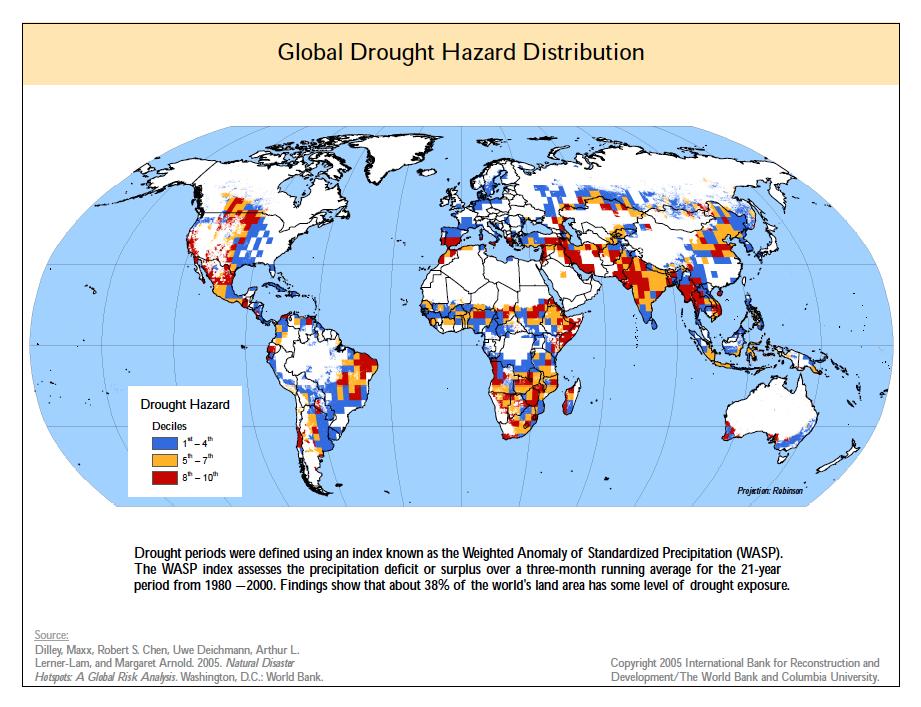
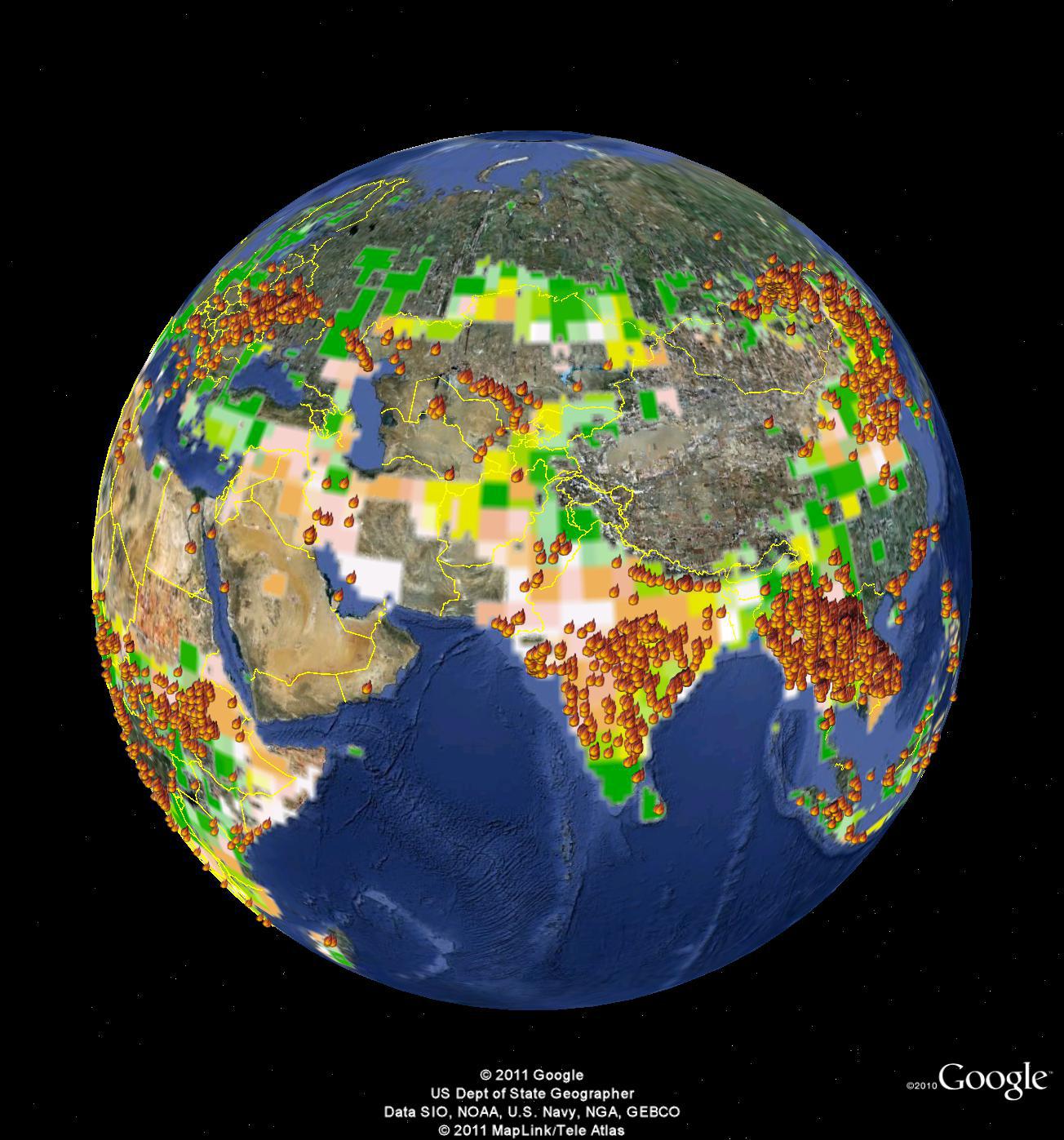
With a little R-related effort by Robert 1 you can get a Google Earth file, which looks like this for Asia. 2 I’ve also added MODIS fire hotspots for the past 24 hours, merely because I can. That would be the little fire icons.
And that means you can mash up drought risk with germplasm origin (from Genesys, say), in this case from Chad as an example.
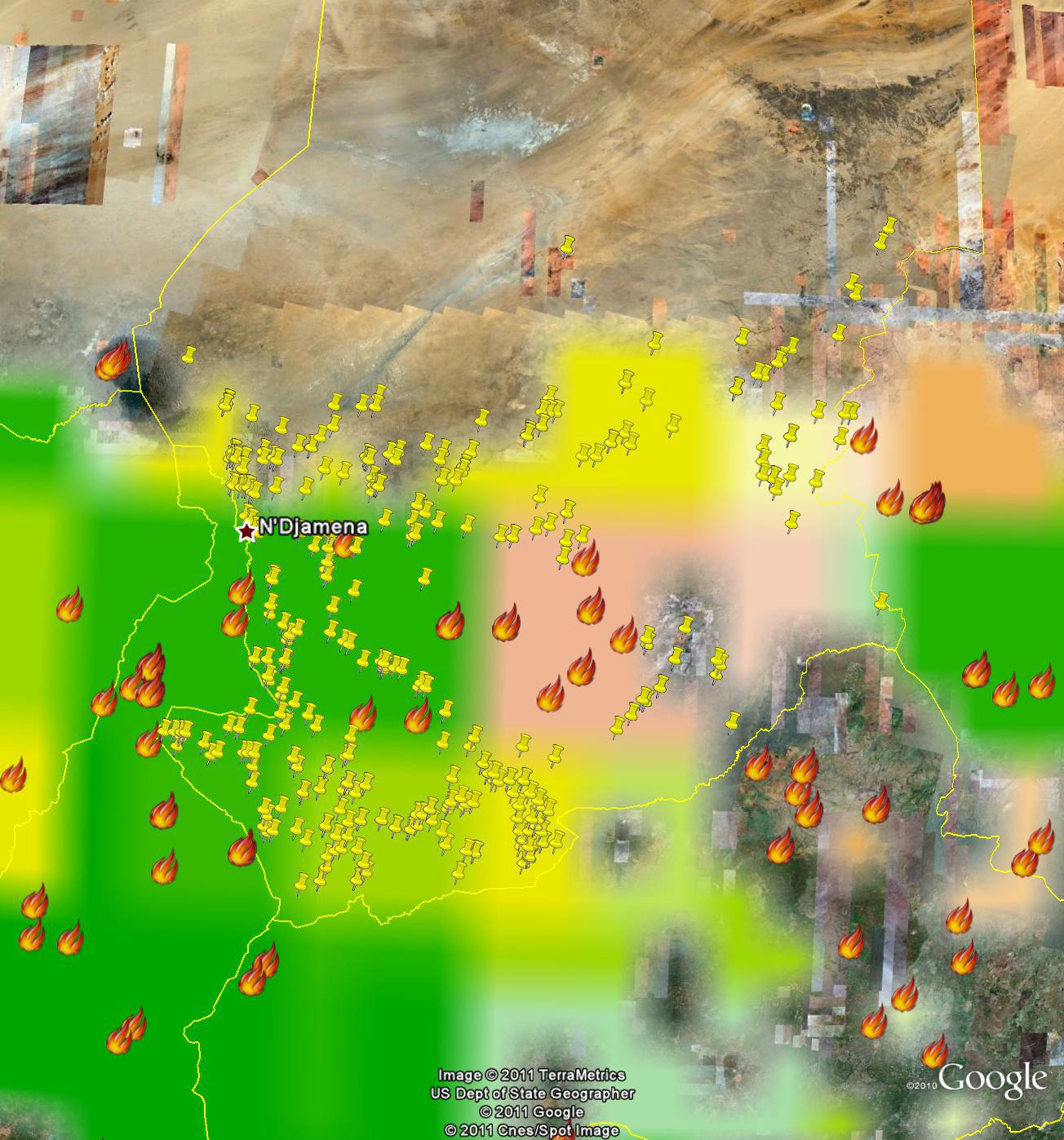
Which is a great thing to be able to do because as we have just had reconfirmed by our friend Dag Endresen, the origin of germplasm allows you to make some predictions about its performance.
Brainfood: Chia, Lentils, Bambara groundnut, Cacao, Amaranths, Rwanda, Cherimoya, Conservation, Drought, Plasticity, Phenology
- Extending the range of an ancient crop, Salvia hispanica L.—a new ω3 source. So we can grow it in the US, natch.
- Characterization of the lentil landrace Santo Stefano di Sessanio from Abruzzo, Italy. In the market, some are not what they claim to be; I’m shocked.
- Genetic diversity in Bambara groundnut (Vigna subterranea (L.) Verdc.) as revealed by phenotypic descriptors and DArT marker analysis. They’re pretty diverse, especially in Cameroon/Nigeria, which may be where they were domesticated.
- Genetic diversity and spatial structure in a new distinct Theobroma cacao L. population in Bolivia. They’re different from other cacao populations, and probably indigenous to Bolivia.
- Systematics and taxonomic delimitation of vegetable, grain and weed amaranths: a morphological and biochemical approach. Relationships? It’s complex.
- First and second millennium a.d. agriculture in Rwanda: archaeobotanical finds and radiocarbon dates from seven sites. Earliest pearl millet (Pennisetum glaucum), finger millet (Eleusine coracana) and sorghum (Sorghum bicolor) in the region, but do they really mean AD?
- The use of consecutive micrografting improves micropropagation of cherimoya (Annona cherimola Mill.) cultivars. It does, what more can I tell you?
- Social and ecological synergy: Local rulemaking, forest livelihoods, and biodiversity conservation. Big meta-analysis reveals complexity and the importance of participation by “local forest users.”
And here are a trio of rhyming couplets, if you see what I mean:
- The relative importance of drought and other water-related constraints for major food crops in South Asian farming systems. Drought and water constraints are widespread in South Asia. Though they contribute no more than 20-30% of current yield gaps, investment in genetic solutions needs to continue. Alas, there are significant Challenges in breeding for yield increase for drought. Nothing that can’t be overcome, though.
- Rethinking species’ ability to cope with rapid climate change. It’s the plasticity, stupid.
- Meta-analyses suggest strong selection on flowering phenology both in plants in general and in chickpea in particular.
Nibbles: Cardamom, FIGS, Descriptors, Haiti
- Cardamom scrutinised.
- A Lifeboat to the Gene Pool. Our friend Dr Dag “provides some of the first experimental evidence to support the FIGS concept”. With slides.
- Descriptor lists are important, says Bioversity today. No joke.
- An investigation, quite possibly partisan, but that’s the point, into emergency seed aid to Haiti after the earthquake.