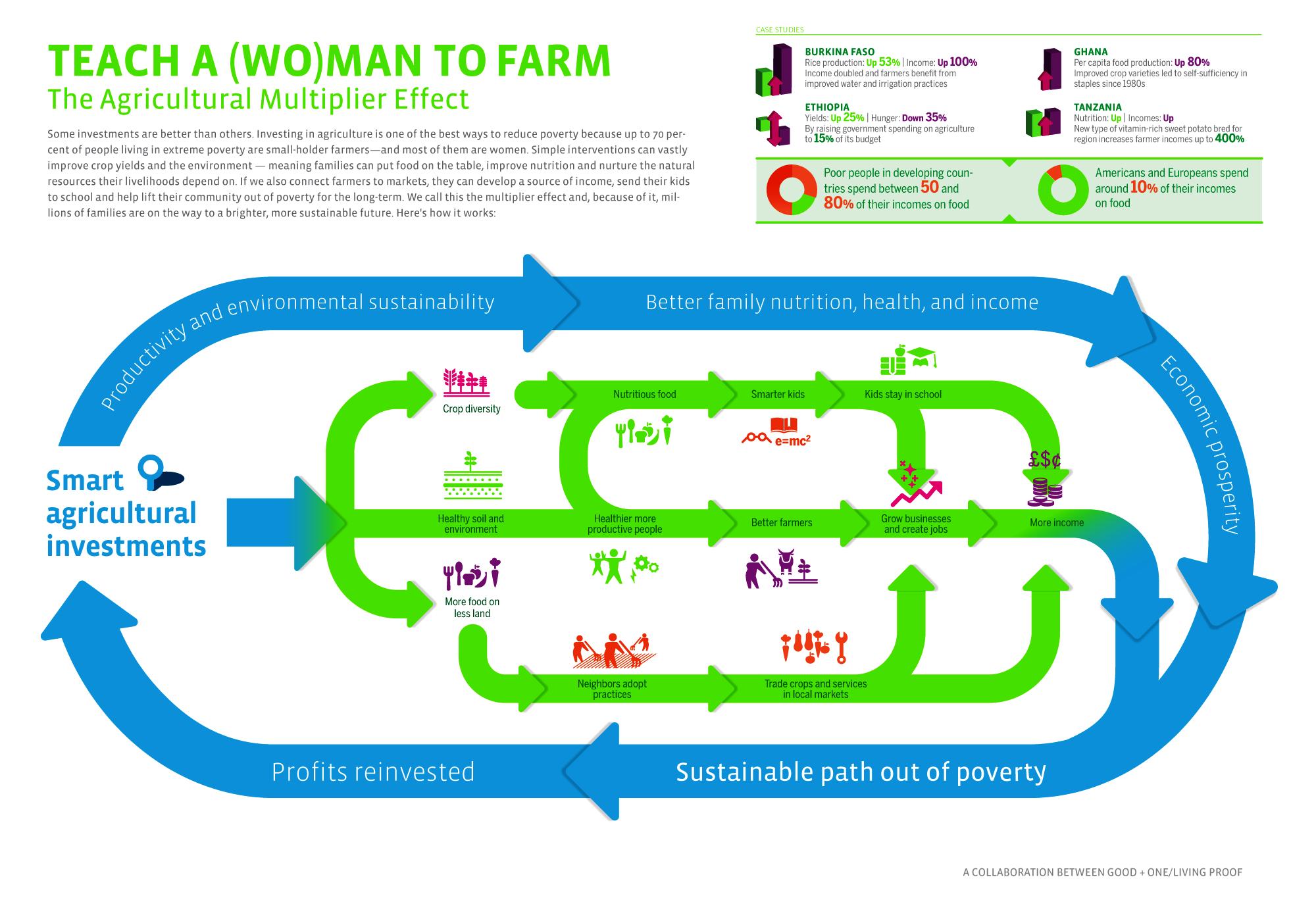
Smart agricultural investments leading to crop diversity? What an amusing notion!
The making of an American institution, of sorts
…produced from a hybrid…, mixing European and native stock; popularized by immigrants, Americanizing an ancient ritual; imbued with nostalgia, as their children assimilated; and then embraced by the general public, as ethnic foodways fused. It may not be sophisticated or refined, but it’s difficult to imagine a beverage better suited to the White House.
You’re intrigued, admit it! Well, it is a great story.
Nibbles: SEARICE, R&D, Sustainable intensification, Biofortification, Chillies, Safe movement, Mangoes, Weeds, Berries, Blueberries, Cerrado
- SEARICE explains its approach to seed sovereignty and farmer participation.
- Nature on IFPRI’s report on agricultural R&D in Africa. Not pretty.
- Resilience Science on the UN Special Rapporteur’s sustainable intensification thing.
- The Gates Foundation is on a nutritional roll; most of yesterday’s posts are available from this round-up.
- New Mexico gets all protectionist about its chillies.
- IITA explains how it provides healthy germplasm. Various different interesting stories in there, stick with it.
- Farmer conservation power in India.
- How to control invasive species. Eat more weeds.
- Presentation on Trends in global nutrition and health: Local fruits and their potential importance for nutrition and health as seen at Pavlovsk berry meeting.
- Speaking of berries…
- The cerrado (and its crop wild relatives) is in trouble. We talked about this, weren’t you paying attention?
UG99 resistant varieties
In case you’re not following the discussion here on knowledge management, here’s a map of the wheat varieties resistant to UG99.
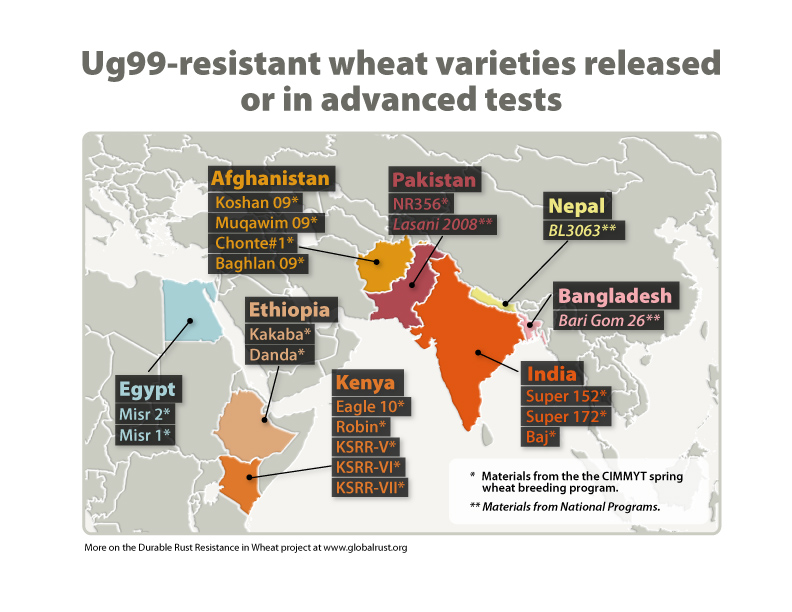
If you use Google to search for images of “UG99 resistance” it is right up there, near the top, and several versions are available…
New insights into barley domestication
We asked one of the co-authors, Ian Dawson, who’s an old friend, to briefly summarize for us a paper just out in New Phytologist on the domestication of barley. Here is his contribution. Thanks a lot, Ian, and keep ’em coming…
 The power of new technologies to explore crop evolution is illustrated by a just released paper by Russell and co-workers 1 that explores barley domestication in the Fertile Crescent, a key region in the development of farming. From assessing a collection of more than 1,000 genetically mapped, genome-wide single nucleotide polymorphisms (SNPs) in geographically-matched landrace and wild barley accessions from Jordan and Syria, genetic contact between the two categories was evident, suggesting hybridisation may be a mechanism for the continued adaptation of landraces in the region under climate change. In addition, statistically significant chromosome-level differences in diversity between barley types were observed around genes known to be involved in the evolution of cultivars, indicating regions of the genome that may be subject to selection and therefore of interest in future crop breeding. For example, a significant reduction in diversity in landrace barley –- which suggests a genetic bottleneck during domestication –- was observed around the brittle rachis genes, recessive characters which result in grains remaining longer on plants after maturation, allowing efficient harvest of cultivated compared to wild barley. Jordan and southern Syria, compared to the north of Syria, was supported by SNP data as a more likely origin of domesticated barley, suggesting limited locations for the original development of the cultivated crop. Such studies, which exploit novel and rapidly developing genotyping methods, provide great scope for also exploring the evolution of other crops of both historical and current importance, especially when combined with matched geographic sampling of wild and cultivated material.