Food desert locator

Luigi and I had the same response to the USDA’s Food Desert Locator: wow!

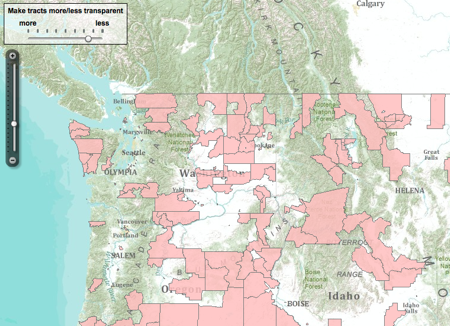
[A] food desert [is] a low-income census tract where a substantial number or share of residents has low access to a supermarket or large grocery store.

Here’s a little section of the country.
FoodDesert

Astonishing in itself, what seems most thrilling is that the entire dataset is downloadable, which suggests all sorts of possible mash-ups: farmers’ markets, poverty, obesity, school journeys, Starbucks locations. The sky’s the limit. Not that correlation is causality, of course.

Nibbles: Fair mangoes, Rice domestication, Saline collections, Spice collections, Aquaculture, Salmon

Agricultural biodiversity in the Linear B tablets

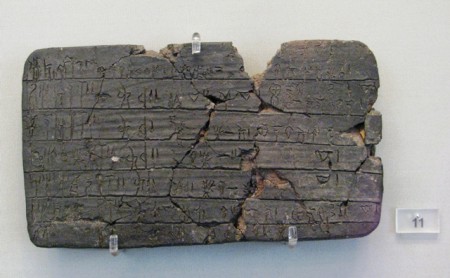
It was a great thrill during a recent visit to Athens to check out selected Linear B tablets on display at the National Archaeological Museum. I hadn’t seen these things outside books since I was about 12 I think. It was an even greater thrill to realize — or remember — that some deal with agrobiodiversity. Here’s one (Ge 610) that “records quantities of raw materials for perfume manufacture.” It comes from the House of the Sphinxes at Mycenae, which may have belonged to a herbalist.

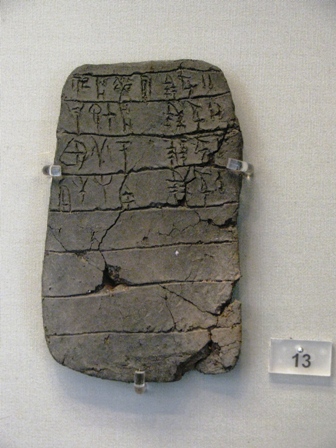
Unfortunately, I was not able to find any further information online about Ge 610, but I had better luck with Ge 603, one of a set “recording aromatic herbs (cumin, coriander, fennel, sesame, saffron) associated with male (workers) names).”

You can read all about that one in Writing Without Letters:

And it also gets a footnote in another book. Oh what fun one could have with this!