- Contribution of pollinator-mediated crops to nutrients in the human food supply. 90% of Vitamin C for a start.
- Foraging behavior of Alberes cattle in a Mediterranean forest ecosystem. It’s a semi-feral breed in NE Spain and its foraging behaviour may well decrease the risk of fires.
- Assessing the impact of the SASA/CASREN technology interventions in the sweet potato-pig production systems in Zitong County (Sichuan, China). All well and good but in this day and age one would expect some exploration of the sustainability of the interventions.
- Proposal for a Kava Quality Standardization Code. Very much needed because poor quality was probably responsible for examples of liver toxicity in the past. This is how to avoid that in the future.
- Clipping stimulates productivity but not diversity in improved and semi-natural pastures in temperate Japan. Semi-natural pastures are more diverse than improved pastures, and can be reasonably productive. So there.
- Pollen flows within and between rice and millet fields in relation to farmer variety development in The Gambia. Depends on breeding system. Likely higher within fields than between. Still no cure for cancer.
- Land, landlords and sustainable livelihoods: The impact of agrarian reform on a coconut hacienda in the Philippines. It seems to be mainly in the mind.
- Genetic divergence is not the same as phenotypic divergence. It isn’t? I’ll alert the media.
- Scope economies and technical efficiency of cocoa agroforesty systems in Ghana. Multi-crop cocoa farms are better, in multiple ways.
- Gene flow increases fitness at the warm edge of a species’ range. Outcrossing between edge populations better for living on the edge than outcrossing within edge populations, outcrossing with a center population or selfing. For a Californian annual anyway. Interesting consequences for in situ CWR conservation, in particular in context of re-introductions. Do we worry too much about “genetic pollution”?
Winning hearts and minds in Afghanistan
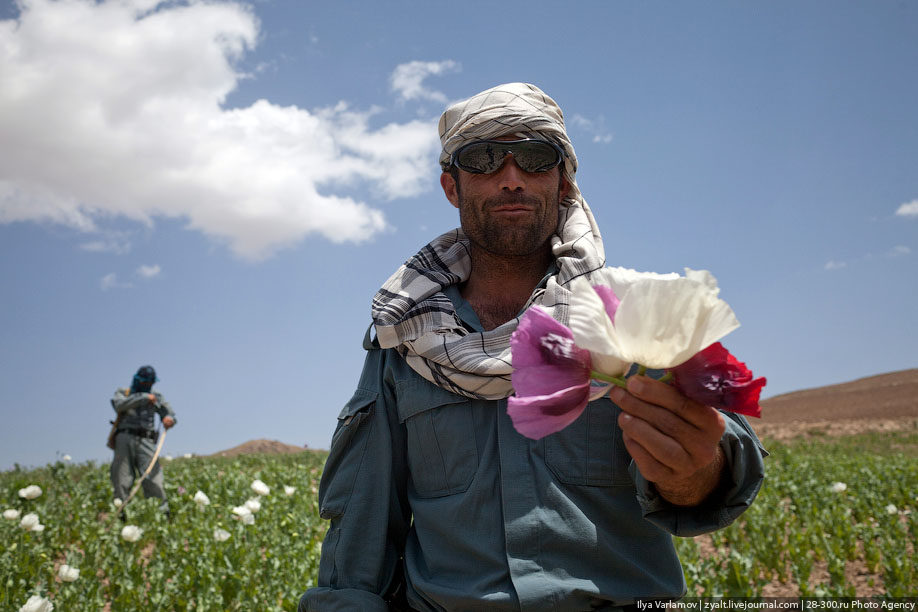
Women and children run out into the field. They cry and throw themselves under sticks. A month later, they might have reaped the harvest and sold it. For many of them this money was the only way to survive another year in this godforsaken place.
Climate change and PGRFA discussed, and discussed again
Jeremy and/or Andy will no doubt correct me if I’m wrong, because they’re there and I’m not, but I believe it is the very presentation embedded below that was made a matter of only minutes ago by our friend and colleague Andy Jarvis of CIAT at the Special Information Seminar on CLIMATE CHANGE AND GENETIC RESOURCES FOR FOOD AND AGRICULTURE: STATE OF KNOWLEDGE, RISKS AND OPPORTUNITIES at FAO. How’s that for timeliness. If not, then Andy will probably give it at the CGRFA-13 side event on pretty much the same subject on Tuesday. Or maybe both? No online sign of the other presentations yet, but I’ll get the scoop on the event from the boys this evening, I expect.
More on those Azeri buffaloes
Thanks to Elli from the Save Foundation for this comment on our recent post on water buffalo in Azerbaijan.
They were crossed with Murrah in Soviet times, just like in the Ukraine and Bulgaria. I’m just preparing a report on Buffalo in SE Europe and we’ve been looking at the situation in Georgia too.
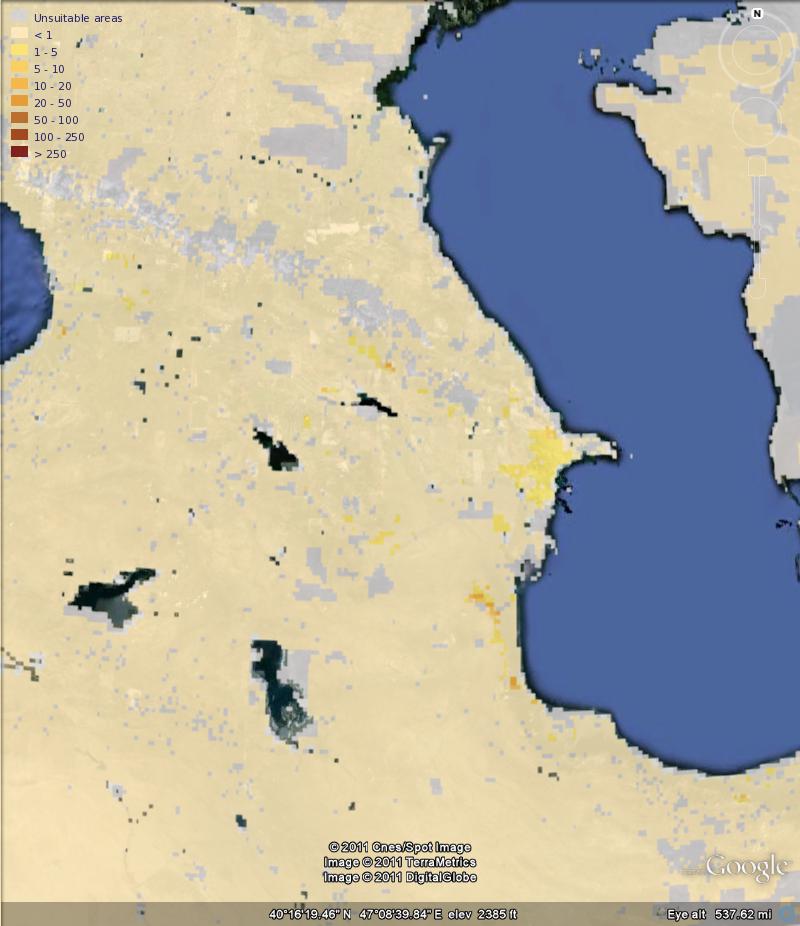 Good to know. Incidentally, I should have mentioned another source of livestock information on the previous post: Gridded Livestock of the World (GLW). If you squint, 1 you can just about make out that it does show some buffaloes in Azerbaijan and other countries in the southern Caucasus.
Nibbles: Breeding, Frankincense and myrrh, Roman pills, Chinese botanic garden, NPGS, Green red bush tea, Old banyan, Terroir, Botanic gardens and invaders, AnGR
- National Organic Coalition suggests USDA’s National Institute for Food and Agriculture separate conventional and participatory breeding from anything involving DNA in considering projects for support.
- Second-guessing the Three Wise Men.
- Yet more on attempts to deconstruct ancient Roman medicines using DNA from tablets found in a shipwreck. Real Indiana Jones stuff.
- Botanic garden and genebank for drought-resistant plants to be established “in Asia’s largest wild fruit forest.” That would be in China. I really don’t know what to make of this. Really need to find out more. But why am I talking to myself?
- Brown (rice) is beautiful.
- Feedback from a genebank user. Kinda.
- Rooibos gets itself certified.
- The oldest cultivated tree on record.
- The taste of Massachusetts.
- “…strongly conservation-minded botanic gardens appear to be in the minority.” Easy, tiger. Will that new one in China (see above) feature in this minority?
- ILRI on an Aussie TV program on conserving local livestock breeds in Africa.