- Back to basics: Considerations in evaluating the outcomes of community forestry. You don’t need fancy indicators.
- Plant exploitation of the last foragers at Shizitan in the Middle Yellow River Valley China: Evidence from grinding stones. Remains of starch and patterns of wear on grinding stones show that Paleolithic people in China used a lot of plants, in a lot of ways.
- Phenotypic diversity and identification of wild Arachis accessions with useful agronomic and nutritional traits. Our friends at ICRISAT identify the top 20 wild peanut accessions.
- Taxonomy and genetic diversity of domesticated Capsicum species in the Andean region. AFLPs and SSRs clarify some taxonomic issues, but show high diversity not just in Bolivia, the putative centre of origin. No top 20 though.
- From forest to field: Perennial fruit crop domestication. They’re like annuals in some respects, different in others. Perhaps most interestingly, their domestication bottleneck wasn’t so much of one.
- Allelopathic potential of Triticum spp., Secale spp. and Triticosecale spp. and use of chromosome substitutions and translocations to improve weed suppression ability in winter wheat. Low in wheat, but high in some rye accessions, and transferrable.
- Genotyping and evaluation of local olive varieties of a climatically disfavoured region through molecular, morphological and oil quality parameters. Eight minor varieties could be less so.
Rupestrine Roman agrobiodiversity
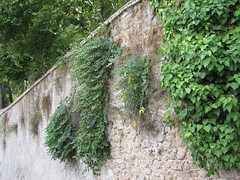
Capparis on this occasion. But I’ve also seen figs, pomegranate and assorted crop wild relatives growing on walls. Time for a serious survey?
Nibbles: Refugia, Mann, Tree pix, Sparing v sharing, Lethal yellowing, Value chains, Coral sun-blocking, GlobalHort, Gravenstein, Pirate agrobiodiversity
- How species survive climate change.
- Charles C. Mann, author of great books on pre-Columbian America and the consequences of the Columbian Exchange, interviewed.
- Dreamy pictures of old British trees.
- “Protecting wild species may require growing more food on less land.” Great press release headlines of our times. Fortunately Mongabay has a discussion.
- Coconut lethal yellowing wreaking havoc in Mozambique.
- What makes a good food value chain?
- Boffins want to re-activate coral genes in temperate plants to stop them getting sunstroke. Or something.
- Old friend engaged by GlobalHort to work on position paper on “Promoting Agrobiodiversity for International Development: A Rationale and Roadmap for Collective Action”. Go, Hannah.
- Grapes vs apples in Sonoma County.
- Aaargh, pirates smoked like chimneys and drank like fish. Well I never. Anyway, nice to see them making full use of the local agrobiodiversity products.
Chile Pepper Fiesta 2011


Chile Pepper Fiesta 2011, a set by Brooklyn Botanic Garden on Flickr.
Looks like fun…
UK genebank on BBC Radio 4
Mike Ambrose manages the UK’s largest seed collection based at the John Innes Centre in Norwich.
With a collection of 25,000 seeds from around the world, he tells Caz how looking into the past helps meet the ‘wish-list’ criteria of plant breeders today.
That’s from the Programme Details for this morning’s Farming Today, on BBC Radio 4. I’m sure they have more than 25,000 seeds, but that’s just a quibble. 1 Did Mike Ambrose really say that the John Innes genebank has seen a 7% year-on-year increase in requests for seed? How much of that went to farmers, I wonder, rather than to breeders.