Two events don’t constitute a trend; that takes three. But I note with interest that Greece’s entry in the 12th International Architecture Exhibition in Venice is Ark. Old seeds for new cultures. Readers will remember that the UK Pavilion at the Shanghai Expo of 2010 featured a Seed Cathedral.
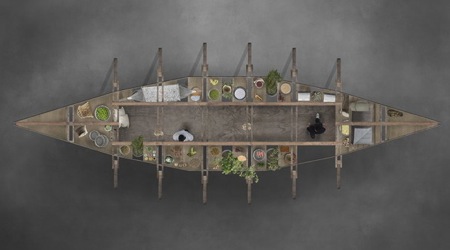
Greece’s effort is much more rooted in food than the UK’s. The Greek Ark Project helpfully explains:
The oldest meaning of the ancient greek word for the activity of building, ktisis, is “weeding, preparation of the soil for sowing, planting“, while the meanings of ‘foundation’ and ‘construction’ are subsequent. Sowing and Construction introduce at the outset a dual function for architecture as the activity of organizing both buildings in space and, also, of open, natural spaces. By means of the present project, we seek to reintroduce into contemporary architectural practices the spaces of culture in its double meaning, of agriculture and of civilization. “People meet within culture”.
It goes on to place the architecture squarely within the realm of agriculture.
And thanks to The History of Greek Food for the original post and the photograph.