Growing greens in Kenya

The relationship between food, nutrition and health is what is missing in most of Kenya’s homes and even at the national level even when they talk of food security.

Helen Murangi, whose family farms 11 hectares near Kiringa in Kenya, grows all kinds of greens, and stresses their value for good nutrition and as a cash crop.

Murangiri farm has with time come to classify weeds into good weeds, that are now grown intentionally for food and human medicine and the other weeds from which the farm derives its pesticides and herbicides needs. In the class of ‘good weeds’ are such common plants as the Black jerk, Jute (mlenda in Swahili), or murere in Luhya, Kisii), ground nuts, Amaranths, Spider Plant (thangeti in Kikuyu, chiisaka in Luhya, a lot-dek in Luo, saget in Kalenjin), Pumpkin, Crotolaria, Solanum, the various Aloe specie among many others.

According to Helen, what she earns from her small portions of these good weeds combined earns her far more that what she gets from the 7 hecteres she had dedicated to mangos. Interestingly enough, every one in Murangiri’s home is converse with the value of everything that occupies their farm’s space and can explain in detail about each plant and crop—from the biological name, local name, its usefulness etc.

Lots more from the horse’s mouth, as it were, at Africa Science News Service.
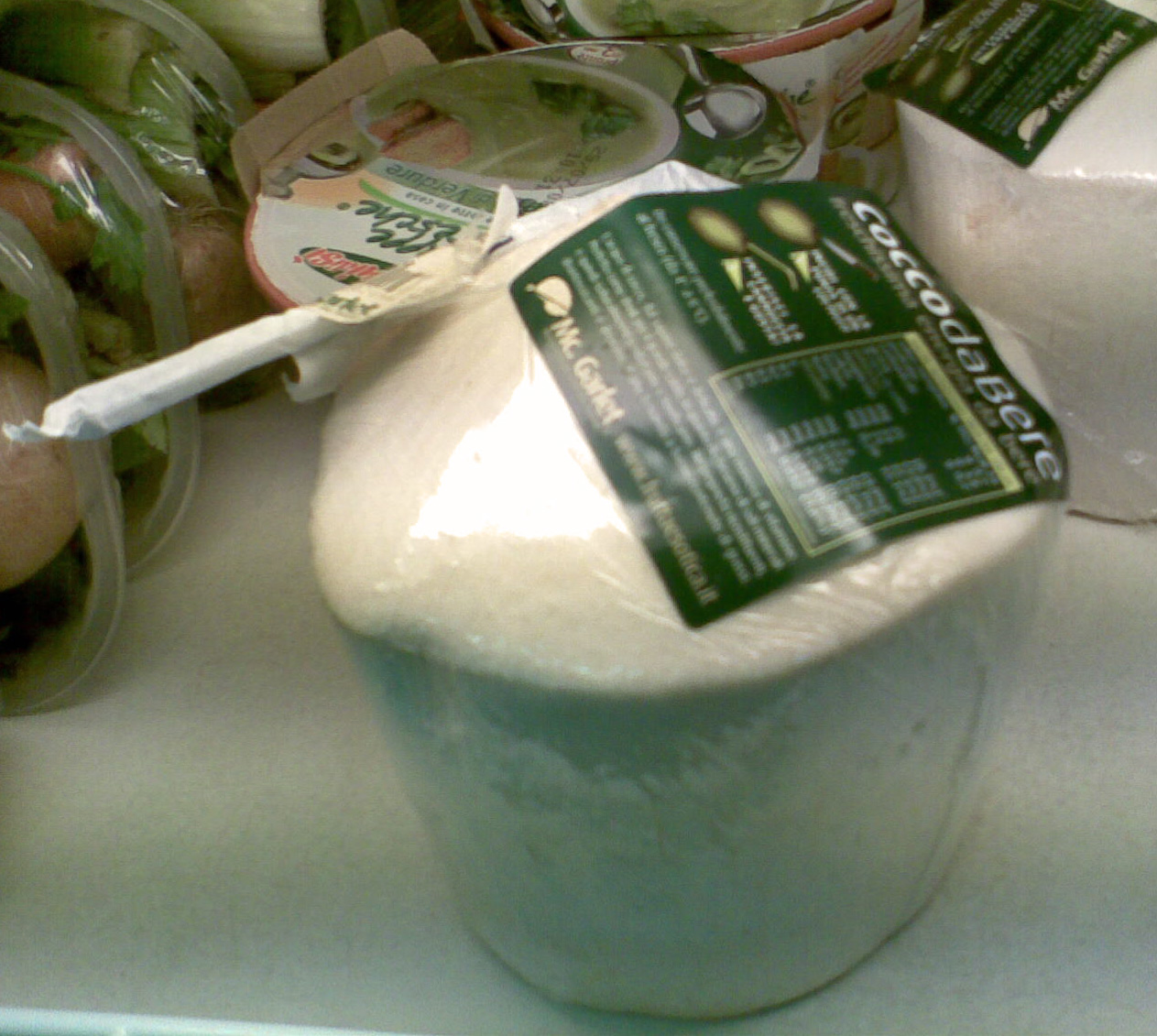
Drink this

Coco.jpg

I apologise for the quality of this image, but there I was in the local supermarket with only a phone. It shows a shrink-wrapped, cut and trimmed drinking coconut, complete with a straw and instructions for how to make a hole and insert the straw. I was astounded. So astounded that I didn’t register any of the details, like how much these go for, where they are coming from or whether anyone was buying them. If there are any left next time I’ll try to find out. Or maybe this is old news to someone, either in coconut-growing or coconut-drinking country.

Grey horses understood

ResearchBlogging.orgAn easy way to mark yourself as a novice is to call a white horse white. They’re greys. I don’t know why, but there it is. 1 Today, thanks to a paper in Nature Genetics, I do know why they’re grey. 2 Turns out they are over-expressing two genes on horse chromosome 25, thanks to a duplicated bit of DNA 4600 base pairs long. And that’s true in more than 800 greys from 8 different breeds. the duplication has not been found in any non-grey horses.

Greys generally start off with dark hair, but gradually lose the dark pigment, leaving them with white hair and, usually, black-skin. Alas, greys also often develop melanomas that reduce their lifespan, and also show depigmentation of the skin like viteligo in humans. So what’s going on? Leif Andersson and his colleagues suggest that maybe the two genes, called STX17 and NR4A3, may be speeding up the rate of division of pigment cells in the skin and the hair follicles. In the skin, this leads to melanomas. In the hair follicles it depletes the stem cells.

Nibbles: Funding, Grains, Wildflowers, AVRDC, Cloning, Salinity, Education, Sheep dogs, Swans, Writing, Fisheries, Big ag

Better harvests through chemistry

From the blurb at Eldis for a document entitled Fertiliser subsidies and sustainable agricultural growth in Africa: current issues and empirical evidence from Malawi, Zambia, and Kenya.

It is argued that there are compelling rationales for “smart” fertiliser subsidy programmes in Africa. However, achieving these benefits depends greatly on how the programmes are implemented. The authors assert that the contribution of fertiliser subsidy programmes to reducing poverty and hunger would be higher if they could be designed and implemented so as to:

  • target households with little ability to afford fertiliser
  • target areas where applying fertiliser can actually contribute to yields
  • promote the development of a commercial fertiliser distribution system rather than undercutting it

Not sure where I stand on this, to be honest. Fertilizers can be very good news, of course, but if they’re based on fossil fuels then a priori they are not likely to be sustainable. There has to be an overall move towards boosting soil fertility in other ways, making use of nitrogen fixing crops, green manures, bio-char, animal wastes and so on. But in the meantime, if you are going to use fertilizers (as I suspect you must) then those seem to be good policy prescriptions.

The full document is here.