- BBC Food Programme on crop diversity in India, with a little help from Bioversity’s Stefano Padulosi (whose name manages to be pronounced in three different ways in 20 minutes.
- How to measure photosynthesis on a grand scale.
- The origins of our diet. It’s the interactions, stupid.
- Barley as superfood. No, not the fermented kind.
- More diverse freshwaters give higher fish yields.
- European earthworm diversity mapped. No word on relationship with yields. Surprisingly difficult to see any correlation with agricultural intensification.
- It’s been a bad time for livestock (and therefore people) in Mongolia and in Ethiopia.
- Domesticating the wild mango that is not a mango but is almost as tasty.
- The weird world of the pure caffeine trade.
Nibbles: Switchgrass mixtures, Groundnut genomes, Bean genome, New wild tomato, CC Down Under, Aussie foods, Natural history collections, Wheat genebanks, Pompeii vineyards, Colombian exhibition, Portuguese collard, Istanbul bostan, Kenyan adaptation, Norwegian adaptation, Hybrid wheat, GMO bananas, Indian organic, Coconut generator
- If you’re going to grown switchgrass as a biofuel, grow it in variety mixtures.
- The two wild parents of the cultivated peanut get sequenced.
- As also does common bean from its Mesoamerican genepool. Happy International Year of Pulses.
- New wild Aussie tomato gets a cool name. No word on when it will be sequenced. Or how long it will last.
- Speaking of climate change in Australia, wine might be in trouble.
- And more from Down Under: new book on indigenous Australian foods. Some of which may have been cultivated.
- Lots of herbarium specimens have the wrong name. Well I never.
- CIMMYT and ICARDA collaborate on wheat diversity.
- Roman wine rising again from the ashes of Pompeii.
- Exhibition on Colombia’s food plants.
- Portuguese green broth is no doubt very nice, but definitely needs a new name.
- The ancient urban gardens of Istanbul live on.
- Kenya gets on top of using biodiversity for climate change adaptation. Or on top of developing a strategy for doing so, anyway.
- Ola Westengen has a strategy, but you have to speak Norwegian to hear about it.
- Hybrid wheat is 5 years away. How long have they been saying that?
- The latest Rice Today has an article on genebank tourism by Mike Jackson (p. 39), who should know.
- Iowa State University is offering $900 to eat 3 orange bananas.
- Sahaju: saving agricultural biodiversity in India the organic way. Cheaper than $900 too.
- Want to multiply up coconuts really fast? They know how to do it in the Philippines.
Brainfood: Phleum breeding, Rice resources, US corn breeding, Ecuadorian trad foods, Mixed systems, Musaceae history, Berry nutrition, Alaskan cattle
- A Molecular Phylogenetic Framework for Timothy (Phleum pratense L.) Improvement. We have the tools, and the instruction manual, but lack the raw materials.
- Open access resources for genome-wide association mapping in rice. Tools, manual AND raw materials, all on one handy platform.
- Why do US Corn Yields Increase? The Contributions of Genetics, Agronomy, and Policy Instruments. Pioneer “era” hybrids released 2000-2009 were more diverse than landraces cultivated in central Iowa during the late 19th century.
- Barriers to Eating Traditional Foods Vary by Age Group in Ecuador With Biodiversity Loss as a Key Issue. Young people liked traditional foods for their health benefits and good taste; adults for the money they brought in.
- Do Smallholder, Mixed Crop-Livestock Livelihoods Encourage Sustainable Agricultural Practices? A Meta-Analysis. Size doesn’t matter.
- Evolutionary dynamics and biogeography of Musaceae reveal a correlation between the diversification of the banana family and the geological and climatic history of Southeast Asia. We have geology and climate to thank for bananas.
- High variability in flavonoid contents and composition between different North-European currant (Ribes spp.) varieties. Smaller is better in redcurrants, but not in blackcurrants.
- Origins of cattle on Chirikof Island, Alaska, elucidated from genome-wide SNP genotypes. A unique mixture of East Asian and European breeds, plus strong selection.
Nibbles: Cover crops, Viet coconut, Water maps, Mao’s mango, Tudor bread, Belgian gardening, IRRI fingerprints, Stay green barley, Miniature donkey
- Uncovering cover crops, the NY Times way.
- Uncovering coconut cultivation in Vietnam, the Roland Bourdeix way.
- Where to expect water shortages, and irrigation. Crying for a mashup.
- When a mango is not just a mango.
- Bread, and much else, according to the Tudors.
- A Belgian plantsman is revolutionizing gardening. No, really.
- How genomics will revolutionize rice breeding. No, really.
- How to get deeper barley roots for drought tolerance? Look to sorghum.
- And today’s miniature livestock is…a donkey.
The hipster future of coffee starts with a genebank
I started a post a few days ago with a quote suggesting that all that commercial farmers are interested in is yield. So let’s balance that today with this:
Geisha in undoubtedly a luxury, but in one important way, it deserves the hype. It is the first coffee to be grown commercially just because it tastes good.
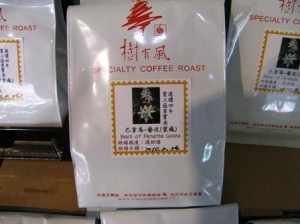 We blogged about the journey of the remarkable coffee landrace called Geisha (or Gesha) a few years ago: from Ethiopia’s forests to the CATIE genebank in Costa Rica to the Peterson family farm in Panama to all over the world, or, more specifically, a hipster coffee shop in Taiwan. But Hanna Neuschwander‘s Coffee in the New Millennium tells the story at much greater length, not to mention with much greater skill. For example, I wish I had thought to describe hillside coffee plantations, with their neat, undulating rows of bushes, as “living corduroy.”
The piece ends with a neat juxtaposition between World Coffee Research’s monumental International Multi-location Variety Trials and the more geographically focussed, but no less ambitious, in its own way, effort by the Peterson family. They’re looking for a new Geisha among hundreds of other Ethiopian landraces they are now testing on their Panamanian farm. I only have one bone to pick with Ms Neuschwander: why not fully acknowledge the role of the genebank at CATIE in all this, rather than just referring, anonymously, to “a research facility in Costa Rica”?