- “Our traditional crops are not just food. They are life. They are our ancestors’ legacy and our children’s inheritance.”
- “Banana diversity is not only a scientific or agricultural asset — it is the sector’s insurance for the future.”
- “Through my parents, I learned that agriculture doesn’t just feed people, it also makes the world more beautiful.”
- “Genebank work depends on accumulated knowledge. If that knowledge isn’t transferred, you don’t just lose experience, you introduce risk.”
- “Conserving and using Africa’s plant genetic resources is not a luxury. It is a necessity for resilient agrifood systems in a changing climate.”
Brainfood: Crop (species) diversity edition
- Small farms contribute a third of the food consumed in high-income nations. And those small farms are disproportionately diverse…
- The Global Spatial Co-Variation Between Crop Diversity and Landscape Heterogeneity. …and crop diversity on farms goes with landscape diversity.
- Beyond Crop Hotspots: Why Overlooked Marginal Agricultural Lands Deserve Urgent Attention. Marginality is not the end of the world (see what I did there?), not least because I’m willing to bet landscape diversity is often associated with it.
- Food Biodiversity and its Association with Diet Quality and Health Outcomes-A Scoping Review. Why should we care about diverse farms? Because diversity in your food is associated with nutritional adequacy, a reduced risk of mortality, or a reduced risk of gastrointestinal cancers. Ok, I know, I missed a step there. There was nothing in the past few weeks in the literature specifically linking farm diversity (the first 3 papers above) and food diversity (the starting point of this paper), but you know the link is there. At least sometimes.
- Long-term agricultural diversification increases financial profitability, biodiversity, and ecosystem services: a second-order meta-analysis. Diversity on farms is not just good for diets, and it’s not that bad for yields either. If 120 years of data and a meta-analysis of meta-analyses are to be believed.
- Global evidence that plant diversity suppresses pests and promotes plant performance and crop production. Another way farm diversity is useful is via pest control. Well, actually, this could count as an ecosystem service, and so an example of the above.
- Ecological drivers of intercropping performance for enhanced global crop production. Ah, that explains how those farm ecosystem services actually works.
- Crop rotations synergize yield, nutrition, and revenue: a meta-analysis. Rotations are diversification too, and good for you too.
- Revitalizing orphan crops to combat food insecurity. But of course the diversification strategy de jour is opportunity crops.
- Value chain research and development: The quest for impact. And for that revolution to happen, we’ll need a better grip on value chains.
- Cultural innovation can increase and maintain biodiversity: A case study from medieval Europe. Yes, agricultural revolution can lead to increased biodiversity.
- Household vegetable agro-biodiversity in northern Vietnam requires diversity in seed sources. Any revolution is going to need good sources of good seeds though.
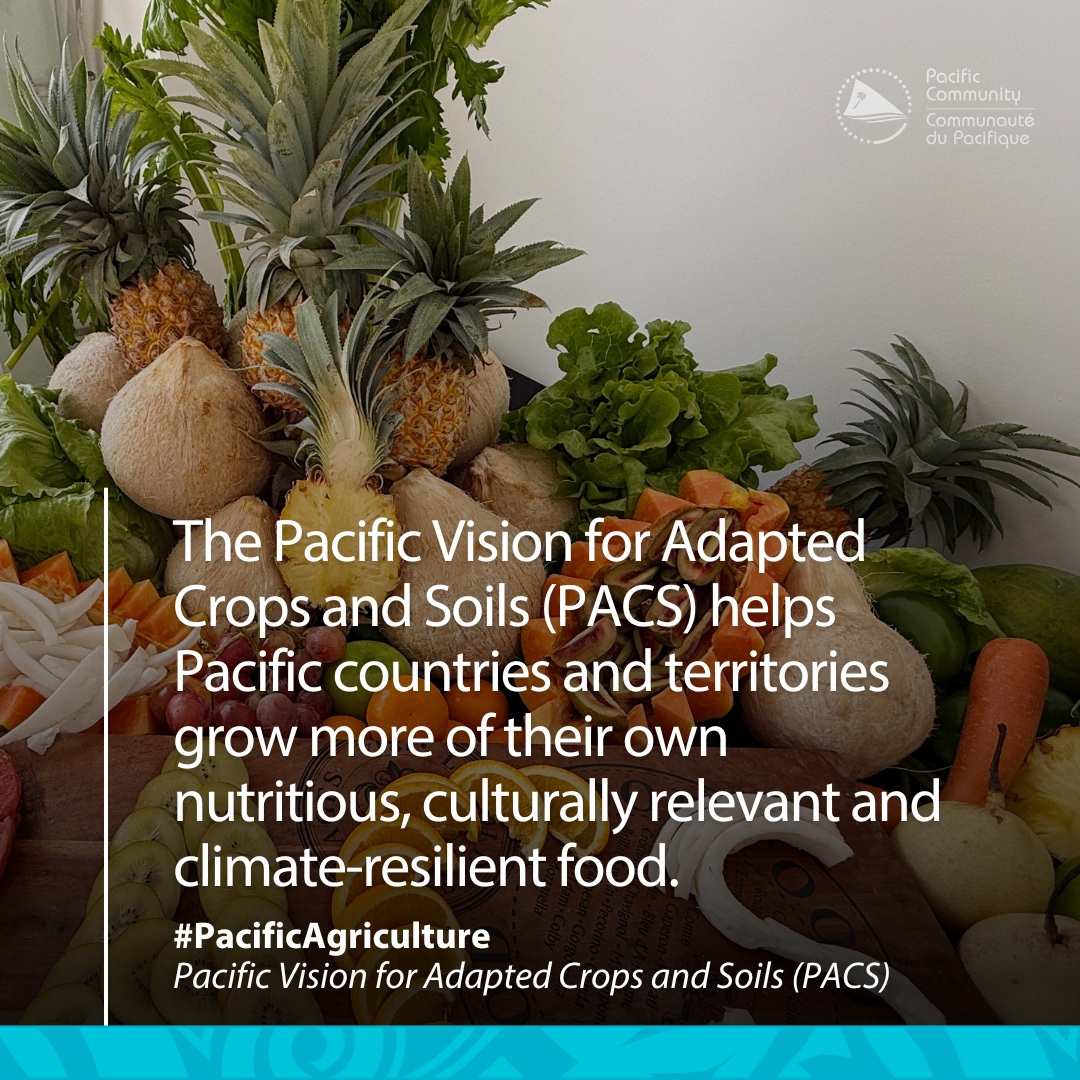
An opportunity for Pacific opportunity crops
Think you can help the Pacific make the most of its lesser-known crops? Apply for a cool job at SPC.
Nibbles: Restoration, Monitoring, CARDI, Margot Forde, Warwick, Slow Beans 2025, Lonicera
- Africa needs good forest seeds.
- And genetic monitoring of the resulting plantings, probably.
- The Caribbean also wants quality seed, and thinks a mobile seed bank is the way to get it.
- The only mobile things about New Zealand’s genebank are its collectors.
- A very mobile donation to the UK’s vegetable genebank.
- Nothing very mobile about Slow Beans 2025, but that’s the point.
- The long journey of honeysuckle.
Nibbles: Ukraine duplication, Mexican native maize, Andean agriculture double, Campanian crops double, Pacific cryobank, Moringa promotion
- A little more safety for Ukraine’s seeds, thanks to a new genebank.
- A little more safety for Mexico’s native maize, thanks to Pres. Sheinbaum.
- A little more safety for Andean agriculture, thanks to Ecuadorian Indigenous women and Inside Mater in Peru.
- A little more safety for Ischia’s zampognaro bean and Amalfi’s lemons, thanks to local people (and GIAHS).
- A little more safety for Pacific crops, thanks to cryopreservation. Breadfruit next?
- A little more safety for moringa? At least in Africa with all its “opportunity crops”?