- Developing radically-new meanings through the collaboration with radical circles: Slow Food as a platform for envisioning innovative meanings. Companies should collaborate with radicals. Presumably in order to turn them. #resist
- Unraveling agronomic and genetic aspects of runner bean (Phaseolus coccineus L.). At least we know what we don’t know.
- Total leaf crude protein, amino acid composition and elemental content in the USDA-ARS bamboo germplasm collections. If you want to use bamboo as feed, you need to choose among the 100-odd species very carefully.
- The Gene Collection of Autochthonous Wine Grape Varieties at the Institute as a Contribution to the Sustainable Development of Wine Growing and Viticulture in Istria. 3591 seems a hell of a lot, but wow.
- Phage Biodiversity in Artisanal Cheese Wheys Reflects the Complexity of the Fermentation Process. Modern methods kill a lot of phages.
- Setting conservation priorities for Argentina’s pseudocereal crop wild relatives. Go north, young CWR researcher!
- Flowering phenology shifts in response to biodiversity loss. Experimentally decreasing diversity in a California grassland advanced phenology.
- Activity, diversity and function of arbuscular mycorrhizae vary with changes in agricultural management intensity. No-till helps VAM, helps soils.
- Oases in Southern Tunisia: The End or the Renewal of a Clever Human Invention? I’m not hopeful.
- Physiological responses to drought stress in wild relatives of wheat: implications for wheat improvement. 4 species show promise.
- PepperHub, a Pepper Informatics Hub for the chilli pepper research community. Hot off the presses.
- Molecular diversity and phylogenetic analysis of domestic and wild Bactrian camel populations based on the mitochondrial ATP8 and ATP6 genes. The wild species is not the ancestor, and the domesticated species is a geographic mess.
- GenMon-CH: a Web-GIS application for the monitoring of Farm Animal Genetic Resources (FAnGR) in Switzerland. Upload data on your herd or flock, end up with a map of where the breed is most endangered.
- Stealing into the wild: conservation science, plant breeding and the makings of new seed enclosures. Ouch!
- GlobalTreeSearch – the first complete global database of tree species and country distributions. 60,065, about 10% crop wild relatives.
Nibbles: Viking dope, Garden survey, Ancient olive press, Proposal writing, Nice figures, Old garden books, Chestnuts, Cannibalism, Saving coffee, Vanilla history, Seed book, Spanish brassica
- Vikings got high.
- “How can you and your garden help us find out more about the global biodiversity associated with the plants in gardens?” Here’s how.
- The oldest olive press in Anatolia.
- “The Mistake: Writing a proposal that showcased knowledge rather than addressing the audience’s needs.” Indeed.
- The Solution: cool downloads from Gapminder.
- The only surviving illustrated Old English herbal. And, from several centuries later, a medieval book on how gardens will save you.
- AramcoWorld on my favourite nut.
- Cannibalism is a choice.
- One kick-ass botanist.
- Saving Ethiopia’s coffee forests. Nah, let’s just map the genome.
- Vanilla has dark side.
- The Profit of the Earth: cool new book on seeds, dark side and all.
- Remember my little trip to the Spanish genebank? What they’re doing on brassica.
Are you a new or a traditional conservationist?
Although discussions about the aims and methods of conservation probably date back as far as conservation itself, the ‘new conservation’ debate as such was sparked by Kareiva and Marvier’s 2012 article entitled What is conservation science?
Two prominent positions have emerged in this debate, that of Kareiva and Marvier, which we label ‘new conservation’ (top-left quadrant of the figure below), and a strongly opposed viewpoint that we label ‘traditional conservation’ (bottom-right quadrant).
These positions can be clearly distinguished by their views on nature and people in conservation on the one hand, and on the role of corporations and capital in conservation on the other hand (the two axes in the figure).
Want to know which quadrant you fall into? Take the survey.
I did, and this is what I got.

Which basically means I’m wishy-washily neutral (agnostic? conflicted?) on the role of the private sector, and apparently think conservation needs to show some benefit for people, in particular poor people. And in that it seems I’m pretty near the centroid of opinion, at least when it comes to the last 100 people who took the survey. Of course, this is for biodiversity conservation. I wonder if the results would be different for conservation of agricultural biodiversity.
A focus on farmers
A whole bunch of interesting reports for your delectation today. From our friends Ola Westengen 1, Teshome Hunduma and Kristine Skarbø at NORAGRIC comes “From Genebanks to Farmers. A study of approaches to introduce genebank material to farmers’ seed systems.”
This report reviews strategies, methodologies and projects that exist to facilitate direct access to genebank material for farmers. Based on a literature review, a survey as well as interviews and data collection from key actors in conservation and development oriented seed system work, we trace trends in the field and develop a typology of approaches.
It’s not long, so read the whole thing. But a couple of things to whet your appetite. First, the categorization of approaches:
- Reintroduction
- Community Seed Banks (CSB)
- Participatory Plant Breeding (PPB)
- Emergency Seed Interventions
- Variety Introduction
- Integrated Seed System Approaches
You can argue with it, but I do like a taxonomy to start things off. Second, the data.
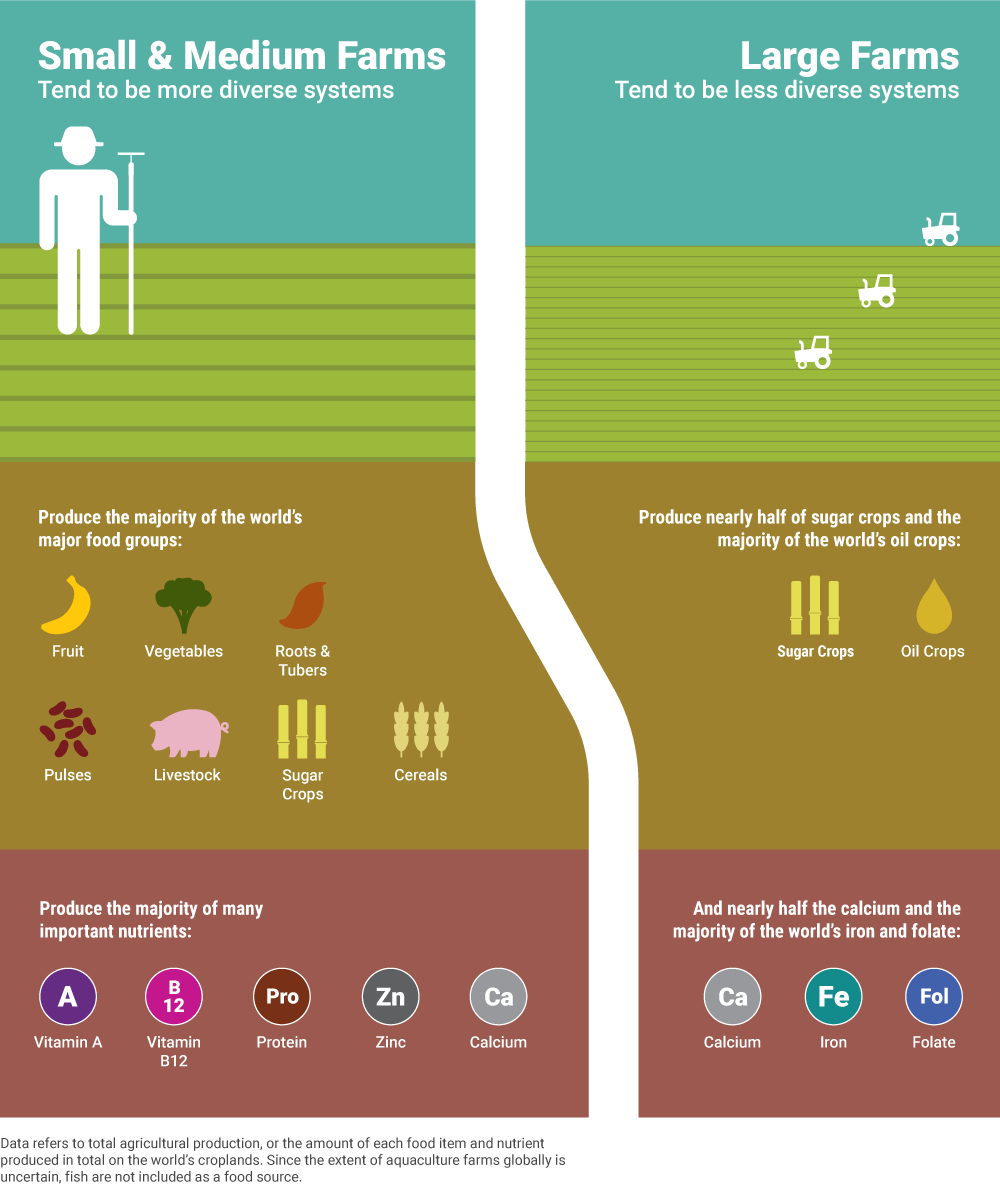
…farmers, farmer organizations and NGOs indeed comprise a substantial user group of the CGIAR genebanks, receiving some 7% of the samples, on par with the distribution to commercial sector requestors.
Always good to have the data. And finally, the challenges: (1) reaching scale, (2) achieving long term sustainability, and (3) legal aspects. In particular scaling up, always a bugbear.
The scale challenge is both a question of seed availability and the number of beneficiaries involved. Genebanks are only able to distribute small quantities of seeds and in all approaches described here the seed multiplication step is to a lesser (e.g. PPB) or larger extent (e.g. emergency seed interventions) critical. There is furthermore a need for exploring ways to scale up in terms of numbers of farmers reached. Some of these approaches, in particular PPB and CSBs, are so resource intensive that the number of farmers directly involved in each project is likely to remain limited. On the other hand, the crowdsourcing approach to varietal evaluation promoted in the Seeds4Needs initiative coordinated by Bioversity International represents a promising strategy for large scale on farm evaluation of diverse portfolio of crops.
Susan Bragdon’s work is quoted in the report, and concidentally she has three (count them) things out this month, published by the Quaker United Nations Office (QUNO).
- Are Small-scale Farmers at the Table? Reflections on Small-scale Farmers’ Participation in Global and National Decision-Making: “…six recommendations for how multilateral institutions that host negotiations or dialogues can encourage and facilitate the participation of small-scale farmers.”
- The Foundations of Food Security – Ensuring Support to Small-scale Farmers Managing Agricultural Biodiversity: “…a rights-based approach supported by governments nationally and internationally [e.g., the Plant Treaty] open broader possibilities of predictable, stable support.”
- The Evolution of Rights and Responsibilities over Agricultural Biodiversity: “…suggestions on how to create a system that supports the critical role that agricultural biodiversity plays in achieving the Sustainable Development Goals.”
The culmination of this flurry of activity from Susan and QUNO is a call to action paper, The Time is Ripe for Governments to Strengthen Sustainable and Food-Secure Farming, in which….
…the Small-Scale Farmers and Agrobiodiversity Dialogue to Action Group (DtA) calls upon the international community to mobilize resources for a more proactive role of the public sector in supporting small-scale farmers, their seed systems and the protection of agricultural biodiversity. Furthermore, the group calls upon national governments to engage in consultation with small-scale farmers to identify what they require in order to effectively engage in activities to support the conversation and sustainable use of biodiversity and to achieve secure livelihoods.
Ok, so there’s a lot to take in here, but if I were to try to encapsulate the take-home message for you, it would be this phrase from the description of the second of Susan’s papers listed above:
…increased private sector interest in agriculture and food systems is reason for equally vibrant governments acting in the public interest.
And international genebanks too, I suppose.
Nibbles: Mango genebank, Japanese elite fruit, Mother Hass, African cattle diversity, New wild ginger, Seed saving, False ivory, ABS, Deforestation, Blight causes, Desert ag, Conserving potatoes, Imperial botany
- Goa to set up a mango genebank. Where do I donate?
- The murky world of really expensive Japanese fruit.
- What is this one avocado tree worth?
- The importance of indigenous African cattle breeds.
- You can never have too many wild ginger species.
- Saving seeds in South Carolina.
- Seeds save elephants.
- IFPRI meeting discusses the increasing complexity of germplasm access and benefit sharing.
- Food giants look to their greenify their value chains. Will they finally decide to secure their genetic base too?
- Irish potato famine: don’t blame the near-fungus.
- Chinese oasis is engineering wonder: and the crops?
- Pachamama and the ever-so-humble potato.
- Review of book on the imperial origins of botany.