- Genotypic difference in salinity tolerance during early vegetative growth of cowpea (Vigna unguiculata L. Walp.) from Myanmar. 3 out of 21 seems a pretty good proportion.
- Epidemiological and evolutionary management of plant resistance: optimizing the deployment of cultivar mixtures in time and space in agricultural landscapes. Best to combine with rotations.
- Barnyard millet global core collection evaluation in the submontane Himalayan region of India using multivariate analysis. Three groups: India, Japan, and everything else.
- Determinants of on-farm cassava biodiversity in Ogun State, Nigeria. Experience and size of farm.
- Historical Alfalfa Landraces Perform Higher Yield Under Dry Farming in Turkey. At least at these two locations in Kars. One does wonder why breeders bother, though.
- Identification and characterization of Vitis vinifera subsp. sylvestris populations in north-western Italy. Was thought to be lost in Piedmont, but 5 small wild populations found, in danger of contamination from the crop.
- Cleome viscosa: a promising underutilized minor crop. Worth a try, though the name is hardly promising.
- Changing values of Farm Animal Genomic Resources. From historical breeds to the Nagoya Protocol. Everything is political now. Welcome to my world.
Nibbles: Beautiful downtown Burbank, Oz rice weed and nuts, Teff embargo, Kew Gardens, Cherokee seeds, Vegetables semantics, MLN progress, Fishy chart, Inuit fishy diet, Bioversity photo fix, African food security, ICIPE cashes in, Root & tuber congress, Smallholders, EU agroecology, Sackville Hamilton, Kiwifruit history, USDA pathogen collection
- Luther Burbank “…was willing to cross just about anything that had leaves…”
- No, rice did not originate in northern Australia. Not in the sense those words are usually used.
- Aussies to embrace cannabis. But not in the sense those words are usually used.
- Australian exporters nuts for more than just macadamia. Ah, interdependence…
- Meanwhile, Ethiopian teff exporters licking their lips in anticipation.
- Kew is bigger than the sum of its parts.
- Cherokee Nation genebanker gets award.
- Yes, BBC, vegetables exist, let’s move on.
- Maize Lethal Necrosis on its last legs? Well, “progress is being made” at any rate.
- The Economist’s daily chart is on declining fish stocks. Why have they gone all warm and fuzzy lately? Something in the zeitgeist?
- Inuit are genetically adapted to their fishy diet.
- Damn it, I lost! Probably fixed.
- Africa sets up a new institution for food security. Which is not the same as hunger, we are told. But is it malnutrition.
- ICIPE scales up and out. More impact than any “new institution” is going to achieve.
- World Congress on Root & Tuber Crops has a new website.
- It’s the smallholders, stupid. Like the ones growing tea in Kenya, frinstance.
- The EU to discuss agroecology. Yesterday, alas.
- IRRI and Plant Treaty to share an IT-savvy genebank manager.
- How kiwifruit became kiwifruit.
- Microbes have collections too.
Nibbles: Kew video, Cannabis taxonomy, Diet change, School beer nazis, Pawnee corn, Salicornia, Oz seed forum, Cuban root forum
- Really stunning video on plant taxonomy through the ages.
- Growers often get cannabis taxonomy wrong. Where’s the video on that?
- Kale or steak? Why not both?
- Enterprising pupils make beer from oats/sorghum breakfast cereal.
- Can always do with more news on Pawnee corn.
- Let them eat Salicornia.
- Australian Seed Bank Partnership organizing a National Seed Science Forum in March 2016.
- The Instituto de Investigaciones de Viandas Tropicales is organizing the Third International Symposium on Roots, Rhizomes, Tubers, Plantains, Bananas and Papayas in Cuba, 20-23 October 2015.
Hacking potato seed systems
How can Solynta make its True Potato Seeds available to developing countries in a socially and economically responsible way, in order to contribute to feeding the world’s growing and often malnourished population?
Good question. And the subject of a True Potato Seeds Hackathon today. The word has been out since July so I’m sure they’ll get a good turnout of clever students and get the problem licked once and for all. Looking forward to the hearing all about it. As no doubt is Solynta. And CIP.
https://twitter.com/Onderwijsloket/status/641524425502892032
Colin gets doctored
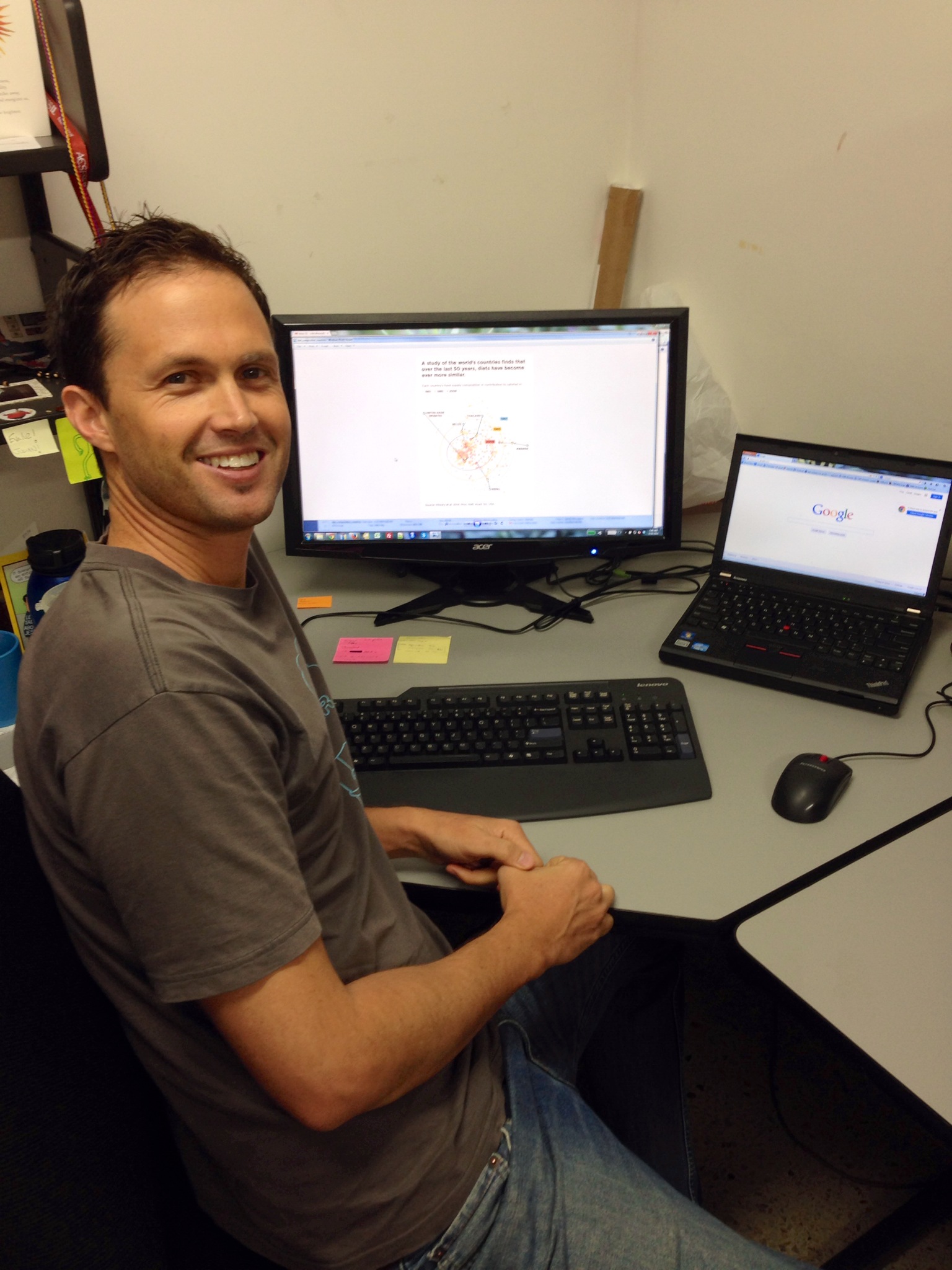 Our friend and occasional contributor Colin Khoury has successfully defended his PhD thesis at Wageningen University. As spelled out in a nice summary over at CIAT, where he was a visiting researcher, Colin’s work addressed four crucial questions dear to our hearts here at the blog:
(1) What is the status of diversity in our food systems, and where are the greatest vulnerabilities?
(2) Where can genetic diversity be found that can be useful in increasing productivity and mitigating these vulnerabilities?
(3) Is this genetic diversity available in the present and in the long term?, and
(4) What steps are needed to improve the ability for researchers to access genetic resources critical for present and future crop improvement?
Congratulations, Colin, and best wishes for the future.