- Developing genetic resources for pre-breeding in Brassica oleracea L.: an overview of the UK perspective. Genebanks will set you free.
- Competitive underutilized crops will depend on the state funding of breeding programmes: an opinion on the example of Europe. Divert some subsidies paid directly to farmers to a Europe-wide breeding programme devoted to NUS.
- Analysis of average standardized SSR allele size supports domestication of soybean along the Yellow River. The middle part, to be precise, where it loops north.
- Bambara nut: A review of utlisation, market potential and crop improvement. Need some functioning value chains, for pity’s sake. That’s why previous promotion efforts failed miserably. Not because they’re, well, not that great a crop? In fact they’re drought-tolerant, tasty, nutritious; but difficult to process, prepare. So do market research to inform breeding.
- State-of-the-art of the Jatropha curcas productive chain: From sowing to biodiesel and by-products. Value chains? You want value chains? I’ve got a state-of-the-art one right here.
- Validation of an allele-specific marker associated with dehydration stress tolerance in a core set of foxtail millet accessions. The marker explains about 27% of total variation in dehydration tolerance in a core collection, which is apparently pretty good.
Forests and Trees: Serving the People of Africa and the World
There’s a big forestry meeting going on in Nairobi, with that title. You can see photos. IISD are on it, of course. And ICRAF and others are twittering up a storm.
No matter how much you market it, people have to see value for your product in order to use it. – Onsango KEFRI #ForestPolicy
— CIFOR-ICRAF (@CIFOR_ICRAF) June 28, 2012
How is agriculture being presented? As the enemy, as usual? Or is the “landscape approach” rhetoric gaining purchase? Anyone want to share their impressions with us?
British pride in its opium processors
Paul Madden, the UK’s High Commissioner in Canberra, Australia, is just back from Tasmania full of enthusiasm for …
UK pharma giant GSK. 1 They process poppies grown by some 400 farms around the island, which go on to become the basis for many important global medicines. It is a very R&D oriented business, as new plant varieties are constantly being developed to produce increasingly sophisticated alkaloids.
If you’ve spent any time on this blog, you’ll know what comes next, and I hate to disappoint.
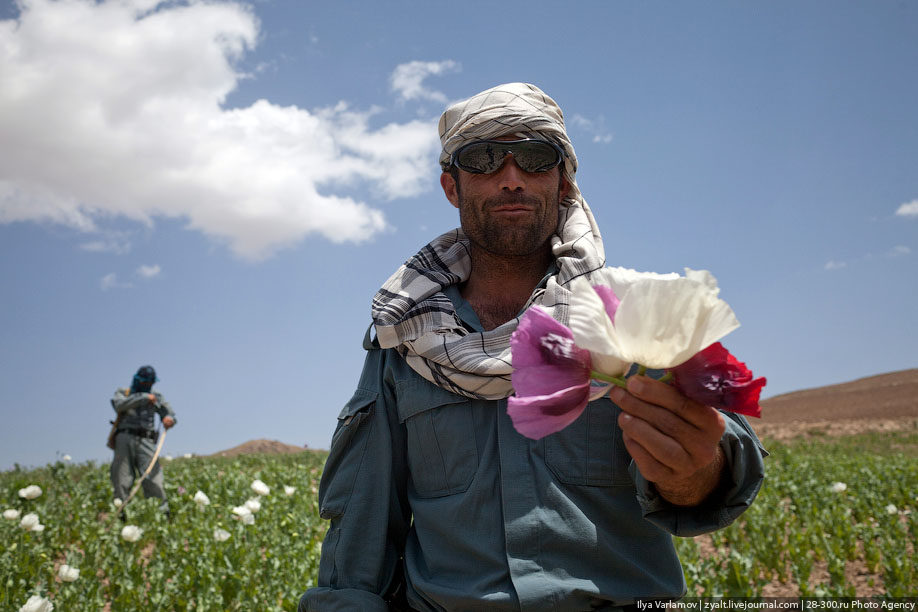
Why on earth is Tasmania encouraged to produce “half the world’s legitimate opiates,” while the same liberty and investment are not afforded the poor farmers of Afghanistan? Britain has interests there too, I believe. Less than a year ago the cumulative cost of those interests was estimated at GBP18 billion. How much would have been needed to create a properly constituted market that would adequately reward Afghan farmers for their resilience, agricultural know-how, and contributions to on-farm conservation? How much might such an effort have saved in not having to combat the people who are supporting Afghan farmers?
It isn’t just the drugs. Madden notes that
Nothing is wasted: the poppy seeds which are a by-product are sold into the catering industry. When you tuck into a lemon and poppy seed muffin anywhere in the world, the chances are the seeds came from GSK in Tasmania.
Funnily enough, that doesn’t impress me either. Were there no sour notes in the High Commissioner’s trip?
My only disappointment was to learn that these poppies are all white, rather than the red ones we associate with Poppy Day in the UK.
How very parochial, and biologically unbriefed.
The red poppies — Papaver rhoeas as opposed to P. somniferum — don’t produce opium or morphine, although they make plenty of thebaine. And believe it or not, thebaine is often the basis for those “increasingly sophisticated alkaloids,” and Tasmanian researchers are working hard to block synthesis at that point, so the poppies would be “useless for the illicit drug trade“.
One final point; they don’t have to be all white, unless you want them to be.
Nibbles: Impact evaluation reviews, Coffee podcast, Pretty on sustainable intensification, Patient capital, Searching for species names, Searching in general, Palestinian agriculture, Korean Neolithic, Mesquite in Africa, CIMMYT-China, Banana trade, UK plant science, Breadfruit, Weed, Beans in Mexico, Macadamia, Organic Cali
- How to do impact evaluation. Required reading.
- Podcast on the history of coffee from Linn. Soc. Required listening.
- How to intensify agriculture sustainably. Meah.
- It may well involve patient capital though.
- This thing will look for all the species names in a piece of text or website. Bound to come in useful one of these days.
- How to use Google properly. And a vaguely agricultural quiz to see if you’ve been listening in class.
- Protecting ancient irrigation system on the West Bank.
- And finding the oldest agricultural site in East Asia.
- The good and bad side of Prosopis in Africa.
- CIMMYT in China.
- The banana as a weapon.
- Touring UK plant science sites.
- Mapping breadfruit to save the world.
- “Over 78 million Europeans (15–64 years) have tried cannabis…” Purely medicinal purposes, man.
- “We wanted to see how farmers are reacting to this global climate change…” Bean farmers, not cannabis farmers.
- If you’re at the Noosa Botanic Gardens, Cooroy, you can see rare macadamias. Yeah but can you smoke ’em?
- Organic seed systems in California. No, not cannabis, settle down.
Nibbles: Agroforestry award, Medieval agrobiodiversity, Agricultural R&D, Fermentation, Climate-smart agriculture, Drought, Aleurites moluccana, Language erosion, Sri Lanka, Livestock, Peas
- My friend Zac bags a well-deserved award.
- Agricultural diversity in the Middle Ages: squirrels and cotton. And there’s probably more where those came from…
- Keeping score on agricultural research spending.
- Fermentables interview.
- What does this climate-smart agriculture look like anyway?
- And do they ever need it in the American midwest.
- And what in blazes is candlenut?
- A tool for documenting endangered languages. Maybe endangered landraces or crops one day too…
- Documented: One Sri Lankan farmer’s thoughts on sustainable agriculture.
- Not to mention the plusses and minuses of livestock — straight from the horse’s mouth.
- And the myth that will not die: King Tut’s peas alive and thriving. Kudos to Jackson Holtz, a properly skeptical reporter.