- Community local knowledge confirms scientific findings on climate change. (Or vice versa?)
- A CIAT video on “the potential of particular forage crops for improving guinea pig production, improving rural nutrition and incomes, and empowering women” in DRC.
- Sustainable eel label. Like that’ll help. h/t The Tracing Paper.
- The small scale farmer who is also Director of Communications and Public Affairs for AGRA runs into a seed shortage. So she plants an unsuitable maize variety and hopes for the best.
Plant breeder incentives; are Plant Patents a help or a hindrance?
A recent blog post added to the arguments questioning the value of property rights over plants. Rather than riff on that from a position of confusion, I sent it over to our friend Kay Chapman at CAS-IP. Here’s her take on the topic.
The original paper being discussed in the blog post asked the question “Did Plant Patents Create the American Rose?”. 1 Moser and Rhode concluded that:
“Using plant patents as the sole indicator of innovation suggests that the answer is yes … A closer look, however, suggests patents played at best a secondary role, and that U.S. breeders mostly used patents strategically to protect themselves from litigation.”
The blog post at Human flower Project (perhaps somewhat unfairly) draws the conclusion from the paper that:
“… there’s evidence that the Plant Patent Act may have served to suppress horticultural innovation rather than stimulate it”
Why is this debate of interest to us? The research is about roses, but the Intellectual Property Rights discussion could apply equally to other plants and crops. In our area this debate becomes even more heated when publicly funded research and development issues are added into the mix.
It’s always useful that we a) take note and learn from these discussions, and b) that we remember the balance that needs to be struck between protecting individual rights, and effects on the wider community. The patent system was always supposed to tread this line. There is more than one type of IPR available to plant breeders. In the US a Plant Patent is just one of three forms of formal protection available for plants from the US Patent and Trademarks Office, along with Plant Variety Protection (PVP) and the Utility Patent.
Protection is certainly not a one-way street. Plant Patent Rights are time limited and the patented plant variety enters the public domain (with no rights attached) once the patent expires. In addition US Plant Patents allow the protected materials to be used for breeding without the need for permission (or a license) from the patent holder, much like the breeder’s exemption for PVP rights. 2 This is not true for utility patent rights over plant varieties.
I would like to question the Human Flower Project’s post in its comparison to Europe. It was noted that:
“European breeders, without the benefit of patents, continued to lead rose innovation”
But what about UPOV? This isn’t mentioned.
The IPR tools are just one piece of the overall innovation puzzle, and the innovation puzzle is a complicated one! By raising the awareness of the uses and characteristics of the tools we can help ensure that public sector research navigates this area better. This could mean taking steps to ensure research falls into the public domain, or using the protections to make outputs available on specific, strategic, development-orientated terms.
 The blog post included a great archive photo of the original Golden Delicious apple tree (1931) caged to “prevent competitors stealing shoots.” That’s certainly one alternative to formal protection!
European agrobiodiversity and biodiversity strategies
 Participatory research and on-farm management of agricultural biodiversity in Europe, by Michel Pimbert, looks like an interesting read. So, in a different way, does the EU biodiversity strategy to 2020. What is not so great is that, at first sight, there doesn’t seem to be much of the former in the latter. But let me get back to you when I’ve gone through both in more detail.
Nibbles: Nabhan, Tilapia, Crowdsourcing taxonomy, Drought, Bees
- Gary Nabhan on the West Bank wall.
- Tilapia not so bad after all?
- Yet another example of crowdsourcing in science.
- Yet another approach to breeding for (mild) drought tolerance.
- Yet another reason why natural history collections are so important.
Diverse lawns are smarter lawns
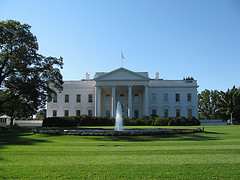 There’s been a lot of talk lately about the demise of the Great American Lawn. Or at least its metamorphosis into something a little more sustainable. Even the White House lawn is not immune to re-development. But a recent post on the Native Plants mailing list of the Plant Conservation Alliance points to what may be the beginnings of a backlash. Here’s what Mark Simmons had to say in response to an article in the Star Tribune entitled Goodbye to Grass (Mark’s comments are reproduced here with his permission):
I really like my lawn – my low maintenance, species-rich, drought-adapted native lawn.
While I agree that lawns can be replaced with alternative vegetation, I think that the lawn is entitled to a place in the American landscape and we should be careful of following the current fashion of demonizing turf. It’s not the lawn that’s the problem is how lawns are manufactured. We take a usually single non-native species that’s been bred to rely on a life-support system of water, fertilizer, pesticides herbicides, and a crazy mowing regimen. If you look at native short grasslands around the world its clear that, in contrast, they are low nutrient, species-rich, systems which are at ecological quasi-equilibrium usually maintained by grazing and or fire. Here at the Lady Bird Johnson Wildflower Center we adopted an ecological approach to turf by testing different mixes of native turf grasses and against a commonly-used non-native turf lawn species (bermudagrass) and measured performance. The multispecies native mix needs less mowing, had less weeds and was a denser, finer (better looking) turf. The results were just published in the journal Ecological Engineering. Sure it can go drought-dormant and brown in summer if it’s not watered. But if that may be an acceptable alternative to no lawn at all.
My young children can’t play baseball in gravel and agaves. And I want to sink a beer on a Saturday evening bare foot in soft, cool turf. Let’s keep doing lawns, just do them smart.