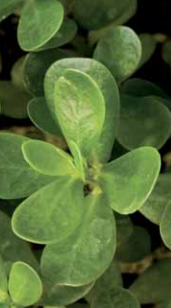
 Sharp-eyed readers may remember a recent Nibble about somewhat quixotic efforts to promote cultivation and consumption of purslane (Portulaca oleracea) in the US, driven more by necessity than conviction. Well, one particularly sharp-eyed reader pointed out that across the border, in Mexico, there’s a whole network of researchers within the Sistema Nacional de Recursos Fitogenéticos para la Alimentación y la Agricultura devoted to this unusual vegetable, which has some half dozen accessions in the bank to play with. There are 106 accessions in Genesys. Purslane researchers of the world, unite! You have nothing to lose but your mineral deficiencies.
Nibbles: Agave pollination, Sanjaya Rajaram, PGR policy history, Ex situ conifers, Botanic garden theft, Kyrgyz forests, Home nurseries, American chestnut, South Pacific action
- Tequila and bats. Two of my favourite things.
- Continuing the Mexican theme, we have a World Food Prize 2014 winner.
- I wonder what he thinks of the changes he’s seen during his illustrious career in the international system for PGR conservation and use.
- I bet there’s a few endangered conifers, and maybe some ex situ collections, in Mexico.
- I hope there weren’t any among the plants stolen from the RBG Edinburgh recently.
- But perhaps there were some fruits and nuts from Kyrgyzstan?
- Well, the way to go is home nurseries, clearly.
- Maybe even with the GM chestnut, why not?
- Meanwhile, in the South Pacific, CePaCT has been really busy.
Nibbles: Colombian chocolate, Urban ag, Subaks, GM debate, Taxonomy online, Genebank tools online, BBC on Kew, Australian seed bank, Cedar of Lebanon, Pizza philosophy, Feijoada
- Move over Juan Valdez. Cacao farmers want to emulate a marketing icon.
- Urban agriculture not all it’s cracked up to be. Living up to that urban ag icon, Cuba, is hard.
- Bali’s iconic, traditional subaks are a complex adaptive system, and much better than modern rice farming alternatives. Makes you wonder why they need protecting, though.
- GM bananas will save us. Not by themselves they wont. I don’t know why I keep linking to this stuff. Nothing at all iconic about it.
- Iconic taxonomic revision tools online.
- Something else that’s online is a bunch of tools for analyzing genebank data. Soon to be iconic, no doubt. As soon as people use them. So get cracking.
- Huge BBC documentary on Kew coming up. I bet the iconic Millennium Seed Bank will feature.
- Speaking of iconic genebank buildings, today’s one comes from Australia.
- The history of an iconic Middle Easter tree?
- The philosophy of an iconic Italian delicacy. Well, Neapolitan, really.
- And in honour of the World Cup (I refuse to put FIFA in front, let them sue me), an iconic Brazilian dish. And don’t worry, those beans are safe. Somewhere iconic.
Nibbles: Banana to SPC, Urban livestock, Ag & nutrition, Nutrition data, PPB, Brazil nut certification, Indian beer, Sheep genome
- Banana germplasm gets around.
- Kenyan urban cows get around. Not local breeds, though…
- Can agriculture deliver both resilience and nutrition? FAO thinks so.
- Yeah, about that: we’re gonna need better data.
- Participatory varietal selection in Nepal. Not as novel as made out here, surely.
- Brazil nut gets it all.
- Today’s beer story comes from India.
- Sorting the sheep from the goats, the molecular way.
Brainfood: Lima been diversity, Cassava diversity, Urban soils, Oil palm seed supply, Ginger ploidy, Certification, Gene flow, Maize & drought, Coffee seed storage, Pathogens on seeds, Wheat breeding, Intensification tradeoffs
- Genetic structure within the Mesoamerican gene pool of wild Phaseolus lunatus (Fabaceae) from Mexico as revealed by microsatellite markers: Implications for conservation and the domestication of the species. Three, not just two, genepools.
- Farmer’s Knowledge on Selection and Conservation of Cassava (Manihot esculanta) Genetic Resources in Tanzania. Farmers exchange landraces, some of which are widespread and others more restricted in distribution. Only about 10% are new, but some have been lost.
- Urban cultivation in allotments maintains soil qualities adversely affected by conventional agriculture. You can farm in cities without killing the soil.
- Social institutional dynamics of seed system reliability: the case of oil palm in Benin. Farmers are being increasingly screwed.
- Natural occurrence of mixploid ginger (Zingiber officinale Rosc.) in China and its morphological variations. About a quarter of plants have both diploid and tetraploid cells, and they look different; no plants are wholly tetraploid. Weird.
- Conserving biodiversity through certification of tropical agroforestry crops at local and landscape scales. Certifying the coffee or cacao farm only is usually not enough.
- Is gene flow the most important evolutionary force in plants? May well be, which means that conservationists, among others, need to take it into account. Fortunately, they have the data-rich genomic tools to do so.
- Greater Sensitivity to Drought Accompanies Maize Yield Increase in the U.S. Midwest. It’s agronomy’s fault.
- Desiccation and storage studies on three cultivars of Arabica coffee. Yeah, not orthodox. Didn’t we know that already though?
- Seed-borne fungi on genebank-stored cruciferous seeds from Japan. There’s lots of them. And something needs to be done about it.
- Delivering drought tolerance to those who need it; from genetic resource to cultivar. In making synthetic wheat, you can fiddle with the AB as well as the D genomes, but then you have to phenotype properly under target stress conditions, and have a way of tailoring the resulting global public goods to local needs.
- The Effects of Agricultural Technological Progress on Deforestation: What Do We Really Know? Not as much as we thought we did.
- Large-scale trade-off between agricultural intensification and crop pollination services. Intensification bad for pollinators in France, so bad for agricultural productivity and stability.
- Achieving production and conservation simultaneously in tropical agricultural landscapes. Intensification good for smallholder income in Uganda, bad for birds. If only birds were pollinators.