- What wild foods did Neolithic farmers eat? Archaeobotanists want to know. So do we.
- British Foreign Office promotes economics of biodiversity and ecosystems in SE Asia. Nothing to say on agrobiodiversity.
- Maybe they could learn how to use Nature to profit from the San in Namibia?
- You say mango, I say bango, lets call the whole thing off.
- Is this now the biggest urban farm in the world?
- Silly veg stuff on Twitter. My favorite so far is Okra Winfrey.
- Seedy Sunday, approaching fast in the UK, cries out for some silliness.
Brainfood: Conservation policy, Grasspea breeding, Modeling rice diseases, Maize roots, Literature on new oil crops, Native vs non-native trees in Indonesian city parks, Cherimoya maps, Darwin Core, Seed dispersal and conservation, Oxalis variation, Polyploidy and variation, Pollinators, Microsymbionts, Plant migration, Culture and agriculture
As ever, we have added most of these references to our public group on Mendeley, for ease of finding. “Most?” we hear you say. “What gives?” Well, Mendeley and some academic publishers still don’t play nicely. There’s nothing to stop you adding the paper in question by hand, if you’re so inclined, but we don’t really have the time. And if you do, please do it right.
- Why are some biodiversity policies implemented and others ignored? Lessons from the uptake of the Global Strategy for Plant Conservation by botanic gardens. Because there are no feedback mechanisms?
- Genetic improvement of grass pea (Lathyrus sativus) in Ethiopia: an unfulfilled promise. Conventional breeding for low ODAP hasn’t worked, so forget about solving that problem through conventional breeding, and move on to other problems, or use genetic transformation.
- Modeling and mapping potential epidemics of rice diseases globally. It is not particularly well done, but one is surprised to see it done at all. NiM 1
- Morphological and physiological characteristics of corn (Zea mays L.) roots from cultivars with different yield potentials. More roots means more yield. Among some modern varieties anyway. Under some conditions. NiM
- Trends in literature on new oilseed crops and related species: Seeking evidence of increasing or waning interest. And finding it, alas. Sort of. NiM
- The green colonial heritage: Woody plants in parks of Bandung, Indonesia. Native species used to be used more, and should be used more again. NiM
- Mapping Genetic Diversity of Cherimoya (Annona cherimola Mill.): Application of Spatial Analysis for Conservation and Use of Plant Genetic Resources. Cool maps of microsat hotspots.
- Darwin Core: An Evolving Community-Developed Biodiversity Data Standard. The way out of Genebank Database Hell? Well, maybe the match that will light the torch that will show the way out.
- Seed dispersal in changing landscapes. Fragmentation, harvesting, invasions and climate change affect seed dispersal in ways that need to be understood by conservationists. NiM. And the BBC’s more verbose take on it.
- Distribution models and a dated phylogeny for Chilean Oxalis species reveal occupation of new habitats by different lineages, not rapid adaptive radiation. Title says it all, really. It’s not that a single lineage exploded as new habitats became available. Old lineages were pre-adapted to the new habitats. 2
- Extensive chromosomal variation in a recently formed natural allopolyploid species, Tragopogon miscellus (Asteraceae). Polyploidy leads to all hell breaking lose in the genome for generations.
- Overplaying the role of honey bees as pollinators: A comment on Aebi and Neumann (2011). It’s the wild bees, hoverflies and other native pollinators, stupid! But still.
- Arbuscular Mycorrhizas Reduce Nitrogen Loss via Leaching. 40 times less, no less.
- Distributional migrations, expansions, and contractions of tropical plant species as revealed in dated herbarium records. Eppur si muovono. And more on the paper. And more on herbarium digitization in general. what can I tell you, I’ve got apophenia.
- Ecological and socio-cultural factors influencing in situ conservation of crop diversity by traditional Andean households in Peru. There are influences; and why wouldn’t there be?
Nibbles: Oca illustrated, Urban herbs, Ancient rice
Will this work, I wonder
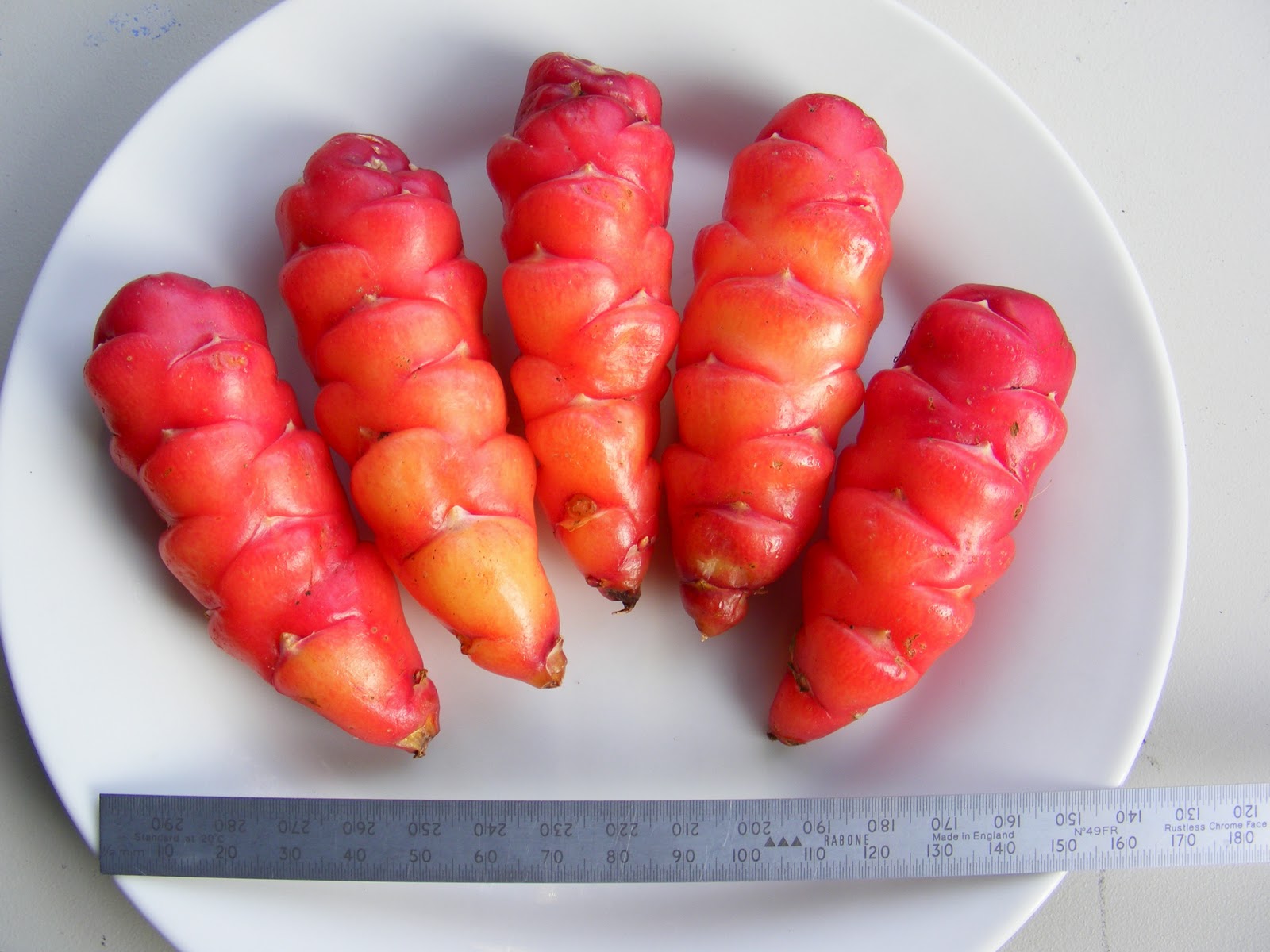
Blue-ribbon oca- Urban farmers making real money, in London and Moffat.
- Lots, lots more on the archaeology of rice, from Dorian Fuller.
Leftovers: Coconuts, Genebank, Vegetables, Famine, Danish, Bissap, Brazil nuts, Dates, Papas y mas, Fruit, Rice, Everything
We found these nibbles at the back of the fridge, and they’re not too mouldy, so lets fry them up before we get anything fresh.
- Boss of India’s agricultural research exhorts international coconut genebank to do more and be heard.
- And, first out of the gate for 2012, Nepal says it will create a new genebank for plants “on the verge of extinction”.
- Immigrant urban agriculture — in Cleveland, Ohio.
- Aid man Edward Carr interviewed: “drought does not equal famine”
- Meetings on “biodiversity” in Europe, under the Danish presidency. Indigestible?
- Hibiscus tea, what a tonic.
- Resources Research goes crazed for book about brazil nuts, and other Amazonian agrobiodiversity.
- A cure for Bayoud disease of dates? And it’s based on medicinal plants!
- Pueblos andinos reciben ejemplares de tubérculos nativos. Otra vez?
- Guerilla grafting? Now there’s an idea for “covert agriculture”. Wonder what the graftees think.
- “The giant panda of the botanical world”? Blimey. A new reserve for real wild rice.
- Huge Satoyama-style paper from Bioversity on THE USE OF AGROBIODIVERSITY BY INDIGENOUS AND TRADITIONAL AGRICULTURAL COMMUNITIES IN: ADAPTING TO CLIMATE CHANGE And they’re the ones doing the shouting.
Nibbles: Bees and climate change, Native American seeds and health, Sustainable harvesting and cultivation, Tree death, Grass and C, Vegetables, Fishmeal, Big Milk
Today: Connections Edition, in which we pick low-hanging fruit, think outside the box, and join up the dots.
- The return of a US bumblebee. Is it due to climate change?
- “These foods have meaning” for a Native American tribe (and for Africans for that matter). So will they be able to check out their seeds? And sequence the hell out of them, like rice?
- If you want to harvest palm heart sustainably in the Colombian Andes, only take 10% of any population a year. Is cultivation an option?
- Trees are dying in the Sahel. And yet boffins don’t know how to kill them. No word on what the grass is doing.
- Vegetables and nutrition: the theory and the practice. Of course, a lot of them are grown in cities.
- Why is so much fish made into fishmeal rather than eaten? Location, location, location. Of markets, that is. Kind of like for milk.