- Lloyd Kreizter gives a fig. And then some.
- Strawberries for spacepeople?
- Calling all garden guerillas. You can now buy seed bombs.
- Nicola at Edible Geography takes orange-fleshed people to a whole new level.
- BMGF takes photo story of orange-fleshed sweet potatoes to a whole new level.
- How to preserve biodiversity: take a cutting of it.
- Kashmiri saffron is beset on all sides … but help is at hand.
School gardens
[I]nstead of building up and knocking down an army of straw men from a distance, Luke Tsai actually visited the [Martin Luther King, Jr. Middle School in Berkeley, California] garden to see how it works and talked to the teachers and principal about the Edible Schoolyard.
What a strange idea, to go and look at something you’re reporting on and see what the people involved make of it, rather than just using your own gut feelings. But Luke Tsai did just that before he wrote about The Edible Schoolyard. Let’s hope this kind of effort never catches on. The Ethicurean wrote about Tsai’s piece and gives lots of context and links.
May Day Guerilla Gardening
There’s something satisfying about a bunch of guerilla gardeners unilaterally declaring 1 May to be International Sunflower Guerilla Gardening Day. Not for them the stuffy business of official approval and endless process. Just go ahead and do it. Today!
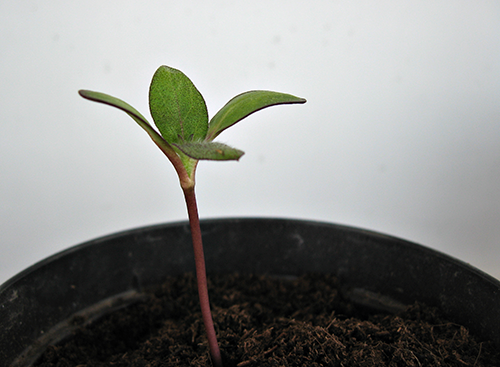
Alas, the process of informing people who might be interested seems also to be an ignored part of the process. Or maybe it’s just us. Anyway, unprepared for an actual act of guerilla gardening, I instead dedicated myself to transplanting half a dozen Black Magic sunflower seedlings. Maybe when they’re a bit bigger and sturdier I’ll consider sending a couple off to fight the good fight. And they are wild relatives.
Before:
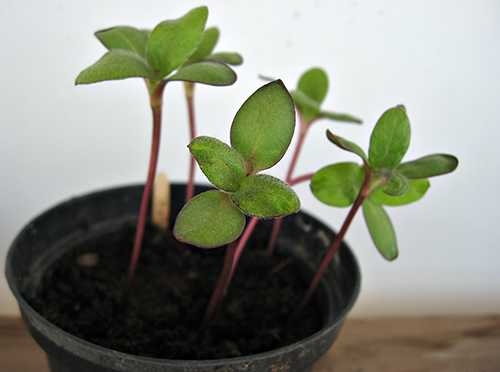
After:
Nibbles: Microlivestock, Urban ag, Ag info, School meals in Peru, Agrobiodiversity indicators, Nature special supplement, Extension, Breeding organic, Forgetting fish in China, Deforestation, Russian potatoes, Fijian traditional knowledge, Megaprogrammes
- FAO slideshow on Egyptian rabbits.
- Journal of Agriculture, Food Systems, and Community Development calls for papers on urban agriculture. Will some look at the intersection with art?
- And IAALD re-launches its journal.
- “…students receiving online encouragement from the national soccer star reported going to bed at night looking forward to receiving their iron supplements the following morning.” Great, of course. But why not iron-rich foods?
- Speaking of which, there’s a new FAO publication on “Foods counting for the Nutritional Indicators Biodiversity.” No, I don’t quite understand it myself. Something to do with what foods count towards CBD biodiversity targets. Well, it’s the International Year of Biodiversity, after all.
- Indeed it is. And Nature makes the most of it. See what I did there? No agriculture though, natch.
- Extension gets a forum?
- Biotech can be useful in organic farming? Say it ain’t so!
- More evidence of shifting baselines in people’s perceptions of biodiversity. How quickly they forget.
- Will they forget what forests look like?
- The Vavilov Institute potato collection needs a thorough going over. Taxonomically, that is.
- Making salt in mangrove ponds in Fiji. Nice video. Not agrobiodiversity, but it’s my blog and I like seeing Fiji on it.
- CGIAR abandons agrobiodiversity? Say it ain’t so. Anyone?
- Speaking of megaprogrammes, there’s going to be one on agricultural adaptation to climate change, right?
- “So, how does huitlacoche taste? Does it matter?? LOOK AT IT! I guess it would be fair to say it doesn’t taste as truly horrible as it looks. The flavor is elusive and difficult to describe, but I’ll try: ‘Kinda yucky.'” Don’t believe him! And read the rest.
San Francisco apes Svalbard global seed vault — locally
In our line of work it is common to hear people rave about the importance of informal seed systems for ensuring that farmers have access to the agricultural biodiversity they need and want — in developing countries. Not so common elsewhere. Now, from the Ethicurean, comes news of a project to build a Backyard Seed Vault, which sounds very like an informal seed system in San Francisco, California. The project’s instigator, who is co-executive director of a group called Agrariana (and check out their origins and mission statement), has this to say:
We’re looking for approximately 100 San Francisco Bay Area gardeners for the inaugural season who would like to work as a community to save heirloom vegetable seed. … Agrariana will lead hands-on workshops in participants’ gardens on properly saving seed. The Backyard Seed Vault is working in conjunction with the Bay Area Seed Interchange Library (BASIL), a project of the Ecology Center, for their immense knowledge on properly saving, labeling, cataloging, and storing seeds. Seeds not redistributed to participants will be donated to BASIL, providing an opportunity for any community member to “check out” seed to grow in their gardens. Gardeners of all skill levels are welcome to participate.
Sounds like a lot of fun. And there are actually lots of similar seed exchanges all over Europe, North America, Australia etc etc. Will they, I wonder, ever attract the attention of people who study the value of informal seed networks elsewhere?