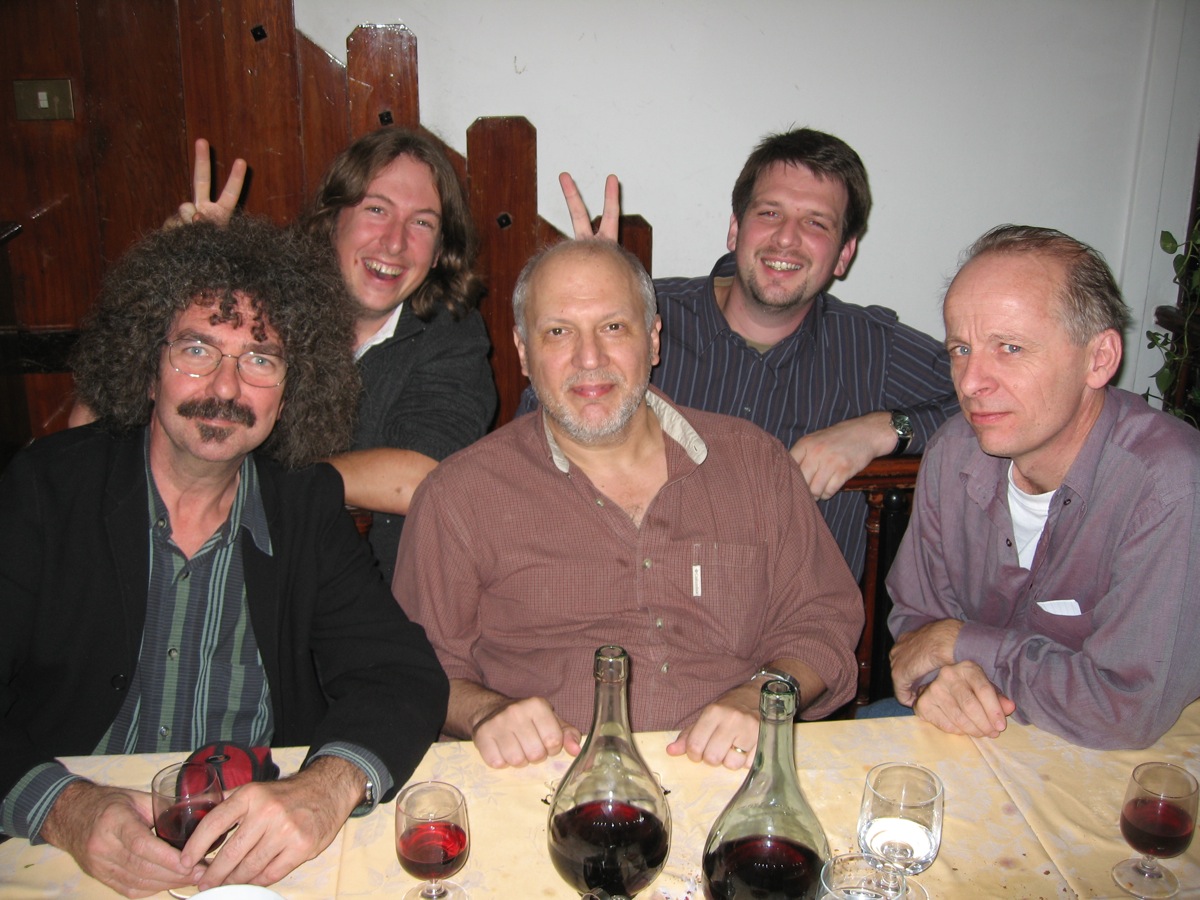
 Throwing caution, and the principles of risk management, to the wind, agro.agro.biodiver.se bloggers gathered in a single location last week, and there’s the photograph to prove it. We won’t bother to name names, or to draw attention to the huge lack of diversity assembled. We will note that we all ate something different although we all drank the same stuff. And had a jolly good time.
The farmers of the future
“America, we cannot turn back. Not with so much work to be done… Not with an economy to fix and cities to rebuild and farms to save.â€
Berry Go Round #11 is up
With lots of great stuff, from pretty much all over the Plant Kingdom. Enjoy!
Onion tears
A Kiwi researcher laments that regulations make it pointless to work on GMO’s in New Zealand. He mentions a particular sad case in point: the obstacles to testing tearless onions. There is no reference to this in the trade-journal for this type of news, the Onion 1. What to say? Perhaps there is nothing wrong with making onions tearless, but I feel it would be a loss. Not having rational objections, I search for a metaphysical answer. Something like Carlos Drummond de Andrade’s poem about an opposite case:
Mal do Século
Como se não bastasse o mundo de tristezas
entre céu e terra,
principalmente em terra,
vem o agrónomo, descobre
o vÃrus da tristeza nas laranjeiras.
My translation:
Times of Sorrow
As if there wasn’t enough sadness
between heaven and earth
particularly on earth
comes the agronomist, discovers
the sadness virus in the orange trees
Agrobiodiversity and HIV/AIDS
On World AIDS Day, it would be nice to be able to point to how agrobiodiversity can help the more than 40 million people living with HIV around the world. Not easy, alas. There’s an FAO strategy-type document from 2003. And what looks like a project from Wageningen University that’s just about to end. But very little else in the way of concrete examples, at least that I could find in the first few pages of a Google search. There was a piece today reviewing the role of nutrition in dealing with HIV/AIDS, but this mainly dealt with supplements. Can this possibly be it?