- Seed security response during COVID-19: building on evidence and orienting to the future. First and foremost, support farmers save their seeds.
- Blended finance for agriculture: exploring the constraints and possibilities of combining financial instruments for sustainable transitions. How about supporting farmers save their seeds?
- Dynamic conservation of genetic resources: Rematriation of the maize landrace Jala. Genebanks helping farmers save their seeds.
- Molecular Parallelism Underlies Convergent Highland Adaptation of Maize Landraces. Early farmers saving their maize seeds in the Mexican highlands eventually helped out farmers in the Andean highlands. With GIF goodness.
- Open access to genetic sequence data maximizes value to scientists, farmers, and society. How will it help farmers save their seeds?
- Applying Knowledge of Southern Seed Savers to Community-Based Agricultural Biodiversity Conservation Practice. The people saving and swapping seeds in the Ozarks respond to films, need how-to manuals, and could be a tad more diverse. I suspect this is not just true in Arkansas.
- Characterization of wheat germplasm conserved in the Indian National Genebank and establishment of a composite core collection. Farmers trying to save their seeds rejoice.
- Heritable epigenetic diversity for conservation and utilization of epigenetic germplasm resources of clonal East African Highland banana (EAHB) accessions. Hey, it’s not just seeds. Methylation patterns follow geography but not morphology in a genetically uniform group of vegetatively propagated cultivars.
- Blind spots in global soil biodiversity and ecosystem function research. Not now, soil biodiversity, I’m too busy dealing with seeds.
- Narrow genetic base shapes population structure and linkage disequilibrium in an industrial oilseed crop, Brassica carinata A. Braun. Landraces of Ethiopian mustard and improved lines cluster in separate groups, but overall diversity is low. Not enough seeds saved, perhaps?
- High-Throughput Genome-Wide Genotyping To Optimize the Use of Natural Genetic Resources in the Grassland Species Perennial Ryegrass (Lolium perenne L.). Only possible because of saved seeds.
- Presence of resveratrol in wild Arachis species adds new value to this overlooked genetic resource. I hope we’ve saved enough seeds.
- Main Challenges and Actions Needed to Improve Conservation and Sustainable Use of Our Crop Wild Relatives. It’s quite difficult — and insufficient — to save the seeds of wild species, but we should do it nevertheless.
- Influence of diversity and intensification level on vulnerability, resilience and robustness of agricultural systems. Why we should all save seeds.
Beating a (cassava) virus in SE Asia
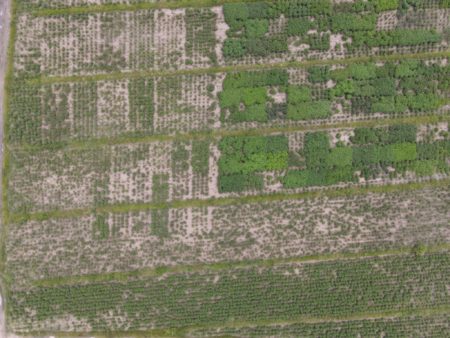
CMD being Cassava Mosaic Disease, one of the most damaging of crop viruses. The question, and photo, come from a recent tweet from a regional team coordinated by the entity formerly known as CIAT that is trying to develop “sustainable solutions to cassava disease in SE Asia” with support from ACIAR and CGIAR’s Research Program on Roots, Tubers and Bananas.
Some of the resistant varieties that are doing so well in the photo are identified elsewhere in the thread as the IITA lines TME3, TMEB419, TMS980581, TMS980505 and TMS920057.
But this PowerPoint from Dr Xiaofei Zhang explains that those were only the beginning. Additional promising material came from a bunch of other sources.
Agriculture on the steppe
I’ve been sitting on a couple of linked press releases from the Max Planck Institute for the Science of Human History for a few months now and it’s about time I did something about them. So here goes. The releases summarize two papers deriving from the analytical work of Dr Shevan Wilkin and her colleagues on skeletal remains previously excavated from Mongolian archaeological sites spanning a wide range of dates back to 5000 year ago.
The first paper focuses on dairy proteins from dental plaque to suggest that steppe pastoralists in what is now Mongolia started consuming ruminant milk at least 5000 years ago. Horse milk came in about 3000 years ago, coinciding with the first evidence of horse bridling and riding, and was mainly fermented. Finally, camel milk started to be consumed during the Mongol Empire, 800 years ago. How lactose intolerant populations dealt with this is still unknown, but may have involved changes in the gut microbiome.
Next, looking at the N and C isotopes in dental enamel and rib collagen enabled the researchers to investigate the wider dietscape. In particular, they found evidence of increased millet (Panicum miliaceum and/or Setaria italica) 1, consumption around 2000 years ago, but only in some individuals, mainly living close to the heartland of the polity (the Xiongnu Empire) which developed at that time.
Clearly, some ancient Mongolians did not completely conform to the nomadic herder stereotype of popular imagination.
LATER: Speaking of broomcorn millet (Panicum miliaceum), here’s a paper that just came out that dates its arrival in Europe to the 16th century BC, and its rapid spread during the subsequent two centuries, i.e. during the Bronze Age. So, having been domesticated 8000 years ago in NE China, it was being widely consumed in Europe before Mongolia. And here’s one we prepared earlier…
Brainfood: Niche modelling, Post-2020 double, CC & productivity, Wild cacao, Popcorn data, Regulations, Duplicates, Oz ag, Kenya diversity, Stressed wheat, DUS, Connectivity, Population differentiation
- ntbox: an R package with graphical user interface for modeling and evaluating multidimensional ecological niches. Yes, another one, deal with it.
- Global targets that reveal the social–ecological interdependencies of sustainable development. The post-2020 framework should not have separate targets for social and ecological outcomes.
- Integrating agroecological production in a robust post-2020 Global Biodiversity Framework. Case in point?
- The Historical Impact of Anthropogenic Climate Change on Global Agricultural Productivity. We’ve lost a decade of productivity growth since 1961.
- Exploring the diversity and distribution of crop wild relatives of cacao (Theobroma cacao L.) in Colombia. Habitat protection needed.
- The Global Popcorn Project. Here comes the data! And more.
- Editorial: Leeway to Operate With Plant Genetic Resources. Research Topic on ABS, biosafety and IPR regulations and how they affect use of PGR.
- SNP Markers and Evaluation of Duplicate Holdings of Brassica oleracea in Two European Genebanks. Out of 10 pairs of accessions with similar names in the Russian and Nordic genebanks, 5 showed genetic differences, and 3 of these also morphological differences.
- History of crop introductions, breeding and selection in Australia: The 140 years from 1788. But at what cost?
- The welfare effects of crop biodiversity as an adaptation to climate shocks in Kenya. Crop diversity mitigates income variability risk caused by climate.
- Genetics of yield, abiotic stress tolerance and biofortification in wheat (Triticum aestivum L.). Well that seems sorted then.
- Is plant variety registration keeping pace with speed breeding techniques? No?
- Global Cropland Connectivity: A Risk Factor for Invasion and Saturation by Emerging Pathogens and Pests. Nice maps of ease of movement among different cultivation areas of vegetatively propagated crops. Could be used to model movement of genetic resources as well as of pests/diseases?
- Global patterns of population genetic differentiation in seed plants. More population differentiation for tropical, mixed‐mating, non‐woody species pollinated by small insects, and lower for temperate, outcrossing trees pollinated by wind. Could perhaps be mashed up with this fragmentation database.
Nibbles: Yunnan mushrooms, Torres Is bananas, Boxgrove, Gluten trends, Apple rootstocks, USDA horticulture job
- There’s a sort of mycological culinary hotspot in Yunnan… Yeah, I thought that too.
- Signs found of old banana cultivation in Australia. Well, kinda. As in not as old as in PNG, and not mainland Australia.
- Really, really old horse butchery site in southern England excavated. When the Brits ate horses. Well, kinda.
- New wheat is pretty much like old wheat, gluten-wise at least.
- Breeding better apple rootstocks at USDA. A hitherto somewhat neglected aspect of apple genetic conservation and improvement.
- Speaking of USDA, here’s another job.