It’s been a little more than a year, and the entries for The First Great Agro.agro.biodiver.se Competition are all in! Time to decide.
Pass the bottle
This was mentioned in a recent comment, but it is worth highlighting more visibly. Andy Waterhouse from the Department of Viticulture and Enology, and Charlie Bamforth, Anheuser-Busch Professor of Malting and Brewing Sciences, both at UC Davis, debate wine vs beer. Sounds like a win-win to me.
Malaria pics
I don’t think you need to have had malaria to be profoundly moved by John Stanmeyer’s photographs for National Geographic 1, though no doubt it helps. The New Agriculturist gathered some thoughts on the link between malaria and agriculture some years back. I picked up my dose here:
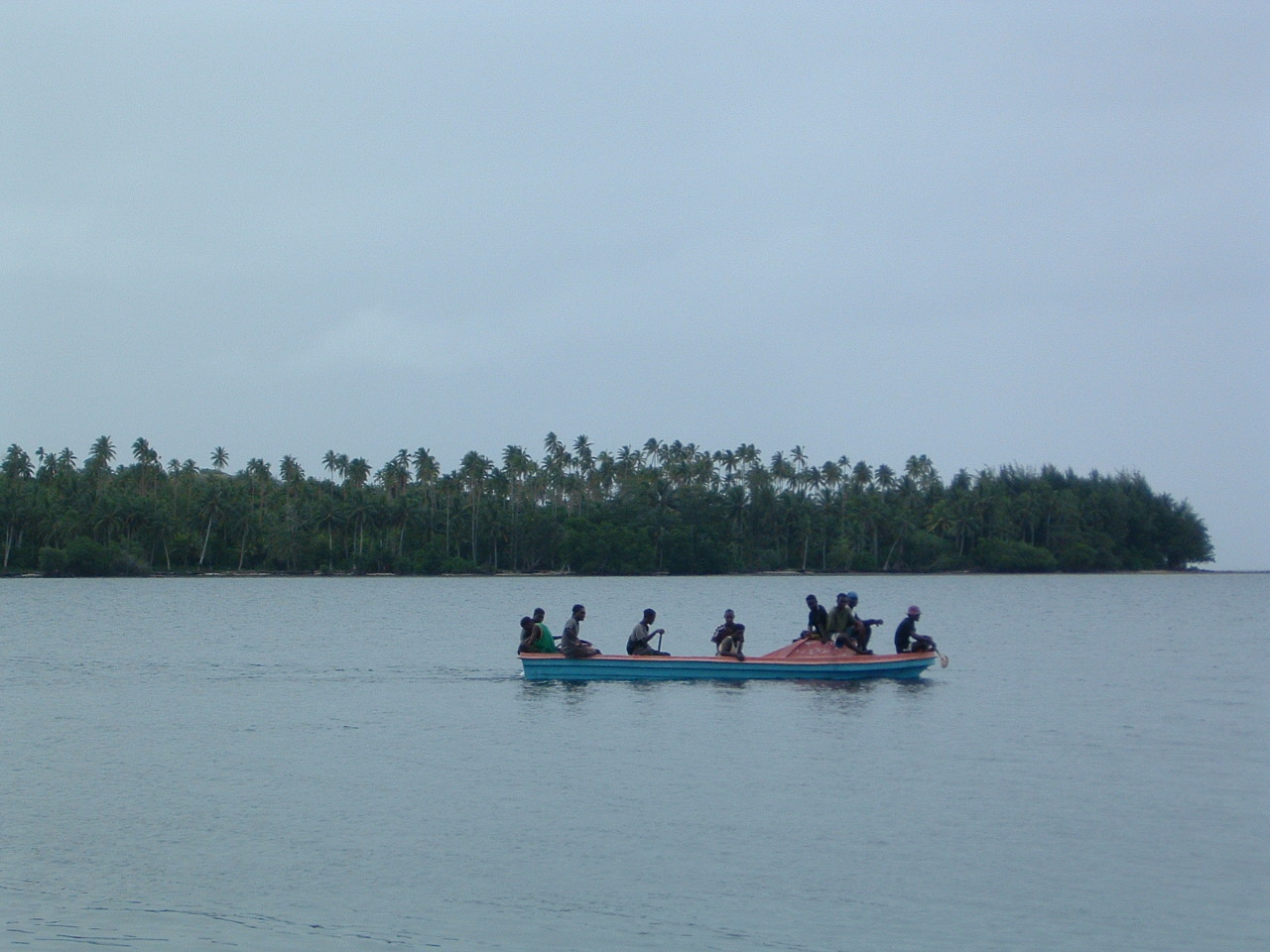
But I didn’t have to cope with it while also trying to grow enough food for my children. And talking of pictures on watery themes, check out these from the BBC on a Nigerian (cat)fishing festival.
Recommendations of the Underutilized Plants Symposium
This just in from Hannah Jaenicke, Director of the International Centre for Underutilized Crops (ICUC):
Over 200 delegates from 55 countries gathered in Arusha, Tanzania 3-7 March 2008 for an International Symposium on “Underutilized plant species for food, nutrition, income and sustainable development”. The Symposium was co-convened under the umbrella of the International Society for Horticultural Science (ISHS) by the International Centre for Underutilised Crops (ICUC) with the Global Facilitation Unit for Underutilized Species, Bioversity International, GlobalHort, Plant Resources of Tropical Africa, and the World Vegetable Center, whose Regional Center for Africa was the local host.
The symposium was a resounding approval of the need for a working group on underutilized plant species to provide a voice to those who are working on these plants. The delegates endorsed the International Society for Horticultural Sciences’ working group on underutilized plants, which is co-chaired by Dr Hannah Jaenicke of the International Centre for Underutilised Crops (ICUC) and Dr Irmgard Hoeschle-Zeledon of the Global Facilitation Unit for Underutilized Species (GFU), and filled it with life and suggestions for future collaboration on research and development projects. A report will be published and circulated in the near future.
Following three days of over 150 scientific presentations, the participants developed a series of recommendations around four pertinent issues.
Continue reading “Recommendations of the Underutilized Plants Symposium”
Populations on the edge
 Are populations on the edge of the geographic range of a species not so important to conserve as more central ones? That’s the provocative question tackled by a recent meta-analysis. 2 Theory would suggest that marginal populations should be less diverse, and therefore possibly of less conservation value. But the theory has never really been properly tested, so the common assumption that marginal populations are less diverse is just that — an assumption.
Its theoretical underpinning is that individuals and populations are likely to be fewer and more widely spaced on the periphery compared to the centre of the range of a species. That means that effective population sizes are likely to be lower and isolation more pronounced, which suggests that genetic diversity within populations should be lower and among populations (differentiation) higher in marginal areas.
That turns out to be more or less the case for the 134 population genetic studies (of both plants and animals) reviewed by the authors: “any given species is more than twice as likely to show the predicted pattern as not, and usually a change in diversity is accompanied by a parallel change in differentiation.”
There are some caveats, however. The differences were generally pretty small. The actual mechanisms producing them not clear (were the differences the legacy of historical environmental changes or the result of ongoing evolution?). The sampling of species was biased taxonomically and geographically. Plus all of the studies looked at (supposedly) neutral variation rather than traits which might actually have adaptive importance.
But the results are nevertheless intriguing. Especially when you think about how they might be different for crops (I don’t think any of the 134 studies reviewed were of domesticated species). If anything, one would predict geneflow from the center to the periphery, and indeed among peripheral populations, to be stronger in crops than in wild species. That means that differences in genetic diversity and differentiation between centre and periphery are likely to be even smaller, maybe non-existent. Sounds like something worth checking.