- Large-scale genome-wide association study reveals that drought-induced lodging in grain sorghum is associated with plant height and traits linked to carbon remobilisation. To reduce lodging, better to select for stay-green (delayed leaf senescence) than for short stature and lodging resistance per se. Here’s a Twitter thread by one of the authors summarizing the findings.
- Green revolution ‘stumbles’ in a dry environment: Dwarf wheat with Rht genes fails to produce higher grain yield than taller plants under drought. At least it doesn’t lodge, though, right?
- A Core Subset of the ex situ Collection of S. demissum at the US Potato Genebank. From 149 to 38, keeping 96% of all marker diversity.
- Migration through a major Andean ecogeographic disruption as a driver of genotypic and phenotypic diversity in a wild tomato species. I guess if you were going to make a core collection for this you could do worse than sample ecogeographically diverse and isolated spots. Tricky to conserve in situ though.
- DNA barcoding of Oryza: conventional, specific, and super barcodes. 6 hypervariable regions in the chloroplast genome can serve as rice-specific DNA barcodes. Assuming you agree on species concepts in the first place.
- A “Global Safety Net” to reverse biodiversity loss and stabilize Earth’s climate. The 50% of the Earth to save to save the Earth.
- Three Key considerations for biodiversity conservation in multilateral agreements. Plan, model, assign responsibility.
- Mashes to Mashes, Crust to Crust. Presenting a novel microstructural marker for malting in the archaeological record. Aleurone cell breakdown in archaeobotanical remains is a robust indicator of beer-making. I bet they find it everywhere now.
- The agroecology of an early state: new results from Hattusha. Huge underground grain silos, with each container holding grain from multiple sites, which could be evidence of tax-paying. But no word on beer.
- Informal Seed Traders: The Backbone of Seed Business and African Smallholder Seed Supply. Lots of room for engagement, and considerable upside. If I were to pick out just one high-potential intervention, it would be providing training in seed testing.
- Restoring cultivated agrobiodiversity: The political ecology of knowledge networks between local peasant seed groups in France. I’m sure they’re testing their seeds.
- A Protective Role for Accumulated Dry Matter Reserves in Seeds During Desiccation: Implications for Conservation. Cells must have >35% dry matter to be able to withstand desiccation.
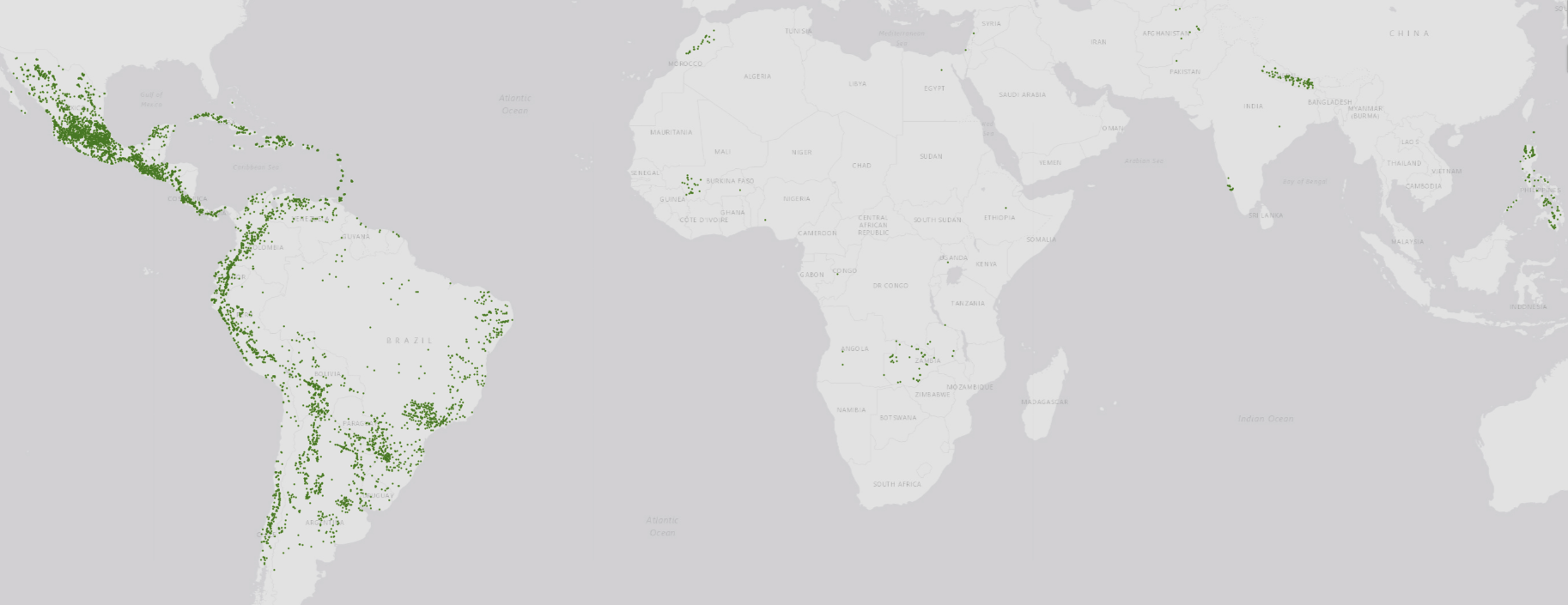
- Multiple lines of evidence for the origin of domesticated chili pepper, Capsicum annuum, in Mexico. It looks like we — inexplicably — missed this the first time around. Chilli, maize and beans originated in different parts of Mexico.
- Ecological intensification and diversification approaches to maintain biodiversity, ecosystem services and food production in a changing world. Though you can change one thing at a time, it’s better to redesign the whole system. But is the better the enemy of the good?
- Refining the genetic structure and relationships of European cattle breeds through meta-analysis of worldwide genomic SNP data, focusing on Italian cattle. 2 groups among Italian breeds: North-Central breeds linked to Alpine and Iberian breeds, and Podolian-Sicilian breeds with links to the Balkans.
- The Archaeology of Pig Domestication in Eurasia. Independent domestication in northern Mesopotamia by 7500 BC (extensive management) and China by 6000 BC (maybe intensive); failed to take off in Japan, for interesting reasons.
- Vegetative States: Potatoes, Affordances, and Survival Ecologies. The potato has both helped to underpin and resist state coercion. The Hittites would have worked something out, though, I feel.
- Holocene coastal evolution preceded the expansion of paddy field rice farming. Rice only moved south from the lower Yangtze 2-3000 years ago, once costal land opened up. No word on affordances.
Realigning priorities for a healthier food system
The Global Panel on Agriculture and Food Systems for Nutrition just came out with its latest report: “Future Food Systems: For people, our planet, and prosperity“. There’s a lot to, ahem, digest in there, but Dr Shenggen Fan has a brief blog post to whet the appetite. He summarizes the policy objectives of the necessary transformation of the food system as follows:
- sustainably producing the right mix of healthy foods in sufficient quantities
- ensuring those foods are readily accessible and at low cost
- making healthy and sustainable diets affordable to everyone
- empowering consumers to make informed food choices
Which is fair enough, but how do you do that when governments, the private sector and households have different, and sometimes competing, goals and priorities? Well, for that you have to go to page 179-182 of the report, where you’ll find a long menu of stuff. But let me give you a taste. Here’s what I happen to think are the most mouth-watering single actions that should be taken by different actors, according to the report:
- Governments: Rebalance subsidies going to the agriculture sector in ways that better support sustainable, healthy diets.
- Development partners: Realign donor policy priorities towards supporting actions which promote simultaneous achievement of planetary and human health goals.
- Commercial food companies: Increase private R&D to support locally appropriate nutrient-rich foods and share related intellectual property with public research entities.
- Civil society and citizens: Advocate for institutional investors and asset managers to link human and environmental health goals to their core strategies.
Needless to say, crop diversity comes into all these, and indeed many, if not all, of the other actions the report recommends. Though, naturally, I would say that, wouldn’t I?
And since I’m here, maybe this is a good time to talk about another report also just out, IPES-Food’s latest: “The Added Value(s) of Agroecology: Unlocking the Potential in West Africa.” Thanks to the Panels’ social media team for highlighting in a tweet what the report says on page 71:
…farmer seed systems are relegated to ‘informal’ status, and their potential to support diversified agroecological farming is held back. While farmer seed systems for cereal crops are highly developed, access to vegetable seeds remains low. As a result, the risks of genetic uniformity of crops, loss of biodiversity, and farmer indebtedness are high, and the prospects for agroecology are severely constrained. As Issouf Sanou, coordinator of FENOP, testifies: “In the beginning, people believed that improved seed would improve farmers’ living conditions, but we very quickly realized that improved seeds had a lifespan [ …] Improved seeds means pesticides, means fertilizers […] And all this creates dependence.”
An opportunity for realigning some of those subsidies and priorities?
The state of plants — in genebanks and out
More than 4,000 species of plants and fungi were discovered in 2019. These included six species of Allium in Europe and China, the same group as onions and garlic, 10 relatives of spinach in California and two wild relatives of cassava, which could help future-proof the staple crop eaten by 800 million people against the climate crisis.
That’s from The Guardian’s article on the release of Kew’s latest State of the World’s Plants and Fungi. Nice to see a shout-out for crop wild relatives, and indeed orphan crops. But it’s not all sweetness and light, of course.
Two in five of the world’s plant species are at risk of extinction as a result of the destruction of the natural world…
This year the report comes with a full volume of scientific publications in the journal Plant, People, Planet. That includes International collaboration between collections‐based institutes for halting biodiversity loss and unlocking the useful properties of plants and fungi, which has case studies on the CWR Project and Genesys.
International collaboration across biodiversity projects offers numerous benefits. Through the eight case studies presented we have identified the five key benefits to collaboration: (a) synergy; (b) greater efficiency; (c) sharing resources; (d) greater impact and leverage; and (e) transfer of knowledge and technologies. We remain mindful that successful collaborations are environments where trust and professional respect within and between partners flourish.
‘Nuff said.
Brainfood: Cali ag, Wild potato double, Enset diversity double, Banana collecting, Disease models, Wild resistance, SP drought, Wheat blast, MAGIC wheat, Biological control, Teosinte, Artemisia, Multiple cropping, Mungbean value, Traditional crops, Singing dogs, Biodiversity metric, Hotspots
- Projected temperature increases may require shifts in the growing season of cool-season crops and the growing locations of warm-season crops. In California’s Mediterranean climate, cool season crops will have to shift in time, and warm-season crops in place.
- A “Mega Population” of the Wild Potato Species Solanum fendleri. Large population, safe, accessible and very diverse. Who needs genebanks, right?
- Survival of Solanum jamesii Tubers at Freezing Temperatures. Very unusual trait in both the crop and the wild relatives, apparently.
- Diversity and uses of enset [Ensete ventricosum (Welw.) Cheesman] varieties in Angacha district, Southern Ethiopia: call for taxonomic identifications and conservation. 55 varieties in 75 homegardens, 88 in the field genebank, many in only one or the other.
- Impact of Climate Change on the Diversity and Distribution of Enset (Ensete ventricosum (Welw) Cheesman) in Ethiopia: A Review. Some are moving, some are dying. I guess we really need in vitro and cryo after all.
- Filling the gaps in gene banks: Collecting, characterizing and phenotyping wild banana relatives of Papua New Guinea. Much diversity of banana ancestor still not in genebanks, but people are on the job.
- Modeling the Impact of Crop Diseases on Global Food Security. Genetic diversity is not enough.
- What natural variation can teach us about resistance durability. That genetic diversity is not enough, apparently.
- Wheat blast: a new threat to food security. We have the genes to fight it, but they won’t be enough.
- Limited haplotype diversity underlies polygenic trait architecture across 70 years of wheat breeding. I hope at least those genes can be found in this MAGIC population based on European bread wheat varieties from the past few decades.
- Potential Short-Term Memory Induction as a Promising Method for Increasing Drought Tolerance in Sweetpotato Crop Wild Relatives [Ipomoea series Batatas (Choisy) D. F. Austin]. Wild sweet potatoes have the genes to remember drought stress, and hence cope with it better. Will they be enough though?
- Ecological pest control fortifies agricultural growth in Asia–Pacific economies. Biological control has been worth USD 15-20 billion a year for non-rice crops over the past 100 years across 23 countries. But how much is the interaction with genetic diversity worth?
- Evaluation of the contribution of teosinte to the improvement of agronomic, grain quality and yield traits in maize (Zea mays). Wild relative not just a source of stress resistance, could be useful for yield potential too.
- “It may also have prevented churchgoers from falling asleep”: southernwood, Artemisia abrotanum L. (fam. Asteraceae), in the church bouquet, and its contemporary presence as a heritage plant in Sweden. The fragrance lingers.
- Multiple cropping systems of the world and the potential for increasing cropping intensity. Multiple cropping on 12% of total agricultural area, which could increase, but probably not as much as was thought.
- Impact and returns on investment of mungbean research and development in Myanmar. Four varieties coming out of international research created economic gains of USD 1.4 billion from 1980-2016. That’s a ROI of about 90, but it took 20 years to kick in.
- Are Traditional Food Crops Really ‘Future Smart Foods?’ A Sustainability Perspective. Well, they could be, but maybe we don’t have 20 years.
- New Guinea highland wild dogs are the original New Guinea singing dogs. …which are therefore not extinct in the wild as used to be thought. Or so the DNA says.
- WEGE: A new metric for ranking locations for biodiversity conservation. That’s “Weighted Endemism including Global Endangerment,” and it hasn’t been tried on plants. Yet.
- Toward Unifying Global Hotspots of Wild and Domesticated Biodiversity. They overlap a lot but not completely. Expect WEGE to be applied at some stage.
The fun begins for the amazing Denise Costich
Another transition at an international genebank. Dr Denise Costich, head of the CIMMYT maize genebank, is retiring. Here’s what they call her “exit seminar.”
Denise and her team kept 32,000 accessions safe, and made them available to all. Denise is moving on, but that work continues.
Happy retirement, Denise!