Chasing melons in Central Asia

I’ve been meaning to post a link to Eric Hansen’s entertaining “In Search of Ibn Battuta’s Melon” for ages. Published in 2015 in AramcoWorld, its title says it all. Intrigued by a wonderful, and wonderfully expensive, Mirza melon from California, Hansen recalls the following passage from the celebrated Moroccan traveller, and resolves to find the melons in question — “the best of all dried fruit” no less — in their native Uzbekistan.

There are no melons like Khorezmian melons maybe with the exception of Bukharian ones, and the third best are Isfahan melons. Their peels are green, and the flesh is red, of extreme sweetness and firm texture. Surprisingly, they cut melons into slices, dry them in the sun, put them into reed baskets as it is done with Malaga figs, and take them from Khorezm to the remote cities in India and China to sell. They are the best of all dried fruit.

Needless to say, he finds them, or something that he decides is much like them, though he also comes to see the pointlessness of the quest.

In the closing hours of my quest, I realized that over the 681 years since Ibn Battuta’s visit to Khorezm, Uzbek farmers had been hard at work perfecting the art of melon breeding and growing. By saving old local melon seeds, creating and improving new varieties and passing down specialized horticultural practices according to regional water quality, soil types and climatic conditions, they had no doubt improved the disease resistance, shelf life, yield, texture, degree of sweetness and complexity of flavors of melons throughout the different growing areas. And then there was the issue of random variations due to natural hybridization in the melon fields to consider. With all of these factors in mind, it would not be surprising—even likely—that Ibn Battuta’s melon had evolved into something quite different, disappeared entirely, or simply fallen out of favor because other, more recent varieties were better.

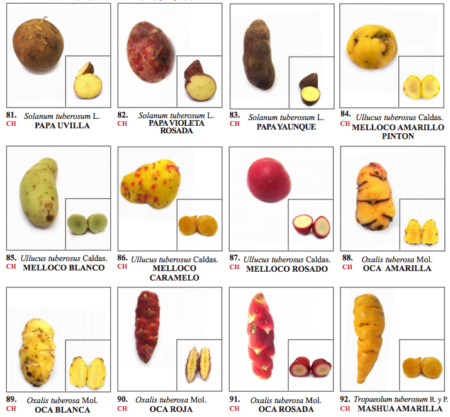
Hansen has helpful guides in Uzbekistan, not least the authors of the book Melons of Uzbekistan. He doesn’t however, link to the book, which is available online. I’m happy to rectify that oversight here.

Unique digital identifiers everywhere

A recent letter in Nature:

Members of the Consortium of European Taxonomic Facilities have adopted a consistent citation system for an estimated 20 million biological and geological specimens from European collections. We encourage researchers, publishers and other institutions to engage with this initiative by citing the full specimen identifier in their publications and data sets. These specimens provide reference material for research on evolution, genetics, mineralogy, ecology and taxonomy — hence the need for a reliable identification system for citation (see A. Güntsch et al. Database 1, bax003; 2017). Our system assigns a unique and permanent Uniform Resource Identifier (URI) to each specimen. It follows Linked Open Data principles (see www.w3.org/tr/ld-bp) by including a redirection facility to human- and machine readable representations of the specimen. It also gives credit to the collectors and custodians. For example, the alpine plant specimen Leptinella scariosa Cass., held by the Royal Botanic Garden in Edinburgh, UK, and collected in Chile by Charles Darwin in 1834, is referred to by the URI http://data.rbge.org.uk/ herb/E00070244.

Quentin Groom, Botanic Garden Meise, Belgium.
Roger Hyam, Royal Botanic Garden Edinburgh, UK.
Anton Güntsch, Botanic Garden and Botanical Museum, Berlin, Germany.

Genebanks are doing something very similar.

Genetic erosion statistic in the dock

Colin is pissed:

Or, to put it more succinctly, stop complaining and propose something better!

Something better than

“In the past century, the number of crops and their varieties, and the genetic diversity within them, has declined as a general trend in farmers’ fields around the world.”

to be precise. Which is in turn supposed to be better than the 75% genetic erosion number, which is a fake statistic whose origin Cary Fowler points out in another comment.

Ok, I’m game, give me a few days.

And meantime, thanks for the meme.

Who moved my rice?

In reply to our plea for a definitive crop distribution dataset, Andy Nelson, who used to work at IRRI and is now at the University of Twente, had this to say in a comment.

Well, this may be one way to go.

Compiling the best expert information with subnational statistics as a first cut and then using that to guide further detailed mapping with remote sensing/big data.

I’d like to see more efforts in crowdsourcing for crop mapping as well.

“This” is “RiceAtlas, a spatial database of global rice calendars and production.” 1

Because of the need to develop a spatially explicit global database of rice calendars that includes detailed information on rice areas with more than one rice crop in a year, we compiled the most detailed available datasets of rice planting and harvesting dates by growing season in all rice-producing countries, and linked the database to subnational production data. ‘RiceAtlas’ provides a spatial and seasonal distribution of the world’s rice production. RiceAtlas contributes to the GEOGLAM (Group on Earth Observations Global Agricultural Monitoring) initiative and regional partnerships, such as the Asian Rice Crop Estimation and Monitoring initiative (Asia-RiCE), by providing information for agricultural monitoring requirements, satellite data acquisition plans, and global crop outlook.

Here’s what it looks like.

With regards to crowdsourcing, there are various initiatives out there that could be relevant, including Geo-Wiki‘s Field Size Campaign.

Anyway, no doubt the RiceAtlas will eventually end up on the website of the CGIAR’s Consortium for Spatial Information. One bit of this, the SRTM 90m Digital Elevation Data, made a recent list of Top 15 Free GIS Data Sources.