- Performance of 50 Lebanese barley landraces (Hordeum vulgare L. subsp. vulgare) in two locations under rainfed conditions. 47 individual plants were as good or better than the 2 checks in terms of grain yield per plant.
- Phylogenetic analysis of Aceh cattle breed of Indonesia through mitochondrial D-Loop region. A specific haplotype, mainly indicus but with some taurus.
- Genetic diversity assessment of in situ and ex situ Texas wild rice (Zizania texana) populations, an endangered plant. Diversity is dynamic in situ, and some of it is missing ex situ.
- Genetic Diversity, Population Structure, Parentage Analysis, and Construction of Core Collections in the French Apple Germplasm Based on SSR Markers. 2163 accessions divide into Old Dessert, Old Cider, and Modern Cultivar subgroups.
- Community Food Security: Resilience and Vulnerability in Vanuatu. High population pressure associated with shorter fallows but higher yields, not associated with purchasing of imported foodstuffs. Not clear what high crop diversity associated with.
- Using genomic repeats for phylogenomics: a case study in wild tomatoes (Solanum section Lycopersicon: Solanaceae). Repetition can be useful.
- The cocoa bean fermentation process: from ecosystem analysis to starter culture development. It takes a microbial community.
- Wild harvest: distribution and diversity of wild food plants in rice ecosystems of Northeast Thailand. There’s much more to rice than rice.
- Free seeds and food sovereignty: anthropology and grassroots agrobiodiversity conservation strategies in the US South. Activist anthropology for better food systems.
- Comparative Study of Hulled (Einkorn, Emmer, and Spelt) and Naked Wheats (Durum and Bread Wheat): Agronomic Performance and Quality Traits. Will need to fiddle with classic baking techniques.
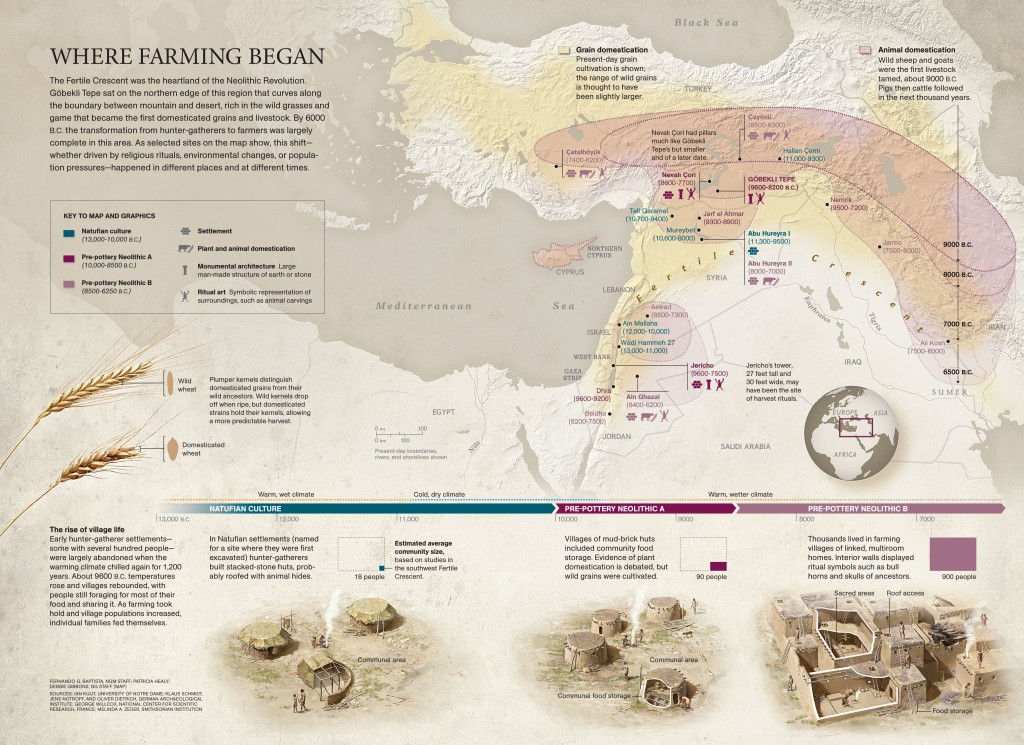
Mapping the Neolithic Revolution
Somehow we missed this great map of the Fertile Crescent from National Geographic. It came out just before Christmas, but we should have caught it, really. I hope they do similar ones for other cradles of agriculture around the world.
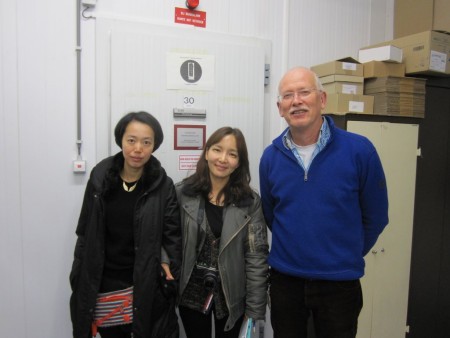
Changes at CGN
Congratulations to Bert Visser (pictured, right, entertaining visitors from the Korean genebank recently) on his retirement from the Centre for Genetic Resources, the Netherlands, the Dutch national genebank. And likewise congratulations to Sipke Joost Hiemstra and Theo van Hintum on taking over his responsibilities.
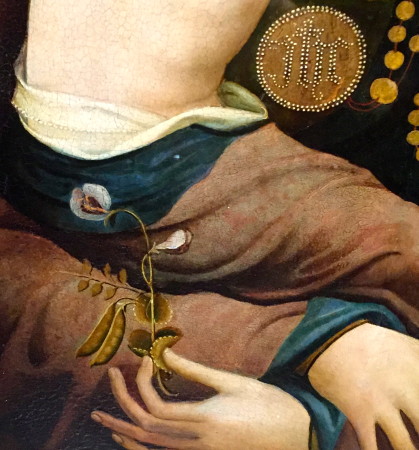
Virgin with crop wild relative
Went to the Wallraf-Richartz-Museum in Cologne at the weekend, and what should I find but a 15th century tryptich of the Madonna holding a crop wild relative flower? Apparently it symbolises virginity.
Brainfood: In situ & CC, Rare livestock phenotypes, SSR & wheat seeds, Kelp genebank, Recognizing pig landraces, Indian pigs, Benin yams, Colombian Manihot, Enset seed, Okra transgenes
- Using in situ management to conserve biodiversity under climate change. It can probably be done, but more empirical evidence of long-term effects is needed.
- Rare phenotypes in domestic animals: unique resources for multiple applications. Difficult to conserve, but worth doing, and biotech will help.
- Patterns of SSR variation in bread wheat (Triticum aestivum L.) seeds under ex situ genebank storage and accelerated ageing. SSRs don’t help figuring out viability loss.
- Germplasm banking of the giant kelp: Our biological insurance in a changing environment. Chileans conserve female and male gametophytes in low light, at 10 °C, in Provasoli media.
- Authentication of “mono-breed” pork products: Identification of a coat colour gene marker in Cinta Senese pigs useful to this purpose. This particular pig breed can be easily and accurately identified.
- Microsatellite and Mitochondrial Diversity Analysis of Native Pigs of Indo-Burma Biodiversity Hotspot. Native Indian pigs closer to Chinese than European.
- Yam (Dioscorea spp.) responses to the environmental variability in the Guinea Sudan zone of Benin. Different varieties respond differently to different conditions, at least as regards yield.
- Diversity and genetic structure of cassava landraces and their wild relatives (Manihot spp.) in Colombia revealed by simple sequence repeats. Lots of geneflow.
- Current availability of seed material of enset (Ensete ventricosum, Musaceae) and its Sub-Saharan wild relatives. Not much.
- Monitoring adventitious presence of transgenes in ex situ okra (Abelmoschus esculentus) collections conserved in genebank: a case study. None found.