- Sesame Crop: An Underexploited Oilseed Holds Tremendous Potential for Enhanced Food Value. Nice overview of diversity conservation and use. Lots of scope for improvement.
- Microsatellite based genetic diversity among the three water buffalo (Bubalus bubalis) populations in Turkey. No great evidence of differentiation among populations into breeds, unlike in India, say.
- Crop diversification, dietary diversity and agricultural income: empirical evidence from eight developing countries. More crops grown, more dietary diversity.
- Temporal evolution of the genetic diversity of Chaerophyllum bulbosum: Consequences on the genetic resources management. French article on the lack of hydrographic structuring, or erosion, in the genetic diversity of largely forgotten apiaceous root vegetable in Germany.
- Merging applied gene conservation activities with advanced generation breeding initiatives: a case study of Pinus radiata D. Don. Because introduction of new diversity from native areas is difficult, foresters in non-native areas should better understand and use the diversity in existing provenance/progeny trials.
- Comparative Analysis of Genetic Diversity among Cultivated Pigeonpea (Cajanus cajan (L) Millsp.) and Its Wild Relatives (C. albicans and C. lineatus) Using Randomly Amplified Polymorphic DNA (RAPD) and Inter Simple Sequence Repeat (ISSR Fingerprinting. 16 Indian accessions classified in 3 clusters, with the stress resistant material mostly together. More diversity in the wilds.
- The role of varietal attributes on adoption of improved seed varieties: the case of sorghum in Kenya. Not just about yield.
- Vegetation in Bangalore’s Slums: Boosting Livelihoods, Well-Being and Social Capital. What’s needed is trees with short stature, narrow trunks, medium canopy, high value. How many species like that can you think of?
- Comparison of fatty acid composition of oil from original and regenerated populations of wild Helianthus species. It’s not the same.
Zeroing in on the Sustainable Development Goals
I don’t know exactly what a zero draft is, but the one for the Sustainable Development Goals is out. Remember, these are what will replace the Millennium Development Goals, when that battle is declared won.
Sustainable Development Goals are accompanied by targets and will be further elaborated through indicators focused on measurable outcomes. They are action oriented, global in nature and universally applicable to all countries, while taking into account different national realities, capacities and levels of development and respecting national policies and priorities. They integrate economic, social and environmental aspects and recognize their interlinkages in achieving sustainable development in all its dimensions.
It looks like we’re starting out with 17 goals:
1. End poverty in all its forms everywhere
2. End hunger, achieve food security and adequate nutrition for all, and promote sustainable agriculture
3. Attain healthy life for all at all ages
4. Provide equitable and inclusive quality education and life-long learning opportunities for all
5. Attain gender equality, empower women and girls everywhere
6. Secure water and sanitation for all for a sustainable world
7. Ensure access to affordable, sustainable, and reliable modern energy services for all
8. Promote strong, inclusive and sustainable economic growth and decent work for all
9. Promote sustainable industrialization
10. Reduce inequality within and among countries
11. Build inclusive, safe and sustainable cities and human settlements
12. Promote sustainable consumption and production patterns
13. Promote actions at all levels to address climate change
14. Attain conservation and sustainable use of marine resources, oceans and seas
15. Protect and restore terrestrial ecosystems and halt all biodiversity loss
16. Achieve peaceful and inclusive societies, rule of law, effective and capable institutions
17. Strengthen and enhance the means of implementation and global partnership for sustainable development
Presumably this is where the haggling begins. And I suspect most of that will happen over the targets and the indicators. These are the three that we’ll be watching out for in particular, though there are plenty of other ones that are relevant to our interests here:
2.9 achieve by 2030 protection and sustainable use of agricultural biodiversity, including through enhanced use and application of indigenous practices and local and traditional knowledge, and through agricultural research and development related to agro-biodiversity and diversity of food
15.3 maintain genetic diversity of both cultivated plants, farmed and domesticated animals and their wild relatives including through effective cooperation of national institutions
15.7 ensure fair and equitable sharing of benefits arising from the utilization of genetic resources
I’d take those. Let’s hope they survive, and that they’re accompanied by some killer indicators.
We must maintain a positive and constructive spirit to achieve ambitious, aspirational and transformative SDGs- Germany #SustDev #OWG12
— UN DESA Sustainable Development (@SustDev) June 16, 2014
Oldie but goldie story of sweet potatoes traveling back to NZ
The Māori kumara would have been lost were it not for the efforts of a Yen, who collected 617 kumara varieties from all over the world during the 1950s and 1960s. In 1963, when the collection became too big for the DSIR to maintain, Dr Yen arranged for its safekeeping in three gene banks in Japan. Interest in the collection was revived in 1988 at an ethnobotanical conference organised by the DSIR. Members of Pu Hao Rangi, a Manukau-based Māori Resource Centre, journeyed to Japan and brought back 9 New Zealand kumara varieties, 4 of which were identified as pre-European varieties. These are now cultivated by several Māori groups.
I came across this feel-good story of genebank use today in connection with something else I was doing, and I was sure I’d at least pointed to it before on the blog. Too heart-warming not to have done so. Alas, I can find no evidence to that effect, so here goes. There’s a bit more about what happened in a Bioversity proceedings volume from 2001:
Dr. Douglas E. Yen of the New Zealand National Research Institute for Crops collected about 600 sweetpotato landraces from the Pan-Pacific area (Yen 1974), including some New Zealand landraces. When Dr. Yen retired from the institute, the New Zealand government decided not to maintain his collection. The U.S. and Japanese governments, who were afraid that this precious collection might be lost, took over its management in 1969. Now 362 accessions of the Yen collection are preserved in our genebank at the National Institute of Crops Science (NICS).
The collection put together by Dr Yen was of great historical significance, as he based his pioneering monograph on the ethnobotany of the crop on it. It would be nice to know if it’s still around, and where. Unfortunately, there are a number of institutes in Japan conserving sweet potatoes, and I can’t figure out which one is the National Institute of Crops Science. Anyway, here’s what happened next:
The Maori Chiefs Conference decided to send a delegation to visit Japan and bring back their landraces. On 18 November 1988, four Maori chiefs visited our institute for a special ceremony turning over their sweetpotato landraces back to them. Among our Yen collection, we returned nine accessions (Y-500, Y-501, Y-502, Y-503, Y-504, Y-507, Y-508, Y-512, and Y-513) to the Maori chiefs. Since then, the Maoris are preserving these landraces as a precious gift from their ancestors.
Now, I would have said that the National Institute of Crops Science is what is now known as the National Institute of Agrobiological Sciences (NIAS), but entering those accession numbers in their database returns sorghums, so maybe not. But I’m looking into it, fear not.
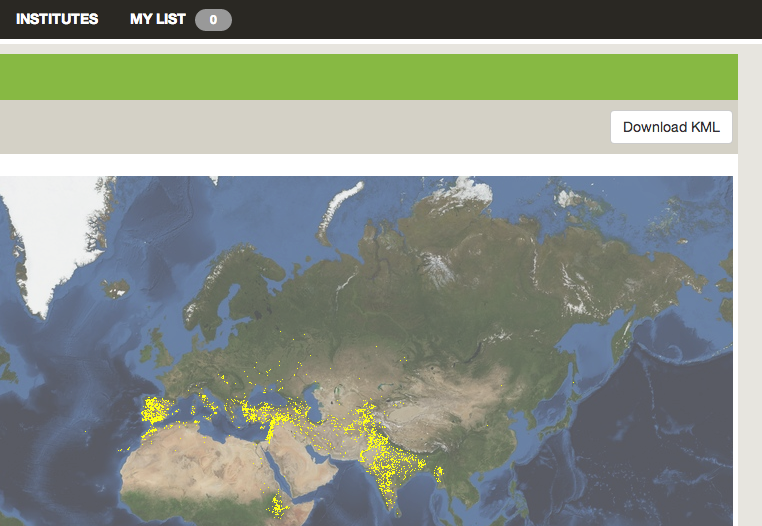
Sharing Genesys data made easier
And yeah, I know, it takes two to tango, and it’s not exactly easy to share that Genesys data either, less easy than sharing the Iraqi atlas map if we are honest. We’re working on that…
That was back in May. Check out the new “Download KLM” button in Genesys now.
Seed bank, Amsterdam-style
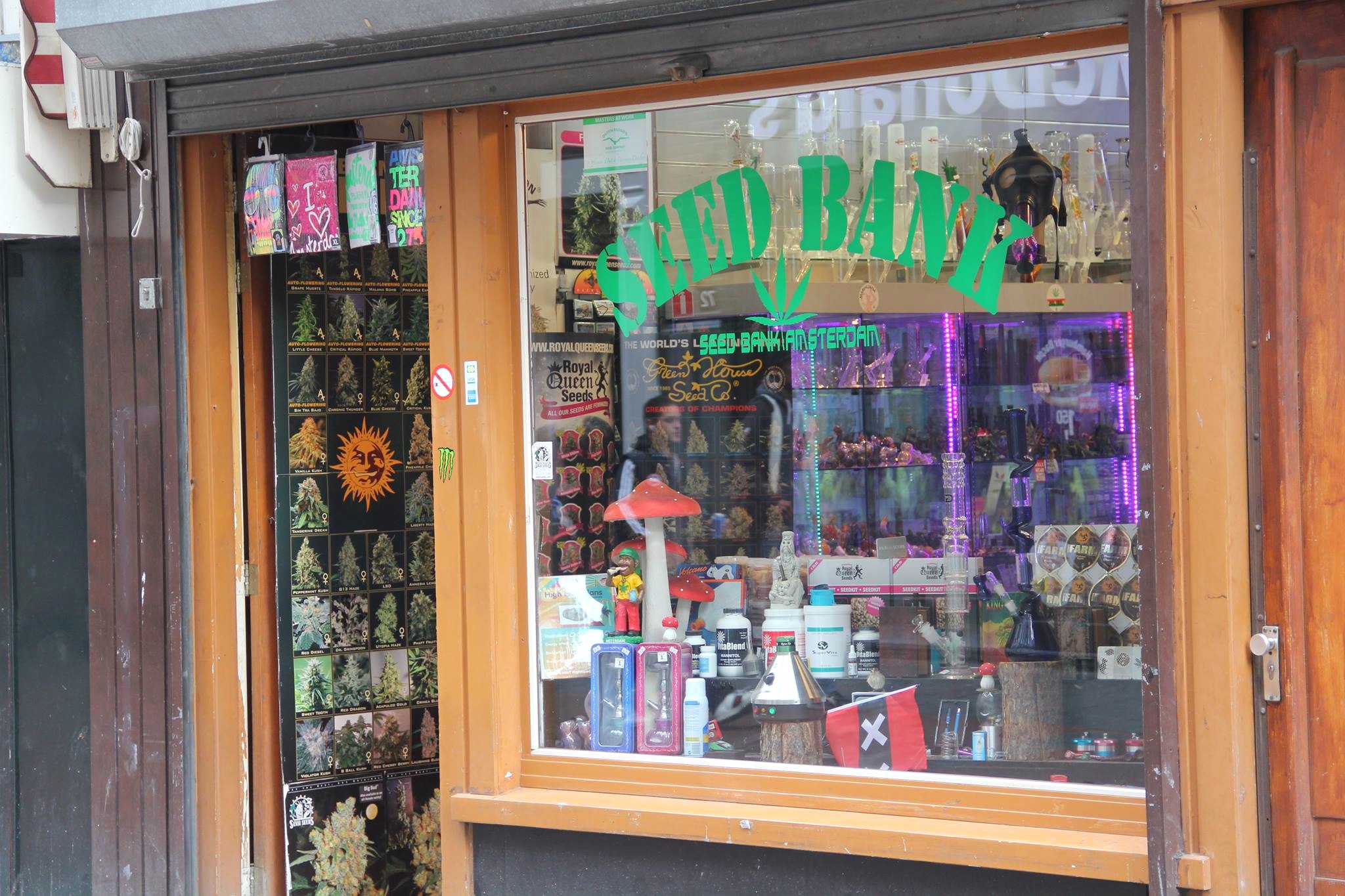
Thanks, Fawzy.