An audio recording of a 90-minute panel discussion is not something to tangle lightly with, not even when the topic is one of my favourites: fermentation. I finally got around to it, though, and I’m very glad I did.
The recording dates from exactly a year ago today, which I swear I didn’t know before writing this, and a discussion at the American Museum of Natural History as part of their series Adventures in the Global Kitchen. The Art of Fermentation featured Sandor Katz, who needs no introduction to fermentation heads, and Dan Felder, head of research and development at the Momofuku Culinary Lab.
I found it really fascinating even though – possibly because – I know a bit about fermentation. And one bit in particular joined fermentation to another interest: seeds and intellectual property rights. I know!
Starting at about 1 hr and 8 mins, Sandor Katz was explaining why, if you decide to do home-made yoghurt with most store-bought yoghurt as a starter, it is ok for the first generation or two but by three and four is pretty runny and not very good. He said that bulk industrial yoghurt depends on pure cultures of just two species of bacterium, Lactobacillus bulgaricus and Streptococcus thermophilus. Local, heirloom yoghurts, if you will, contain those two as part of a larger ecosystem, and the ecosystem as a whole is able to defend itself from microbial interlopers, whereas the pure cultures are not. And that’s why an heirloom yoghurt can be renewed generation after generation without changing much in its properties.
Katz pointed out that greater control for the manufacturer means some benefits but less self-sufficiency for the consumer. You can buy their yoghurt, but you can’t use it to make your own. And he specifically likened that to the development of F1 hybrid seeds, which likewise offer benefits at the expense of self-sufficiency. Because you can’t save your own seeds from F1 hybrids.
Except, of course, that you can. You don’t get what you started off with, but that’s the point. With time and space and a little bit of knowledge you can dehybridise F1s, exploiting all the goodies that the breeders put in there and, who knows, coming up with something as good or better and being able to maintain that generation to generation. I have no idea whether you can do that with industrial yoghurt, exposing it to a bit more wild culture and selecting among mini-batches.
And that led to a not very satisfactory discussion of intellectual property rights as they relate to ferments and the kind of work Dan Felder is doing with Momofuku. “I can’t talk about that,” he said, disarmingly. But then he did, worrying that plagiarism was much more common than credit and attribution among chefs. And that’s why they keep some things secret.
Katz then pointed out that we owe all the ferments and most of the techniques in use today to generations of experimenters before us. Sound familiar?
Ferments and techniques, but not substrates, countered Felder, who makes a miso based on Sicilian pistachios, and much else besides. He was proud to accept that he was building on generations of experimentation and tradition. Just not writing it up on Twitter.
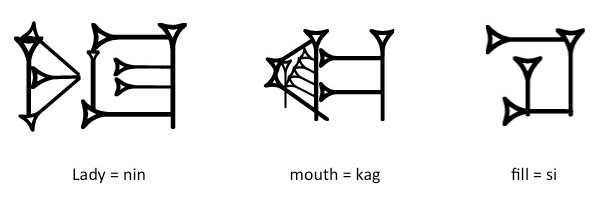
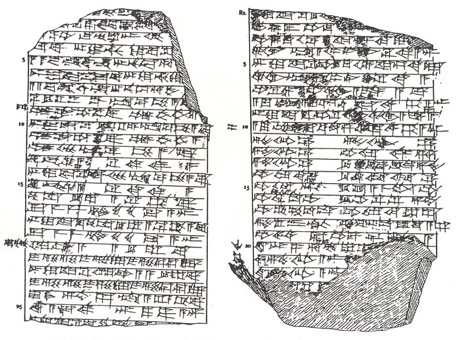 Since we’re on the subject of agricultural biodiversity and poetry, let’s also deal with that Sumerian ode to beer that featured in another article I linked to recently. It’s called the “Hymn to Ninkasi,” and it was found on a 19th century BC cuneiform tablet. Ninkasi means “lady who fills the mouth,” and was, aptly enough, the goddess of brewing. I found a longer version of the poem online, along with a recipe for the beer it describes, a “light, unhopped, unfiltered barley beer.” There’s some really detailed scholarship on Sumerian beer out there. What I don’t quite understand is why this stanza