- Latvia’s Tomato Rebellion: Nested Environmental Justice and Returning Eco-Sociality in the Post-Socialist Eu Countryside. The Man tries to enforce the European Common Catalogue, Latvians rebel.
- Traditional agricultural gardens conserve wild plants and functional richness in arid South Sinai. Wild plants survive in gardens, which thus combine diversity and utility.
- Analysis of a silkworm F1 hybrid with yellow cocoon generated by crossing two white-cocoon strains: Further evidences for the roles of Cameo2 and CBP in formation of yellow cocoon. What, are we expected to eat this thing now, what with its high carotenoid content and all?
- Genetic diversity and bottleneck studies in endangered Bhutia and Manipuri pony breeds. Bottleneck? What bottleneck?
- Analysis of the genetic diversity of radish germplasm through SSR markers derived from Chinese cabbage. New Korean radish varieties not same as old Korean radish varieties.
- Ethnobotanical study of anthophagy culture in mountainous area of Wenzhou. It pays to eat flowers.
- Enabling adaptation? Lessons from the new ‘Green Revolution’ in Malawi and Kenya. Adopting hybrids, and thereby escaping the “low maize productivity trap” is no guarantee that your thoughts will turn to crop diversification.
- Phytomorphological and Essential-Oil Characterization in situ and ex situ of Wild Biotypes of Oregano Collected in the Campania Region (Southern Italy). Both nature and nurture play a role. Look for high glandular and stomatal density.
- Diversity characterization and association analysis of agronomic traits in a Chinese peanut (Arachis hypogaea L.) mini-core collection. Can it really be down to just 15 alleles?
- Assessment of molecular diversity and population structure of the Ethiopian sorghum [Sorghum bicolor (L.) Moench] germplasm collection maintained by the USDA–ARS National Plant Germplasm System using SSR markers. High diversity, no structure, much duplication, little passport data.
- Crossability patterns within and among Oryza series Sativae species from Asia and Australia. Some easy, some difficult, all interesting.
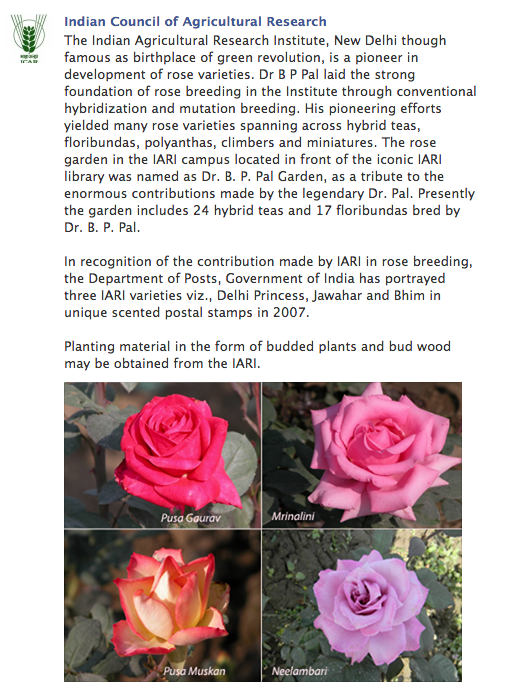
Rose Revolution
So one of the many new things I learned during my recent trip to India, and which I thought would make a nice piece here, was that Indian breeders are hard at work improving ornamental flowers in general, and the rose in particular. Now, as luck would have it, ICAR has just posted something about this on its Facebook page, so I don’t even need to think of anything clever to write about it. I love it when that happens.
Outsourcing rice germplasm collecting
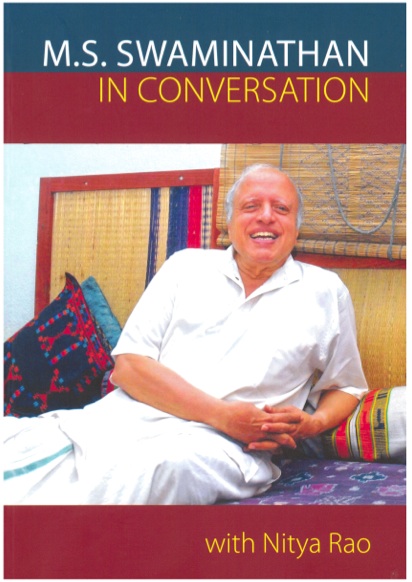 One of the highlights of my recent trip to India was receiving a copy of the booklet “M.S. Swaminathan in Conversation with Nitya Rao” from the great man himself. Sure, you can of course download the thing in PDF. But my copy is signed :)
Anyway, there’s lots of interesting stuff in there about Prof. Swaminathan’s life and career, a career that included a number of very high level positions in agricultural research and development in India (which earned him the title of “Father of the Green Revolution in India,” among other things), but also a very successful stint as director general of IRRI. Given Prof. Swaminathan’s lifelong interest in genetic resources conservation, it came as no surprise to see the IRRI genebank mentioned a number of times.
What was surprising, at least to me, were the somewhat unconventional methods that were sometimes used to make sure that endangered diversity did in fact reach the genebank. Here’s a snippet, you can find more on page 53.
Burma, now Myanmar, has a lot of germplasm, similar to what we have in our North East. However, this was not collected because these were very disturbed areas. When I went to Myanmar from IRRI, I told General Yu Gong that he should give some protection to our collectors. ‘Why Swaminathan, why do you want to send your people? You train my soldiers on how to collect and what to collect, and they will do this for you’. We made a very good programme, I was there for the first two days. T. T. Chang ran the programme, explaining to the generals and the soldiers how to collect what we call ‘passport data’ about the plant. They collected about 9,000 varieties. I must give credit to General Yu Gong for opening my eyes to this potential.
I have in the past mused about decentralized approaches to collecting for ex situ conservation (see, for example, slide 19 in these training materials on germplasm collecting methods and strategies), but I have to admit that using the military never even occurred to me.
You say Kartoffel
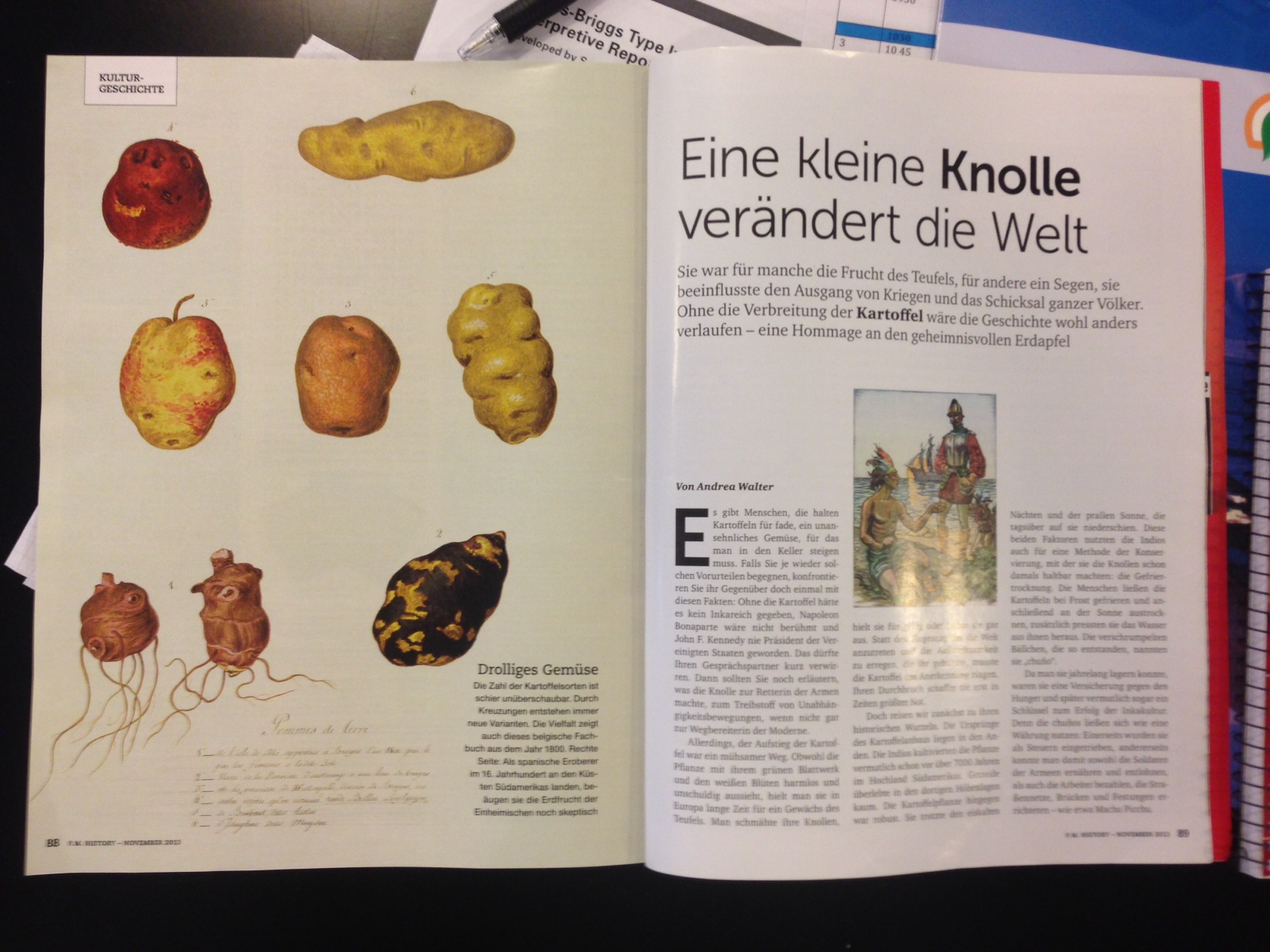 Let’s be fair. The inability to distinguish the potato from other Andean roots and tubers is not entirely confined to National Geographic. Take, for example, the November 2013 edition of the German magazine P.M. History. I don’t think it is online, but there’s an article in there entitled “Eine kleine Knolle verändert die Welt,” or “A small tuber that changed the world.” The first couple of pages are reproduced here. Clearly, it’s about the potato.
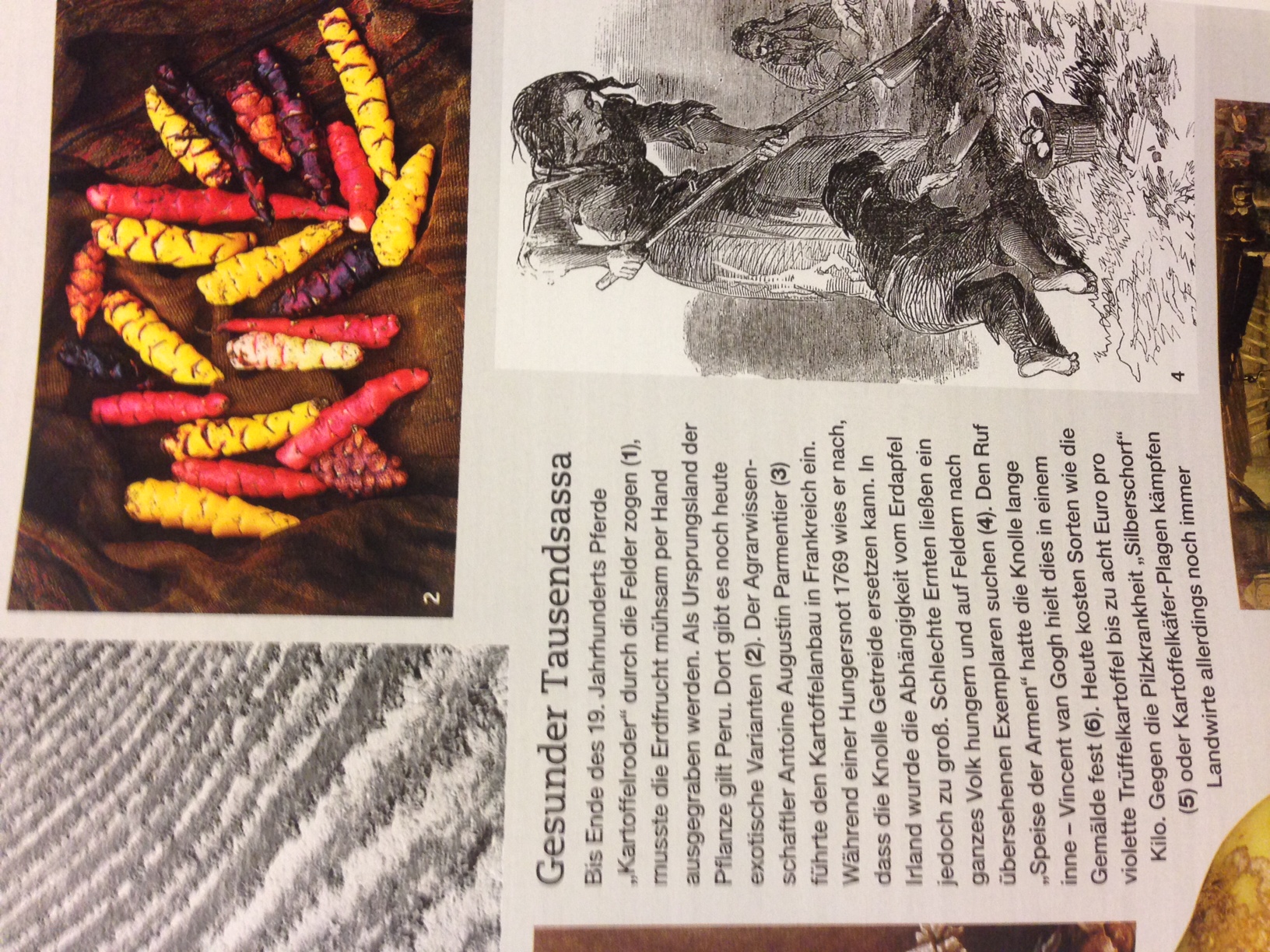 Ah, but wait, for a little further on one comes across a photo of what are clearly not potatoes. Unless of course all is explained in the caption, but somehow I doubt it.
Chenopods!
Spare a thought for those fortunates slaving over a hot stove today to give thanks for their good fortune. And if you’re not in the kitchen, consider these Thanksgiving Genomes.