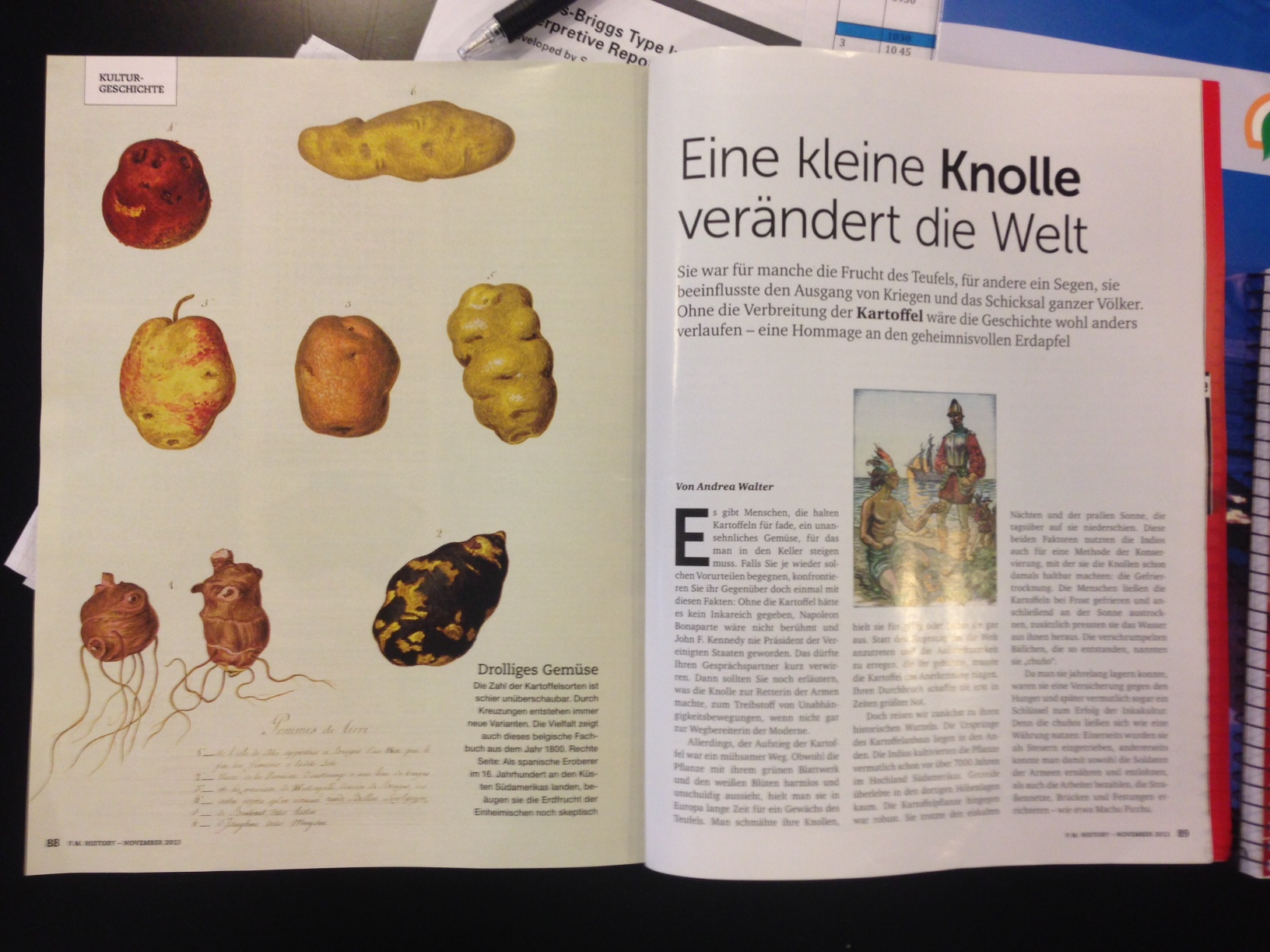
 Let’s be fair. The inability to distinguish the potato from other Andean roots and tubers is not entirely confined to National Geographic. Take, for example, the November 2013 edition of the German magazine P.M. History. I don’t think it is online, but there’s an article in there entitled “Eine kleine Knolle verändert die Welt,” or “A small tuber that changed the world.” The first couple of pages are reproduced here. Clearly, it’s about the potato.
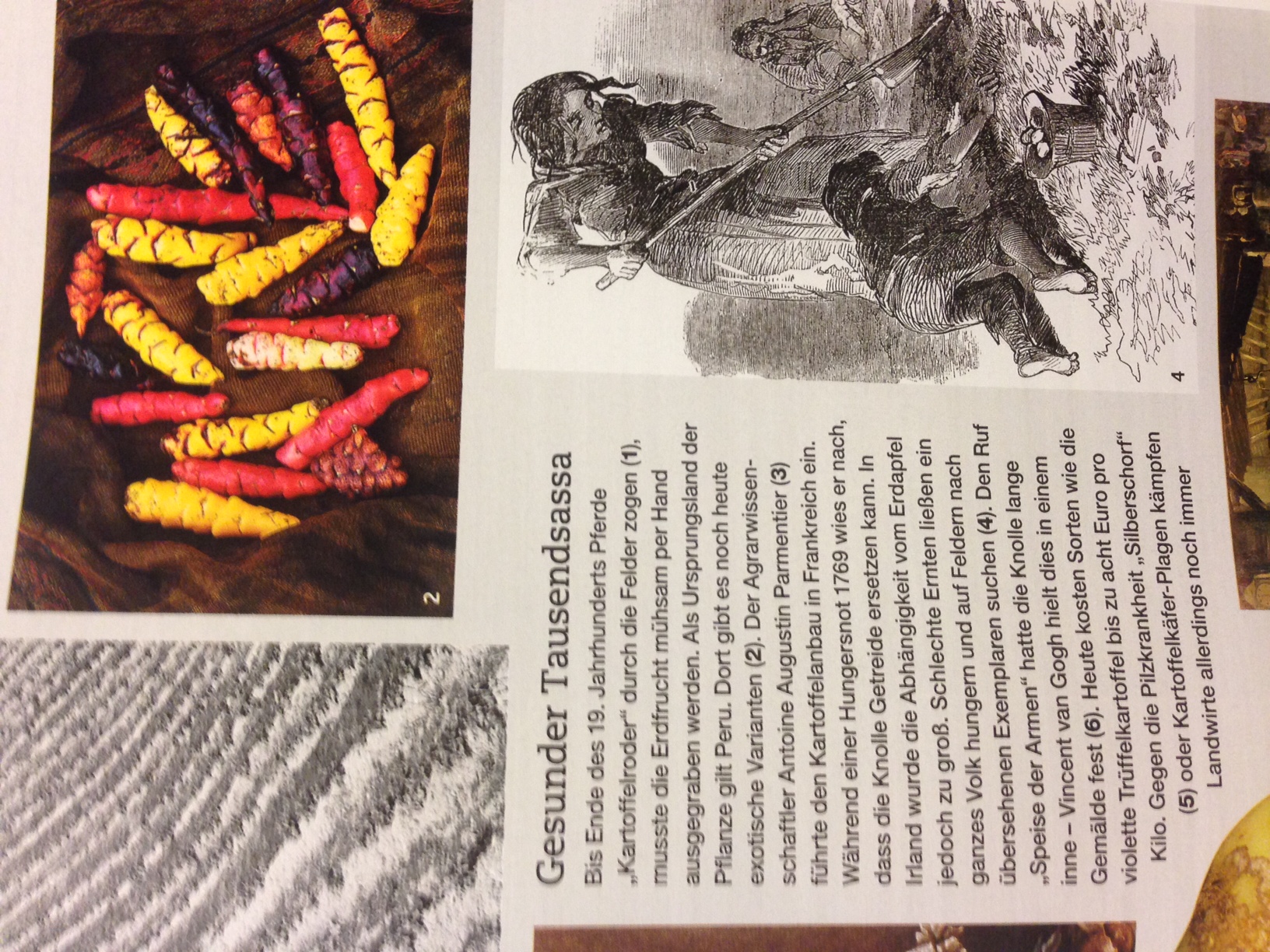 Ah, but wait, for a little further on one comes across a photo of what are clearly not potatoes. Unless of course all is explained in the caption, but somehow I doubt it.