- What kind of goods are plant genetic resources for food and agriculture? Towards the identification and development of a new global commons. Exclude non-Parties to the ITPGRFA from access, and get all Parties to make up-front financial contributions are the recommendations that most grabbed my eye.
- Genome-Wide Association Studies Using Single Nucleotide Polymorphism Markers Developed by Re-Sequencing of the Genomes of Cultivated Tomato. Markers for important agronomic traits identified. Now to use the little buggers.
- Low temperature storage of mango (Mangifera indica L.) pollen. Good to know for these recalcitrant things.
- Cryopreservation of grapevine (Vitis vinifera L.) in vitro shoot tips. Another triumph for droplet-vitrification.
- Evaluation of Morphological Traits Diversity in Synthetic Hexaploid Wheat. But is it novel?
- Wild Lactuca species, their genetic diversity, resistance to diseases and pests, and exploitation in lettuce breeding. It is novel, but can be difficult to use.
- Homegardens as a distinct agro-ecological entity in Kerala: Its biodiversity, structural dynamics and environmental significance. They are becoming more and more important as refuges for biodiversity, but need policy support.
- Probable Agricultural Biodiversity Heritage Sites in India: XVII. The South-Central Region of Eastern Ghats. And not a homegarden to be seen.
- Genetic diversity and relationship of cattle populations of East India: distinguishing lesser known cattle populations and established breeds based on STR markers. Just because it’s not officially recognized as such, it doesn’t mean it’s not a breed.
- Reproductive ecology and genetic variability in natural populations of the wild potato, Solanum kurtzianum. Sexual reproduction, insect pollinator behaviour and seed dispersal by storm water channels make for more diversity within than between populations, and more besides.
- Genomics of Compositae crops: Reference transcriptome assemblies, and evidence of hybridization with wild relatives. Self-incompatibility and post-zygotic isolation makes for crops that are generally more different from their wild relatives.
- Consequences for diversity when animals are prioritized for conservation of the whole genome or of one specific allele. Basically, you can’t do both.
Gates Foundation strait-jackets African agricultural research
Taking a leaf from the EU’s book, the Bill & Melinda Gates Foundation is offering us a PEARL. That’s the Program for Emerging Agricultural Research Leaders. Tremendous idea, to train and empower younger scientists, specifically “African scientist[s] residing in sub-Saharan Africa or planning to relocate to sub-Saharan Africa to implement the proposed project”.
With this call, we are looking for projects led by MSc and PhD scientists at national agricultural research institutions and universities in sub-Saharan Africa, working in collaboration with other researchers internationally (either within Africa or beyond the continent).
There’s up to US$500,000 available for each project, and you still have until 30 September to get your pre-proposal in. But don’t think you can work on any old thing. No sirree. There are “Exclusionary criteria,” for example no “[i]mprovements to current regulated chemicals or the development of new chemical formulations that would be considered regulated chemicals”. And no (or not much) agricultural biodiversity:
We will NOT consider funding for:
<snip>
Proposals that are not applicable to one or more of the following crop and livestock species: maize, wheat, rice, millet, sorghum, cassava, sweet potatoes, yams, beans, cowpeas, chickpeas, groundnuts, banana, chickens, small ruminants (e.g. goats), and cattle;
No idea what order those are in; possibly their importance in the BMGF pantheon. But if you wanted to work on, say, bambara groundnuts, leafy greens, cavies, baobab, fonio, cane rats, cocoyam, tef etc., etc., etc you’re out of luck.
You obviously have nothing to contribute to whether “three-quarters of the world’s poorest people” have enough to eat, are able to send their children to school, and can earn any money to save and lead healthy and productive lives.
Too bad.
There’s an app for Hawaiian breadfruit?
Well of course there is. And pretty nifty is it too. 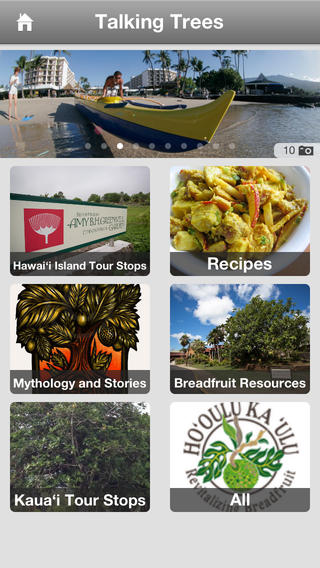
Take a real or virtual tour around Hawai‘i’s Big Island and learn about the culture and history of the island through stories of the ‘ulu (breadfruit). This engaging and resource rich app includes tour stops of cultural interest, breadfruit recipes, Hawaiian mythological stories, interviews with local cultural practitioners and links to information about how to cultivate and use breadfruit.
…
Ho’oulu ka ‘Ulu is a project of the Hawai‘i Homegrown Food Network and the Breadfruit Institute of the National Tropical Botanical Garden. Learn more at: www.breadfruit.info or www.breadfruit.org
Giant fruit update
For some reason, this seems to be the time of year which the media sets aside for stories on large fruits. Or largish, anyway. Because I may be spoilt by my time in the tropics, but this “Avozilla” doesn’t look like such a big avocado to me. I was hoping I’d be able to be more precise about this, but I couldn’t find systematic characterization data on the world’s avocado collections, not even in GRIN. And no, I’m not impressed that Avozilla has its own Twitter account either:
“@DailyMailUK: AVOZILLA, world's largest avocado goes on sale at Tesco http://t.co/8wCZl4WiNA pic.twitter.com/gLEV98M0It” Yes, I'm here!
— Avozilla (@Avozilla) September 2, 2013
And likewise, 14-15 grams is not bad for an olive, but there’s bigger, and not all of them are from Italy.
Featured: Santorini
Dirk sets us straight on those Santorini sweet peas:
The charred sweet peas from Santorini are actually Lathyrus clymenum, the Santorini Fava bean. The crop is still cultivated on the island. Prepared as a pulse, Santorini fava is eaten by tourists and locals. No worries about seed toxins which are identical and at higher levels than those in grasspea.