The latest In Our Time sent me scurrying to the online database of Oxford’s Pitt Rivers Museum. Gotta love a museum whose collection you can search using the keyword “cassava accessory.” I also liked the historic photographs of the Luo, several of which include agricultural biodiversity.
Evolution strikes back
Ford Denison drew attention to this astonishing photograph of giant ragweed 1 lording it over a crop of harvest-ready maize.

Nothing unusual about that — being a giant anything gives you a licence to lord it over lowlier things. The point, of course, is that the corn crop is Round-up ready and so, of course, is the weed. More facts and figures at The International Survey of Herbicide Resistant Weeds.
Ford also pointed to an interesting discussion on the difficulties of defining anything as slippery as farming philosophy by talking about what is and isn’t permitted.
To give the consumer a clear, black and white choice, organic marketing strategy offers a black and white world where all human-made pesticides and fertilizers, and all genetically modified crops are bad, regardless of their value to farmers or to sustainability. Even limited use is prohibited because it would blur the marketing lines.
Amen. Although let’s not forget that good old-fashioned soft soap is as human-made as anything. In the old days, I always advised beginning allotmenteers to blitz an unkempt plot with glyphosate and then get as holy as you like about being organic. Nothing is more soul-destroying than discovering couch grass or ground elder infesting the asparagus and strawberry beds. Of course, today, it might take more than glyphosate.
Pisang Seribu in the limelight
You know those websites which do nothing but reproduce photographs of weird and wonderful things, usually as a way of getting you to buy something, often weird but probably not very wonderful? Well, sometimes images get posted from there to Facebook or whatever, and indeed some go viral, no doubt resulting in huge profits for someone or other. The image I saw yesterday didn’t go viral, but it was certainly weird and wonderful enough to do so. It’s of a hugely long bunch of tiny bananas, and you can see it in the original place I saw it, but I’ll reproduce a better photo below.
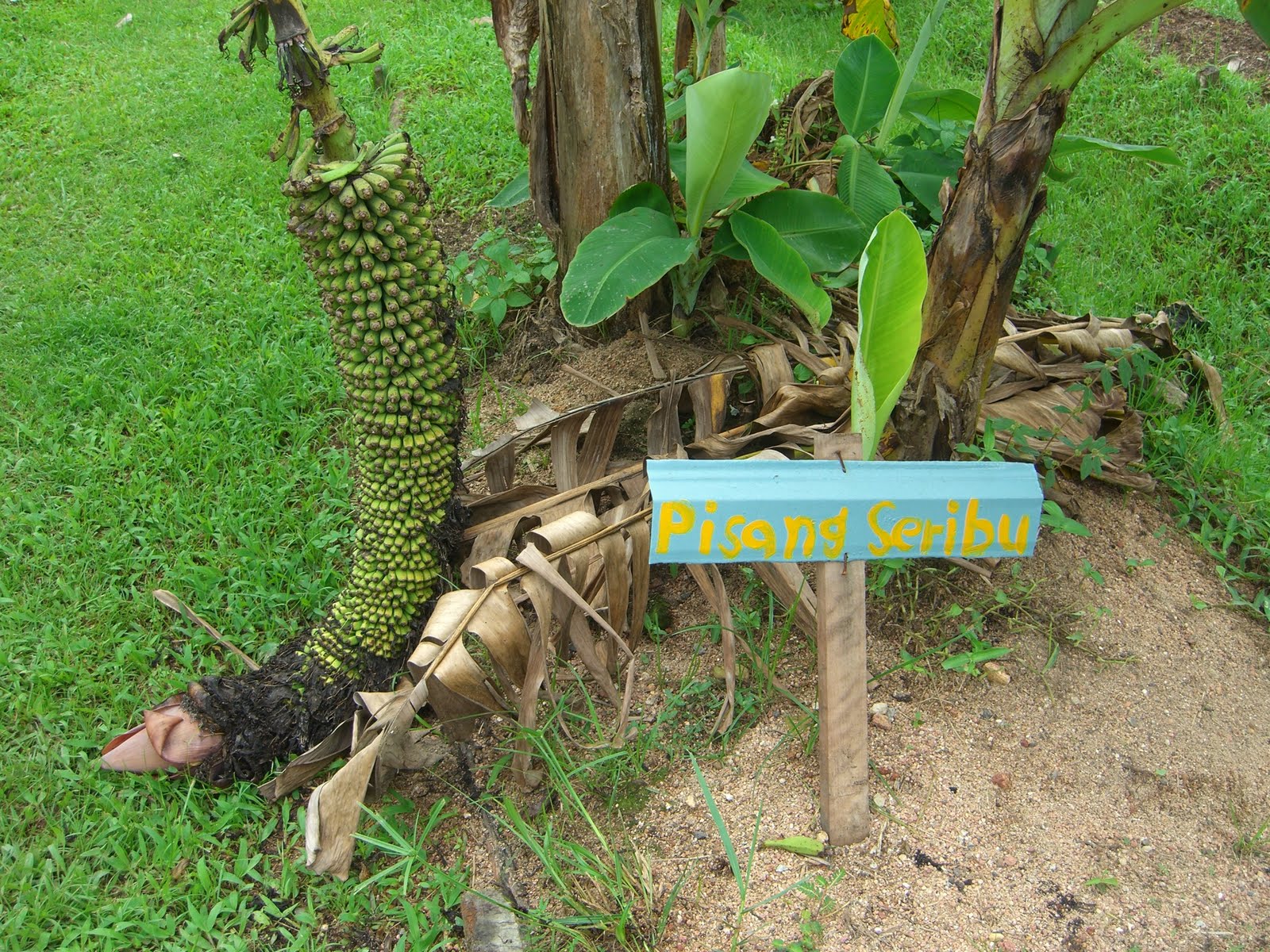
I was able to find it, 2 at a blog called Smell the Coffee, thanks to our friends at ProMusa. I posted the original link on their Facebook page, and also on Twitter, and within minutes I heard back with the full monty on our strange banana.
The cultivar is called Pisang Seribu in Malaysia and Indonesia, pisang being the Malay word for banana and seribu meaning a thousand. We have it on good authority that the fruit are ‘delightfully edible’. The other unusual thing about this cultivar, besides the high number of fruit, is that the latter didn’t develop from female flowers but neutral flowers, which usually wither away and do not develop into fruit nor produce pollen. Pisang Seribu doesn’t have a Musapedia page yet, but it is featured on the Cultivar Diversity portal… In Vietnam, it is called Chuoi Tram Nai. Chuoi is the Vietnamese word for banana, Tram means 100, and (I think) Nai means hands.
So maybe now the thing will go viral in the agricultural biodiversity community at least. Thanks to ProMusa.
Heirlooms oversimplified?
Heirloom seeds are usually open-pollinated, meaning that wind or insects fertilize the seed. They’ll breed true to their parent plants, so if you harvest the seeds and replant them you will get the same variety.
Is it just me, or does this strike you as a huge over-simplification — not to say error? And there’s more — lots more — where that came from.
SimpleMappr taken through its paces
And speaking of maps, if you’re one of those botanists who has shouted “I just want a simple dot map!” in frustration, you will want to read the overview of SimpleMappr from Kew’s GIS Unit. And yes, you can share the maps.