Have your say on the Reform of the Common Agricultural Policy! Word, from Mrs Isabelle Durant, Vice-President of the European Parliament.
Since the beginning of the 21st century, Europe has been going through a period of profound change.
One vital challenge is linked to agriculture and rural areas, and the relationship between farmers and consumers. This is the domain of what is known as the Common Agricultural Policy of the European Union (or CAP).
As we speak, the reform of the CAP is underway, and the European Parliament, through a lengthy democratic process, is preparing the final response.
Success in tackling these research areas requires increased policy commitment to co-ordinated and sustained EU-wide programmes and improved collaboration between the relevant scientific disciplines (including genetics and genomics, plant sciences, ecology, social sciences). In addition there must be improved linkage between all the activities inherent in plant conservation, research and breeding and improved use of the scientific evidence to inform strategic development for agriculture and land use.
Bring it on, obviously.
That said, the report does seem to have had its sights set so firmly on high that it doesn’t have a lot to say for the small growers and gardeners that Europe generally tramples underfoot. For example, the report namechecks “On-farm managed diversity” and “Links between conservation and use” and has an informative section of genetic erosion. And yet, when it comes to “Constraints on use” there is no mention of the single biggest constraint in Europe: European legislation. The report does say:
In Europe, genetic erosion associated with the introduction of deliberately bred cultivars has been significant for many crops.
It doesn’t say that if you don’t want to grow the specific deliberately-bred varieties Europe lists as acceptable, you’re mostly out of luck. 1
That’s not to do the effort down completely. There are some good summaries of what plant genetic resources for food and agriculture are all about, and their role in plant breeding, climate change and so on. The summaries of access and benefit sharing, and an overview of the European scene for PGRFA are worthwhile too.
In fact, as reference document, this report is pretty handy. It could, however, have issued a clear call to open up Europe’s seed markets to genuine diversity.
Historical genomics of North American maize. Fascinating analysis indicates selection based on a limited set of ancestor lines, and “decreased diversity in the ancestry of individual lines”.
My ignorance knows no bounds, I’m pleased to say. Coconut wood, for example: I had no idea it was of any value. But a recent note alerted the Google coconut group to news of a project, funded by Australia, to develop “high quality veneer and veneer products from senile coconut trees in some Pacific island countries”.
Senile is their term, obviously, not mine. I’m far too sensitive to think that just because a coconut palm is 70 years old it is senile. The fact is, however, that old coconuts are not as prolific as youngsters, and may be worth more as timber than as a source of nuts. Certainly the wood looks very pretty, and Carey Smoot, the bloke who developed the industry sounds like quite a card.
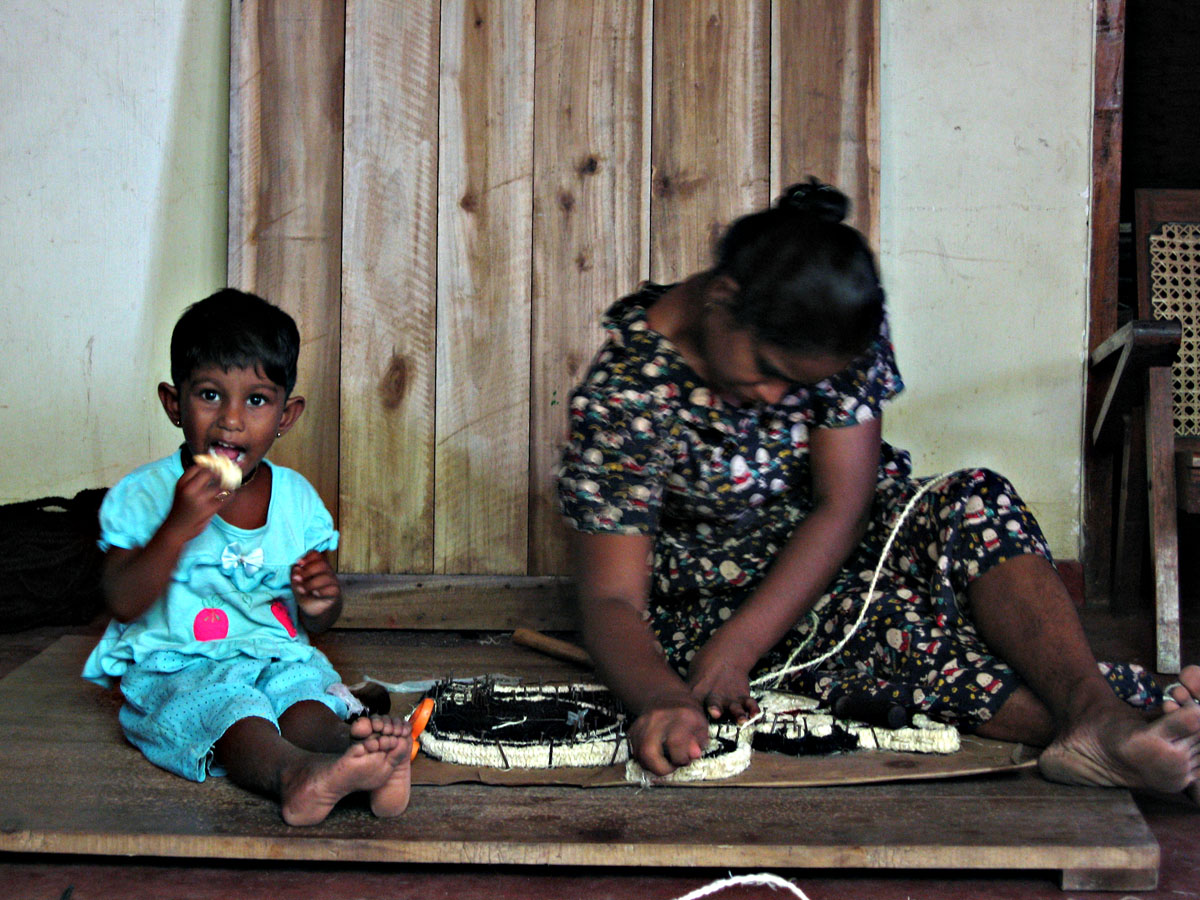
Turning (almost) worthless coconut fibre into more valuable coconut doormats in Dodanduwa, Sri Lanka, a COGENT project from long ago.
What interested me about the story was the fuss it stirred up among coconut nuts. The big worry is how the smallholders who rely on coconuts as the foundation of their livelihoods would respond to buyers with big bucks. Top dollar now for an old tree might be irresistible; would the sellers replant? If not, what will they do when they’ve spent the cash? And, of course, are there other products, besides timber and commodity-priced coconuts, that would boost their incomes sustainably?
Indeed, people called the sustainability of the entire senile coconut timber project into question, and it was a comment in that discussion that really caught my eye.
it goes without saying of course that you DO NOT take more trees than can re grow sustainably otherwise you cut your throat so to speak … and deforestation of coconuts could be irreversible.
Actually, taking more trees than can regrow is exactly what you do do, if you are a normal, for-profit economic entity, especially when the growth rate of the trees is lower than the discount rate you use to decide among alternative investments. The point was made ages ago, largely in relation to fisheries, but is still not widely appreciated. In fact, the role of the discount rate in determining economic behavior is pretty much under-appreciated everywhere.
If you’ve got a great big gob of capital waiting to be put to work, you chop down and convert all the senile coconut palms you can, until that’s no longer profitable, and then you invest your much larger chunk of capital in something equally unsustainable, like whaling. Or intensively cultivated farmland.
The premise that the agriculture sector should also be a vehicle for improved nutrition is intuitive, but this sector often delivers neither good nutrition nor food security to the most vulnerable in the population.
Key lessons for improved intersectoral implementation include the role of advocacy in framing the problem in context and highlighting mutual gains for different sectors, to create the political will and working space for nutrition action; the importance of organizational arrangements, including convening or coordinating bodies with multisectoral credibility to facilitate mobilizing and resourcing power; and the importance of building not only technical but also strategic capacity to manage multisectoral relationships for improved nutrition outcomes. Ultimately, these solutions will have to be tailored to country contexts.