- Species vulnerability to climate change: impacts on spatial conservation priorities and species representation. Yes, you can focus on sensitive species, but it comes at the cost of representativeness.
- Estimating management costs of protected areas: A novel approach from the Eastern Arc Mountains, Tanzania. Those are $ costs per pixel on the map, which I’ve never seen before. Don’t think they took into account the effects of climate change, though. Maybe they should get in touch with the Aussies above?
- The use of mycorrhizal inoculation in the domestication of Ziziphus mauritiana and Tamarindus indica in Mali (West Africa). It would help.
- A new integrative indicator to assess crop genetic diversity. Includes varietal richness, spatial evenness, between-variety genetic diversity, and within-variety genetic diversity. Not much left, really. Anyway, remember this from last week? Anyone out there going to put 2 and 2 together?
- Assessing Nutritional Diversity of Cropping Systems in African Villages. A new tool! Different from the integrative indicator above! Anyone going to put 4 and 2 together?
- Agriculture-Nutrition Pathways Recognising the Obstacles. “The pathways between agriculture and nutrition seem to be laden with impediments, particularly in the form of intricate household preferences.” Those pesky preferences.
- The chestnut blight fungus world tour: successive introduction events from diverse origins in an invasive plant fungal pathogen. Asia to N. America to Europe, but more than once. All very complicated. The surprising thing is that low diversity and low admixture have nevertheless still resulted in success in disparate places. What fiendish molecular or biochemical mechanism is behind this? Only more research will show, natch.
- Translocation of wild populations: conservation implications for the genetic diversity of the black-lipped pearl oyster Pinctada margaritifera. Introducing some wild individuals near farms leads to more diverse farmed populations, right? Nope. The farmed populations are way diverse already and if anything the diversity is moving the other way.
- Maize x Teosinte Hybrid Cobs Do Not Prevent Crop Gene Introgression. That’s because the hybrid cobs break apart much more easily than maize.
- Detecting population structure and recent demographic history in endangered livestock breeds: the case of the Italian autochthonous donkeys. Microsatellites confirm existence of 8 breeds of Italian donkey, though there is also significant substructuring within each by farm. This apparently calls for a “synergic management strategy at the farm level,” which basically means using the breed as the unit of conservation but being careful about inbreeding.
- Evolutionary tools for phytosanitary risk analysis: phylogenetic signal as a predictor of host range of plant pests and pathogens. Work out host susceptibility by looking at existing pest preferences and phylogenetic distance from the stuff the pest is known to like.
Is there more than one TME 419 cassava?
The TME 419 cassava that I Nibbled about earlier today has been making quite a splash in both DR Congo and Nigeria. Question is, is it TME 419?
Those who know about such things will recognize TME as an IITA genebank number. And indeed, if you look it up either on Genesys or IITA’s genebank database, you land on a Togolese landrace called Gbazekoute. Unfortunately, that doesn’t look anything like the TME 419 described in IITA’s Improved Cassava Variety Handbook. 1 There, TME 419 is indeed a Togolese landrace, but with the following characteristics: 2
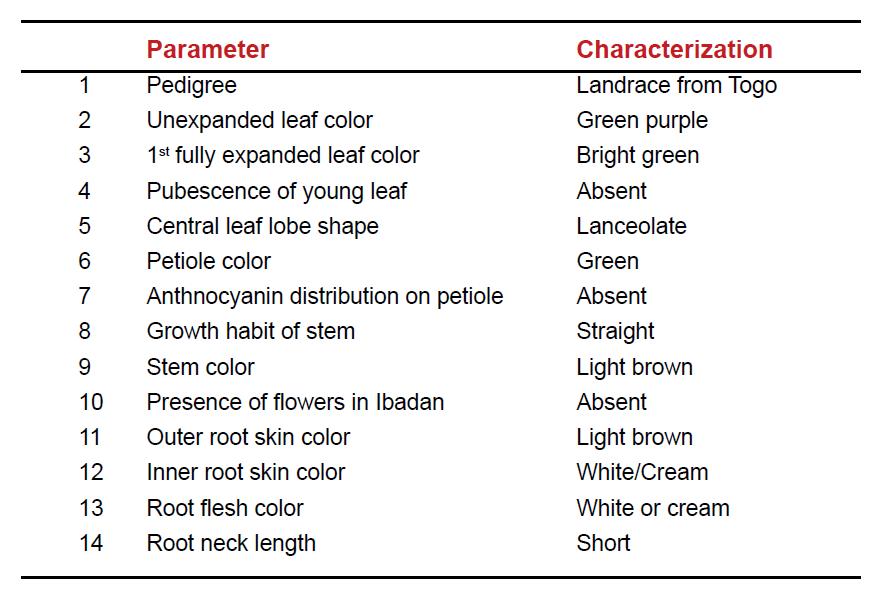
Compare that with the description in the IITA database. Is the shape of the leaf’s central lobe lanceolate or elliptic? Is there or is there not pigmentation on the petiole? Is the colour of the root pulp white/cream or yellow? And does it have a purple cortex or not? A discrepancy in one of these descriptors I might have understood, but it is clear to me that we’re talking here about quite different cassavas.
So I ask IITA: which one is the real TME 419? I mean the one making news in DR Congo and Nigeria.
BBC discovers heirlooms
I suppose the BBC must have read our post a couple of weeks back about the open letter on the EU seed marketing legislation, and our more recent post on the travails of a small US heirloom seed company, and decided this was a bandwagon they could not afford to simply watch rumbling past.
Genebank database hell goes mobile
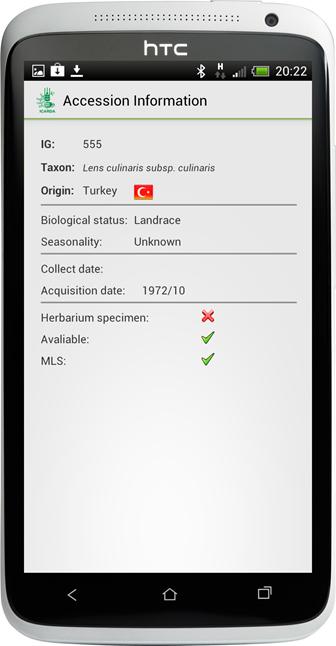 With a mighty leap, the ICARDA genebank has just landed squarely in the 21st century. You can now download an app and search the international collection managed by the centre from your Android phone. iPhone version coming soon. If you test it out, leave your comments here and they will reach the relevant ICARDA geek.
Shea butter producers go digital


Shea producers in Leo, Burkina Faso go Digital, a set by IICD on Flickr.