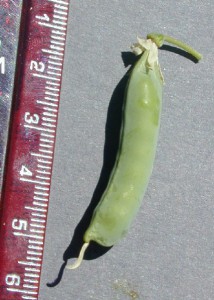
Some faba beans, without the nice Chianti

ResearchBlogging.orgIf you’re a faba bean breeder interested in cold tolerance you will have come across a paper recently in GRACE the title of which will have set your pulse racing: Screening and selection of faba beans (Vicia faba L.) for cold tolerance and comparison to wild relatives. 1 And if you had skimmed ahead to the conclusion you would have found it difficult to contain your excitement.

In conclusion, some faba bean accessions were selected for cold tolerance and desirable agronomic characteristics. ACV-42, ACV-84 and ACV-88 were selected as highly cold tolerant. These sources of cold tolerance could be used to improve cold tolerance level in faba bean breeding programs.

You would then have gone back and read the paper thoroughly to find more information on these previous accessions, and in particular on where to get hold of them. But you would have been disappointed, and you might very well have moved dejectedly onto the next paper in your Google alert.

Fortunately I am made of sterner stuff. So, thanks to an email to the authors, I can now tell you that

ACV-42 = TR 31590 at the Aegean Agricultural Research Institute, Izmir, Turkey
ACV-84 = IG 14048 at ICARDA
ACV-88 = IG 72247 also at ICARDA

And, thanks to Genesys, I can add that IG 14048 is a Polish landrace called Debek and IG 72247 is from Canada and has at some point had the number “73 Rm 70”, though I can find no reference to this in GRIN-Canada. Neither Eurisco nor Genesys has the Turkish genebank’s faba bean data, and their website was down when I tried it today, so I can’t tell you anything about TR 31590, I’m afraid.

You’re welcome.

And here’s a bit of a bonus for you. The paper also drops the fact that

The best known freezing tolerant genotype is a French genotype ‘Cote d’Or’ which can survive –22ºC if previously hardened…

Well, being a faba bean breeder interested in cold tolerance you probably already know that, and have it, but in case you’ve run out or something, Genesys/Eurisco says you can get it in a couple of different genebanks, including CGN in the Netherlands. 2

Now, to feed back that evaluation information on ACV 42, 84 and 88 — and indeed all the other hundred-odd accessions evaluated in the paper — to the genebanks from whence they came, to make life that little bit easier for the next faba bean breeder interested in cold tolerance breeder…

CGIAR research on Cassava Brown Streak Disease

Catherine Njuguna, a communications specialist at IITA, left a lengthy comment explaining all the work being done to combat cassava brown streak disease. We asked if we could use it as a guest post. She sent this even longer article, which we’re happy to share.

Efforts to save Africa’s cassava from deadly viral diseases

The warning by Food and Agriculture Organization on the viral disease wreaking havoc cassava, an important staple in eastern and central Africa, was spot on and timely. It highlights the challenges posed by this new and not-so new disease, Cassava Brown Streak Disease, which is threatening the food security and livelihoods of over 200 million people who depend on the crop.

Together, the two diseases cause more than 1 billion USD worth of damage to Africa’s cassava. The already poor small-scale farmers bear the brunt of this loss.

On a positive note, a lot of work is being carried out by various the governments, researchers, donors, Non-governmental organizations and the farmers themselves, to combat not only the cassava brown streak disease (CBSD) but also cassava mosaic disease – another disease drastically affecting cassava in the region to avert the looming catastrophe. However, a, lot more still needs to be done as the two diseases continue to spread rapidly through the region.

Some of the activities we are carrying out at IITA in collaboration with our wide range of partners from other Consultative Group on International Agricultural Research (CGIAR) centres, National Agricultural Research Systems, (NARS), Universities, non-governmental organizations (NGOs), Community Based Organizations and Private sector include:

  • Breeding for varieties that are tolerant/ resistant to both the Cassava Brown Streak Disease (CBSD) and the Cassava Mosaic disease (CMD) using conventional and molecular assisted breeding: Efforts are under way to develop high yielding varieties resistant to the two diseases. While we have not had any success in CBSD resistant varieties, we have identified and are promoting varieties that are tolerant to the diseases – they show symptoms but still give acceptable yields.

In Zanzibar, the cassava production has been revived by four tolerant varieties developed together with Zanzibar researchers at Kizimbani research institute officially released in 2007. On mainland Tanzania working with researchers from the Ministry of Agriculture, Food Security and Cooperatives, 8 improved varieties for the Lake Zone region and 5 varieties for mid-altitude areas in tolerant to Cassava Mosaic Disease were officially released in 2009. They are also showing acceptable levels of tolerance to CBSD. IITA and partners including FAO, CRS are working to rapidly multiply and get to farmers clean planting material of these tolerant varieties. A further 8 varieties showing tolerance to both diseases for coastal lowlands are at an advanced trial phase.

Farmers in Ukerewe take part in participatory variety selection to help ensure new varieties meet their preferences

Breeding efforts are also underway in Uganda where varieties, crossed with tolerant varieties from Tanzania and showing acceptable levels of tolerance to the diseases under the harshest of disease pressure conditions are in the pipeline for release in a year or two after further testing.

Scientists are also using advanced technologies such as molecular marker-based breeding (MAB) for faster and more effective breeding of resistant cassava as conventional breeding takes between eight to twelve years to come up with the improved varieties.

However, as a vegetatively propagated plant, getting enough planting materials to meet the demand is a tremendous challenge. A lot of support is needed to devise rapid and efficient ways of getting healthy planting material of improved cassava varieties to needy farming communities as rapidly and efficiently as possible.

  • Understand disease epidemiology – Although cassava brown streak had been known in East Africa for many years, it had always been confined to lowland coastal areas. The new outbreaks defied existing research wisdom as rapid new spread was reported from the relatively high altitude regions (over 3000 feet above sea level) of Uganda, Kenya, and Tanzania around the shores of Lake Victoria. Research efforts are under way to understand what is driving this new spread. A lot of knowledge has now been generated on the virus (CBSV), developing diagnostic tools and basic technologies to manage the disease. However, a lot of research is still needed as the virus is very diverse.
  • Surveillance systems to track the spread of the diseases: Under the Great Lakes Cassava Initiative (GLCI) funded by the Bill & Melinda Gates Foundation, a regional surveillance program was set up in 2009. It was made up of national agricultural research systems of Burundi, DRC, Kenya, Rwanda, Tanzania, and Uganda, IITA, Catholic Relief Services (CRS) and the UK’s Food and Environment Research Agency (FERA) among others to track the extent and speed of spread of CBSD and CMD in the five countries. This will assist in detecting when the disease spreads to new areas and help to identify areas of priority.
  • Whitefly vector: A lot of research is underway to understand the whitefly, Bemisia tabaci – the tiny insects transmit the viruses that cause the CMD and CBSD- how it spreads the disease and the relationship between it and the disease. Research is also underway to find a biological control to sustainably reduce its population.

Overview of IITA work on combating CBSD.

A brief of the two diseases

CBSD was first reported from Amani, Tanzania in 1936 but was mostly confined to the low lands of Eastern Africa and around Lake Malawi. However, from 2004, the disease, which causes a dry rot in the roots rendering them inedible, started spreading to mid-altitude areas and has drastically affected cassava production in Central and South-Western Uganda, North Western Tanzania, Western Kenya, and North Western DR Congo.

The disease damages the most economically important part of the crop, the roots. Furthermore, the symptoms are not always clear. A field of cassava looking healthy and vigorous up to the time of harvest can conceal the grim reality of rotten useless roots, revealed as the farmer digs up her long-anticipated crop.

CMD, on the other hand, also has a long history in Africa and was first reported in 1894 and the earliest management work initiated in 1930s in Tanganyika. However, an unusually severe form was first reported in Uganda in the late 1980s. The country experienced a severe epidemic that reduced national cassava yields by a third within three to four years severely affecting the food security. Efforts to develop disease resistant varieties were successful. CMD resistant varieties were developed, clean planting materials widely distributed and education in sound agronomic practices. By the early 2000s, major increases in cassava production were being realized in many affected countries, as resistant varieties spread. Many farmers who had stopped growing the crop in despair started growing it again. The work of disseminating the new varieties to farmers was supported through large-scale campaigns to raise awareness about the disease, its symptoms and measures to stop its spread

However, the emergence of CBSD has become an additional challenge for breeders and researchers to grapple with as crops that were developed and resistant to Cassava Mosaic disease were susceptible to the new disease.

Featured: Cassava research

Turns out we were ignorant. The CGIAR is doing a heap of work on cassava brown streak disease, as Clair Hershey informed us.

There are several major projects on breeding for resistance, e.g., ”Biotechnology applications to combat cbsd” coordinated by IITA; “Cassava genomics: bridging the gap between sequence and breeding application” funded by Gates; and an ongoing major effort in Uganda to look for resistance in landraces and bred varieties. Also, there is a new project proposal from East Africa to search for resistance in Manihot wild species. This is under review so details aren’t yet available, but hopefully it will be funded.

Which is great. But who knew?

Mapping crop wild relatives in Guatemala

Good news for lovers of Mesoamerican crop wild relatives. Ten years in the making, the Atlas of Guatemalan Crop Wild Relatives (Atlas Guatemalteco de Parientes Silvestres de las Plantas Cultivadas) is finally out. 3

The Atlas provides detailed information on 105 species or subspecies of wild Guatemalan plants that are related to crops, including their description, distribution, diversity and conservation status. The species are organized into genepools corresponding to the 29 crops that were chosen for this study because of their economic, cultural and biological importance. Through an interactive Google Earth® interface, users of the Atlas can consult individual maps for each of the 105 plants included in the study, showing their known distribution based on the locations where scientific specimens were collected and projections of their potential range based on climate. Additional maps display areas of high species richness and diversity to assist conservation efforts. The maps draw upon a database of 2,600 records of scientific specimens conserved in numerous national and international institutions, primarily herbaria and seed banks.

I’ve been playing around with it and it is pretty easy to use. Once you open the database in Google Earth 4 you can map the actual and potential distributions of individual species within each of the genepools, and also of the genepool as a whole. This, for example, is what you get for Phaseolus.

The green-to-red colouring shows the geographic distribution of species richness within the genus. One could quibble on aesthetic grounds about the choice of icon in this case, but that can always be changed by fiddling with the properties of the appropriate layer in Google Earth. More important is that the potential distributions and richness maps are clipped to the borders of Guatemala. I can understand the logic for that, an unwillingness to extrapolate, but I would perhaps have taken the risk, if only to stimulate neighbouring countries to embark on similar efforts.

The Atlas also allows you to look at the distribution of specimens and species richness in the dataset as a whole, and helpfully provides a layer on the protected areas of Guatemala. So this is all the specimens that the authors looked at, mapped together with the extents of national parks, archaeological sites and the like.

Just a little more fiddling with the properties of the layers allows you to see to what extent areas high in richness of crop wild relative species can be found within the confines of protected areas. The answer? Not much.

I don’t know enough about the flora of the region to be sure whether all the relevant species have been included, but the coverage looks pretty comprehensive to me. Clicking on the specimen icons gives you useful basic metadata. In some cases, the specimens are distinguished as to whether they are from herbaria and/or genebanks. So in this case the red dots are germplasm and the rings herbarium specimens of Phaseolus coccineus, which allows a rudimentary form of gap analysis, I suppose.

Perhaps more effort could have been expended in this direction. For example, are there really no wild Guatemalan cacao accessions conserved in genebanks around the world? And could not a little widget have been concocted to very roughly delimit gappy-looking areas? But that is to quibble, and no doubt both data and functionality could be added in the future. An English translation certainly will be. This will prove a marvellous conservation resource. Congratulations to the authors. 5 Now, guys, what about Paraguay?

Those elusive pizzutelli, again

With thanks to Giuseppe for pointing out another fruit painter, I went looking for Bartolomeo Bimbi’s depiction of our current favourite grape, and found a reasonable version. I reckon that’s it fourth from the right in the third row down.

Unfortunately, on the version I found the names of the varieties, which I take to be somewhere within the escutcheon at the bottom of the painting, are illegible. Having looked at all the bunches hanging there, that’s the only one that does seem vaguely horn shaped. The original is in the Villa Medicea in Poggio a Caiano, about 15 km northwest of Florence, and if I’m ever in the area I’ll try and get a better look. Old paintings and manuscripts are clearly a good source of information for modern-day fans of diversity sleuthing, although I confess I rely on others more expert than me to do most of the legwork. A perfect example is Andrea Borracelli, whose website is full of this kind of information (and for which I am grateful).

From him, we learn that Galletta Bianca belongs to the group ‘Pizzutello’ for the characteristic shape of the berries, and was found 6 in the area of Montepulciano, growing in family gardens. It is an old Tuscan variety … described in 1809 by Targioni Tozzetti as having “acini corniculatis flavescentibus” — horn-shaped, yellow berries. Galletta Bianca (there is also a black form), differs from the known Pizzutello white, 7 is listed in the Catalogue of Betti (1851) 8 and in the catalogue for the Public Exhibition of the Horticultural Society of Tuscany (1858). Low (1982) lists Uva Cornelia as a synonym for Galletta Bianca. Vine of medium vigour, with normal (?) productivity, limited to the provinces of Siena and Arezzo. It has an average percentage of fruit set, with the first fruiting shoot on the third or fourth bud, with two inflorescences per shoot, and has a normal tolerance to the most common parasitic diseases.

And I reckon that’s about all the sleuthing we’re going to do, unless, of course, something even more interesting turns up.

Just for comparison, here are a couple of my own pictures of pizzutello bought just up the road a little more than a month ago.

Bimbi, by the way, clearly had a great interest in diversity; he also painted a two-headed lamb for Grand Duke Cosimo III de’ Medici.