A few days ago Daniel Mietchen over at Wikimedian in Residence asked the question How would you illustrate the concept of a seedbank? Well, how would you? This is my idea:
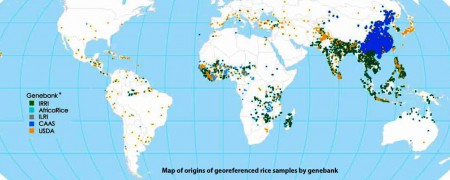
Crops, livestock, microbes, pollinators, wild relatives, agroecosystems, foodways …
A few days ago Daniel Mietchen over at Wikimedian in Residence asked the question How would you illustrate the concept of a seedbank? Well, how would you? This is my idea:
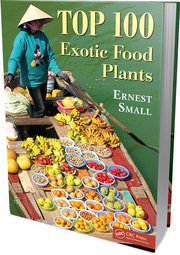 There are less than one hundred food plants that are very important to humans, but a few hundred more are already gaining importance, or could in the future. We have not yet imagined the potential value of hundreds of others. In many cases, we know little about them. Here Dr Small has selected 100 of these “exotic” food plants and provided a wealth of information. This book is a companion to his Top 100 Food plants, for which he received the 2009 Lane Anderson Award for science popularization. As the saying goes – “What more can we say”.
The author had a large and diverse audience in mind, and has written in a very user friendly style. The well organized and comprehensive information will be much appreciated by the scientific community (agriculture, horticulture, environment and medicine), by chefs and those with a love of cooking, by travellers, and by anyone with an interest in the most important commodity on earth. Some of the plants treated here are plants that have only recently found their way onto the shelves of stores in the western world. The purpose of this book is to focus on the increasing flow of plant products through world trade. It covers a diversity of food products and the value of eating a wide variety of plant foods, thus contributing to a healthier diet. The author hopes that by highlighting exotic plants, he will increase the diversity of crops around the world, leading to a safer and improved agricultural economy.
How many exotic food plants are there and what makes them exotic? There are at least a few hundred and “exotic” here means selected by the author. The selection is not just plants that Dr Small likes (that too) but, includes the plants that meet some combination of the following criteria: (1) produced outside North America; (2) strange & exciting; (3) encountered in the English speaking Western world or by travellers; (4) important either globally or in particular regions; (5) lack of information in English on culinary aspects; (6) personal taste; (7) economic importance; (8) encountered in north temperate countries; (9) interesting; and (10) unfamiliar to people. Some plants and plant products that you might call “exotic,” like banana, coconut, chocolate, date and pineapple, are not here because these were included in the earlier Top 100 Food Plants (Small 2009).
Since this is the author’s selection of 100, naturally there are many other economically important plants that are not included, some exotic and some not. Among the species not included here are saskatoon (Amelanchier alnifolia), cranberry (Vaccinium macrocarpon), pecans (Carya illinoinensis), pine nuts (Pinus pinea), hickory nuts (Carya cordiformis, Carya glabra, Carya myristicaeformis, Carya ovata, and Carya tomentosa), langsat (Lansium domesticum), salak (Salacca zalacca or Salacca edulis), karonda (Carissa carandas), maqui (Aristotelia chilensis) and jabotacaba (Myrciaria cauliflora). Here there are more, and/or different plants than in other books treating this subject area, or the treatment is much more complete than elsewhere. Among the many other books covering this subject to some extent are Jacques (1958), Schery (1972), Brouk (1975), Chan (1983), Hanelt (2001), Vaughan and Judd (2003), Biggs et al. (2006), and van Wyk (2006). These are listed in Appendix 3 of Top 100 food plants and in Appendix 2 of Top 100 exotic food plants. Readers of the latter will be especially interested in plants such as the largest seed in the world, the Seychelles Island Double Coconut (Lodoicea maldivica), the safe sweetener called Stevia (Stevia reboudiana), the key to immortality called Gogi (Lycium barbarum), and many others.
The plants included are those producing fruits, vegetables, spices, legumes, culinary herbs, nuts, and extracts. The treatment of each species provides information in a consistent format. It begins with an introductory paragraph with family and scientific name and clarification of other plant names. Next is “Plant Portrait” which includes a description of the plant, its native distribution, where it is cultivated, its uses, parts consumed, exports, and other aspects such as toxicity and use as medicine. Next a “Culinary Portrait” is provided including uses, preparation, effects and commercial products. Finally a section entitled “Curiosities of Science and Technology” includes a wide range of information. Treatments end with the “Key Information Sources” as well as “Speciality Cookbooks” which often includes more than a dozen references. Here the reader can find additional information on a variety of topics. The book actually contains more than 2000 literature citations. It is enhanced by more than 200 drawings, many chosen from historical art of extraordinary quality.
This scholarly and accessible presentation covers plants that have been the subject of sensationalistic media coverage and others that are controversial such as the acai berry (Euterpe oleracea), kava (Piper methysticum), hemp (Cannabis sativa), and opium poppy (Papaver somniferum). Some of the information is fascinating and humorous. It is an entertaining learning experience as well as an authoritative source. It is also an excellent companion to the very successful Top 100 food plants. From household cooks to professional chefs, from university botany students to plant scientists, and from travellers to homebound, there is much here for everyone.
This review, by Gisèle Mitrow and Paul Catling, of Agriculture and Agri-Food Canada, appeared originally in #455 of Botanical Electronic News. (Subscribe here.) We thank BEN’s editor, Adolf Ceska, and Dr Mitrow and Dr Catling, for permission to republish it here.

You may have seen stories in the past week or so of a flock of Shropshire sheep that authorities in Canada have threatened with destruction. The sheep belong to Montana Jones, who raises them at her Wholearth Farm, near Hastings in Peterborough. Five years ago she sold a ewe to a farmer in Alberta, and that sheep has been diagnosed with scrapie. As a result, the Canadian Food Inspection Agency wants to destroy other animals from the same flock who are infected or suspected of being infected.
One problem for Montana Jones is that the test “is only about 85% accurate”. So the sheep that tested positive may not have scrapie, although I have no idea what that 85% figure actually means. False positives? False negatives? What?
It is a long time since I last had to get my ahead around scrapie, the risks to humans (it is not “mad sheep disease”), the different breed susceptibilities, and the different approaches to eradication. All of those are important issues, I am sure. What concerns me about Montana Jones’ case is whether the appeal to the rarity of Shropshire sheep justifies not taking the precaution of slaughtering some of the flock.
Of course it is heart-breaking to lose animals you have lavished care on, especially when you feel that the action is not justified. But while Shropshires may be very rare in Canada, with all kinds of historical attachments, they are in pretty reasonable shape elsewhere, for example at their home in the UK. (Here is a wool nut’s view of the UK Rare Breeds Survival Trust’s rankings.) I wonder, too, how much genetic diversity the Canadian flocks represent. Wouldn’t it be cool if someone were able to genemap all the Shropshires around the world, in order to be able to show the CFIA just what we would be losing if they go ahead with their plan to cull half of Montana Jones’ flock?
By all means go ahead and sign the petition to save those Shropshires, but consider, too, that evidence of their genetic importance might just carry more weight.