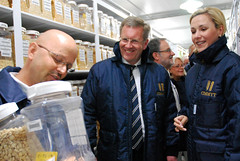
The 21st International Pepper Conference is coming up. Well, sort of, it’s in a year’s time, November 4-6, 2012 in Naples, Florida, USA. I wonder if self-described seed capitalist and Tabasco aficionado Tom Adlam will go. Or at the very least “friend” the Facebook page. No sign of a blog, though, which is increasingly de rigueur these days at conferences, nor a Twitter hashtag. Early days, I guess. However, you can already sign up, clunkily, for an email newsletter.
Naked and susceptible to smut — but not new
Kudos to Carolyn Ali at straight.com — “Vancouver’s online source” — for a fluffy and under-researched story that led me to something of real interest. Ms Ali reported breathlessly on “a new — and naked — oat”. But of course there is nothing new about naked oats. They lack the hull that surrounds the grains of ordinary oats. That makes them a lot easier to thresh, and they were recorded in England in the middle of the 16th century, where they were known as “peelcorn” and “skinless oats”. So not really novel. And not rare either. Luigi rapidly found me hundreds of accessions in genebanks around the world.
I was going to leave it at that, a pained someone-is-wrong-on-the-internets or a smug why-are-modern-“journalists”-too-lazy-to-do-basic-research diatribe. Ms Ali’s piece is essentially a puff for Manitoba farmer Scott Sigvaldason, who grows the stuff and cannily registered the name Cavena nuda (geddit?). 1 But looking at Naked Oats, a paper by T.R. Stanton in the Journal of Heredity (vol 14, 1923), I learned about more than the antiquity of naked oats.
I learned also that in every trial to date, naked oats had performed very poorly indeed in comparison to their clothed brethren, which gave three, four, even six times more grain. Yield, of course, isn’t everything. Unfortunately, naked oats are more susceptible to smut and rust than other oats, and deteriorate very quickly in storage, which also affects their viability as seed. They do, however, possess one very valuable quality: each spikelet contains several flowers, which produce 4 to 12 grains per spikelet, compared to two in normal oats. Several breeders (prior to 1923) had tried to insert this characteristic into normal oats, without success. Stanton concludes:
[S]uch a variety is impossible. [Researchers] have shown that the many-flowered spikelet and naked kernel or membraneous palea are linked. For this reason the number of flowers is reduced in all plants which breed true for adherent palea (hulled condition). According to Capron, a biflorous naked form is possible, but from the practical aspect is not desirable. On the other hand, a multiflorous hulled form is very desirable, but seems impossible genetically.
Ali’s article cites Vernon Burrows (“Dr Oats” according to some sources) as the breeder who created Cavena nuda, aka AC Gehl. Had he achieved the impossible? It doesn’t matter, because we’re talking about naked oats. It is rust resistant, which is good. Of greater interest, to me, is that the protein of at least some of the newer naked oat varieties is of rather good quality, so much so that Campbell’s created a new kind of soup, called Nourish, based on naked oats. Campbell’s further offered to give 100,000 cans of Nourish to Food Bank Canada. The soup is touted as:
[A] complete meal, delivering iron, calcium and a full serving of vegetables, fibre and at least 18 g of protein. The first-of-its-kind product was developed to address the problem of hunger both in Canada and internationally, as well as to be a reliable food source for people impacted by disaster situations abroad.
Campbell Soup Company is keen to “push hunger into a smaller box” (see for yourself) and is giving Canadians a chance to help the World Food Programme by donating $0.25 — the price of a school meal — to WFP for every can a Canadian buys. So I’m feeling really bad about my initial instinct to trash Carolyn Ali’s story just because it was a bit wrong.
And I’ll bet T.R. Stanton would be feeling bad too, for being so negative about naked oats.
During the past fifty years naked oats have been advertised several times as a valuable new variety, with extravagant claims as to their yielding power and usefulness as compared with common oats. The purchaser in every case was “gold bricked” and became the unfortunate victim of the clever advertising of the promoter.
Stanton goes on to talk about the Bohemian oats scandals.
In the decade from 1870 to 1880, naked oats, under the name of Bohemian oats, were for the first time widely exploited in this country. They were known prior to this, but apparently had been given no serious consideration, especially [sic. huh?] as a plant novelty that would lend itself readily to spurious exploitation. During the period of the Bohemian oat scandal the seed was sold for as much as fifty cents a pound. The Bohemian oats were rather widely distributed, but farmers discovered that they were greatly inferior to ordinary oats and soon they had almost entirely disappeared from cultivation. However, sporadic exploitation of naked oats under other names has occurred up to the present day.
The Bohemian oats scandal is an absolutely beautiful con, beautifully explained by Laura Bien at Ypsinews.com. It could never happen again.
Could it?
FAO fruit art display
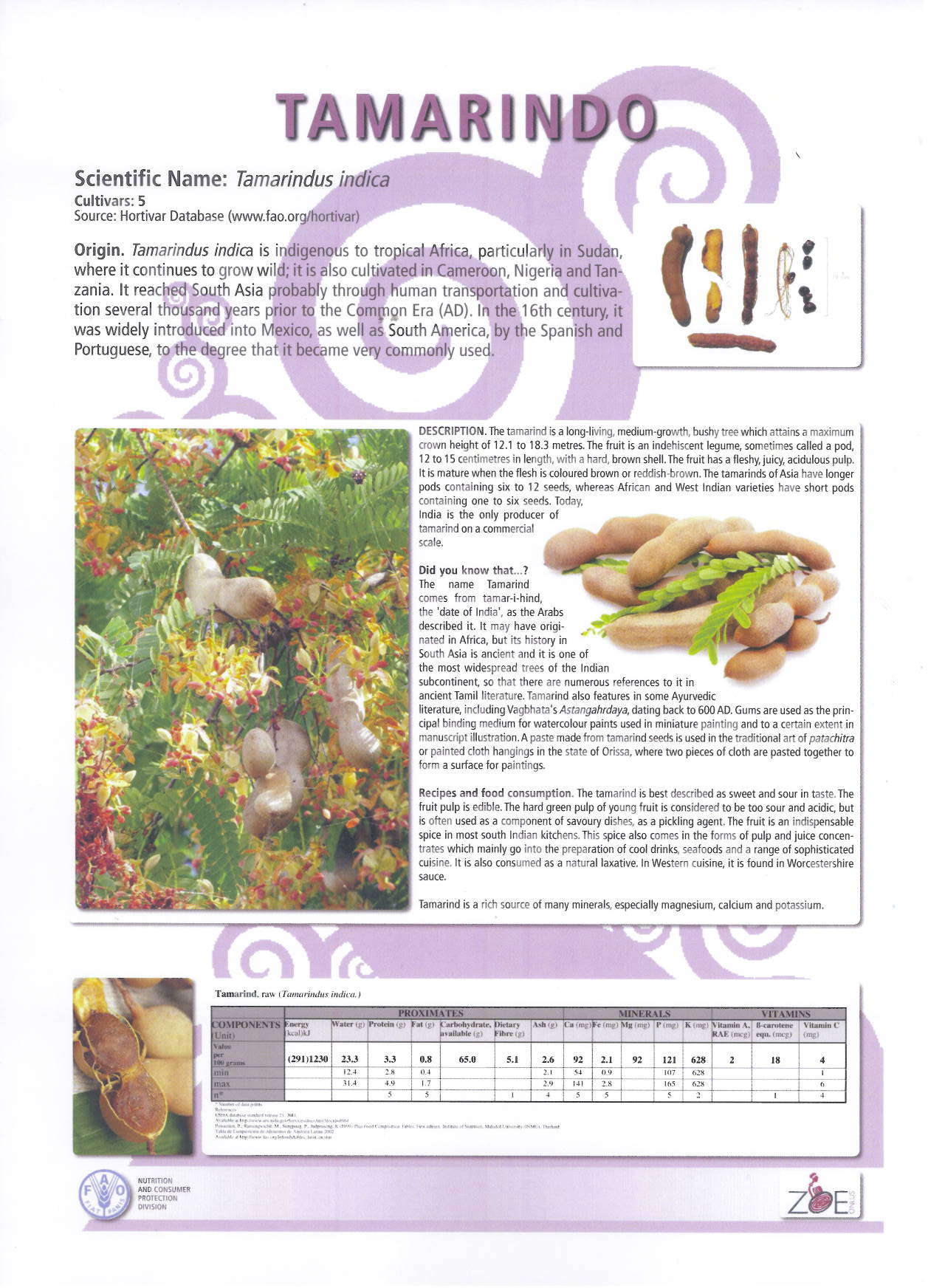 Clearly, I need to learn to stay on things at least a beat longer. Watching this made me seasick, and I knew what was coming. Anyway, the display is in FAO’s Flag Room. The posters (and accompanying fact sheets) are from FAO’s Nutrition and Consumer Protection Division and cite the Hortivar Database, which is a new one one me. And no, baobab wasn’t there.
Harvest THIS
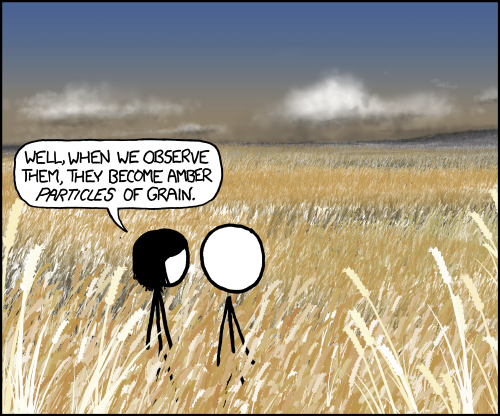
Two of my very favorite topics in one genius image.