Zimbabwe revisited; please reward GardenAfrica

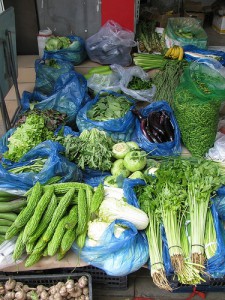
A couple of weeks ago I moaned that the description for a project to Support Zimbabwean smallholders to feed their communities and conserve their natural heritage had “failed to set my heart aflutter”. A little wordly magic has now been wrought on the proposal, which I now honestly believe gives a better picture of what the project is setting out to do. The very least you can now do is to reinforce GardenAfrica’s behaviour by heading over to the Coop site and voting for this proposal in the Tackling Global Poverty category.

Thanks.

Germplasm documentation is a two way street

I don’t blame Pat Helsop-Harrison for not donning the fire-proof suit to find his Ug99 resistant lines, or whatever. I really don’t. Why would anyone venture into Genebank Database Hell, when they have such a friend in Google? I only do it myself because, well, I get paid to. But although the genebank community bears some of the responsibility for this situation, and is indeed trying to do something about it, part of the problem lies, I’m sorry to say, with the users of the data.

I’ll give you an example. Over at Vaviblog Jeremy has a post about the domestication of African rice. He describes some fancy DNA work from researchers in China who pinpointed the area of domestication of Oryza glaberrima by comparing the sequences of 14 genes in 20 accessions of the cultigen with 20 accessions of the progenitor, O. barthii. And where did they get that material?

All accessions were obtained from seeds provided by the Genetic Resources Center of the International Rice Research Institute at Los Baños, Philippines.

That’s great, of course. This kind of research use of the international collections is exactly what one wants to see. That’s what they’re there for. But when I asked IRRI about this, they said that “these authors aren’t included in the names of recipients in our database.” So they must have got the seed indirectly in some way. Again, fine. But when users use seed from a genebank like this, it would benefit everyone — the genebank itself, future users — if they fed back their results in some way, to add to the store of information the genebank has on its accessions.

Now, not all genebanks make this as easy to do as they could. That’s why we have on occasion suggested a social networking approach to germplasm documentation, to resounding silence. But users don’t go out of their way much either. Until the two communities come together more on this, the best way to find seeds will probably continue to be Google.

How do you manage knowledge?

If I want to find which wheat line carries Ug99 rust resistance, I don’t go to a genebank database, nor even Theoretical and Applied Genetics TAG on the shelf behind me and where I saw the relevant article. I Google the phrase.

Pat Helsop-Harrison tells it like it is in the Annals of Botany blog. He’s previewing a virtual conference next week that questions how scientists and others share and manage information. Wouldn’t you know it, I’m probably too snowed under producing information myself to pay much attention, but I will be looking for summaries. There are now so many more different kinds of information, and so many different ways of finding things than there were before, that we need new approaches.