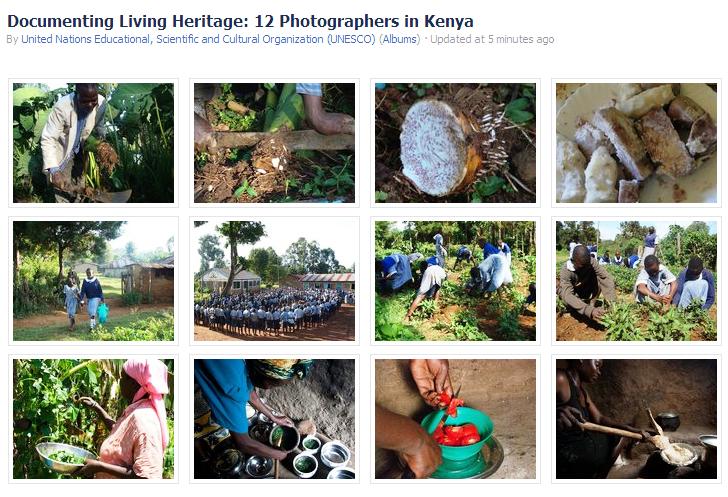
 There’s a great set of pictures of Kenyan traditional crops and food preparation on UNESCO’s Facebook page, in their Documenting Living Heritage series. This is part of an exhibition currently on at UNESCO’s HQ in Paris to raise awareness of the 2003 Convention for the Safeguarding of Intangible Cultural Heritage. I doubt there’s a photograph of the Gene Bank of Kenya, but that surely contributes to that goal too.
Organic practitioners meet, and meet again
The European Consortium for Organic Plant Breeding (ECO-PB) has announced two up-coming meetings. One is dedicated to the European organic seed regime and the other one is a celebration of ECO-PB’s 10 year anniversary.
That’s what we said a couple of days ago. And it’s all still true and everything. I just bring it up again because we have heard from our reader Matthew about an Organic Seed Growers Conference on January 19-21, 2012, in Port Townsend, WA.
The Organic Seed Growers Conference is recognized as the only event of its kind in North America, bringing together hundreds of farmers, seed production and distribution companies, researchers, plant breeders, pathologists, and university extension in two days of informative presentations, panel discussions, and networking events. There are also farm visits and short courses prior to the two-day conference.
Sounds like fun. As ever, we’d love to hear from any participants.
Feria del Elote
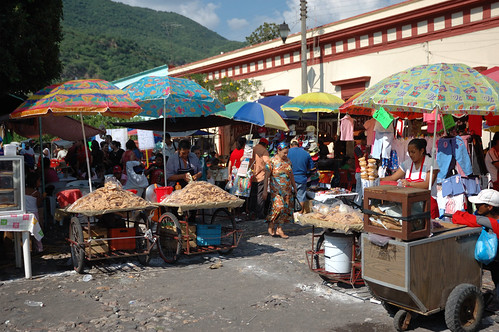
From CIMMYT’s Flickr feed:
Carts selling tacos made with maize tortillas (traditional Mexican flatbreads) in Jala, Nayarit, on the Pacific coast of Mexico, during the town’s annual two-week Feria del Elote, or maize ear festival. Tortillas are a staple food in Mexico, and are commonly filled to make tacos. For more about maize in Jala, see CIMMYT’s August 2007 e-news story “Pride and pragmatism sustain a giant Mexican maize,” available online.
Photo credit: Eloise Phipps/CIMMYT.
Maize hits the heights
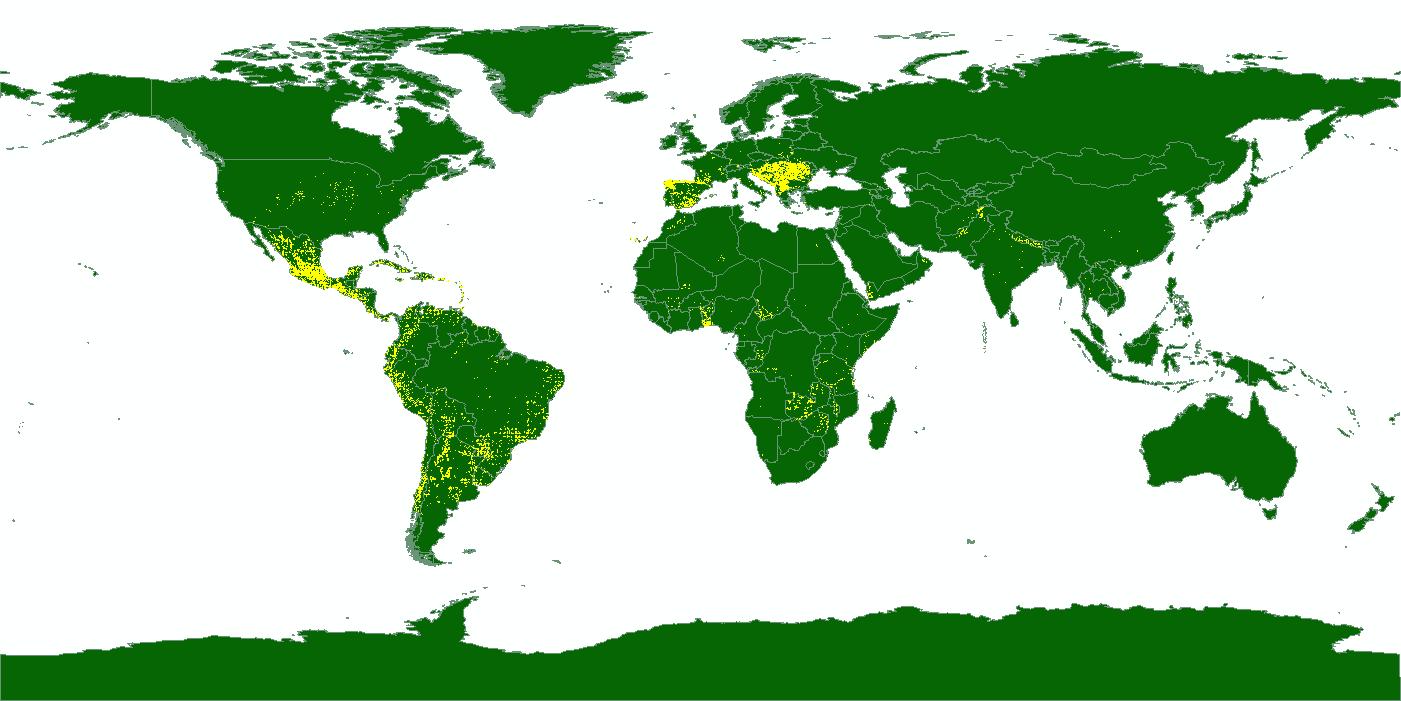
The llama dung story got me thinking about high-altitude maize. Maize is a tropical plant and it would have taken quite a bit of effort to get it adapted to high elevations. This is what Genesys knows about maize around the world:
And this is (in red) where maize collected above 3,500 masl has been collected:
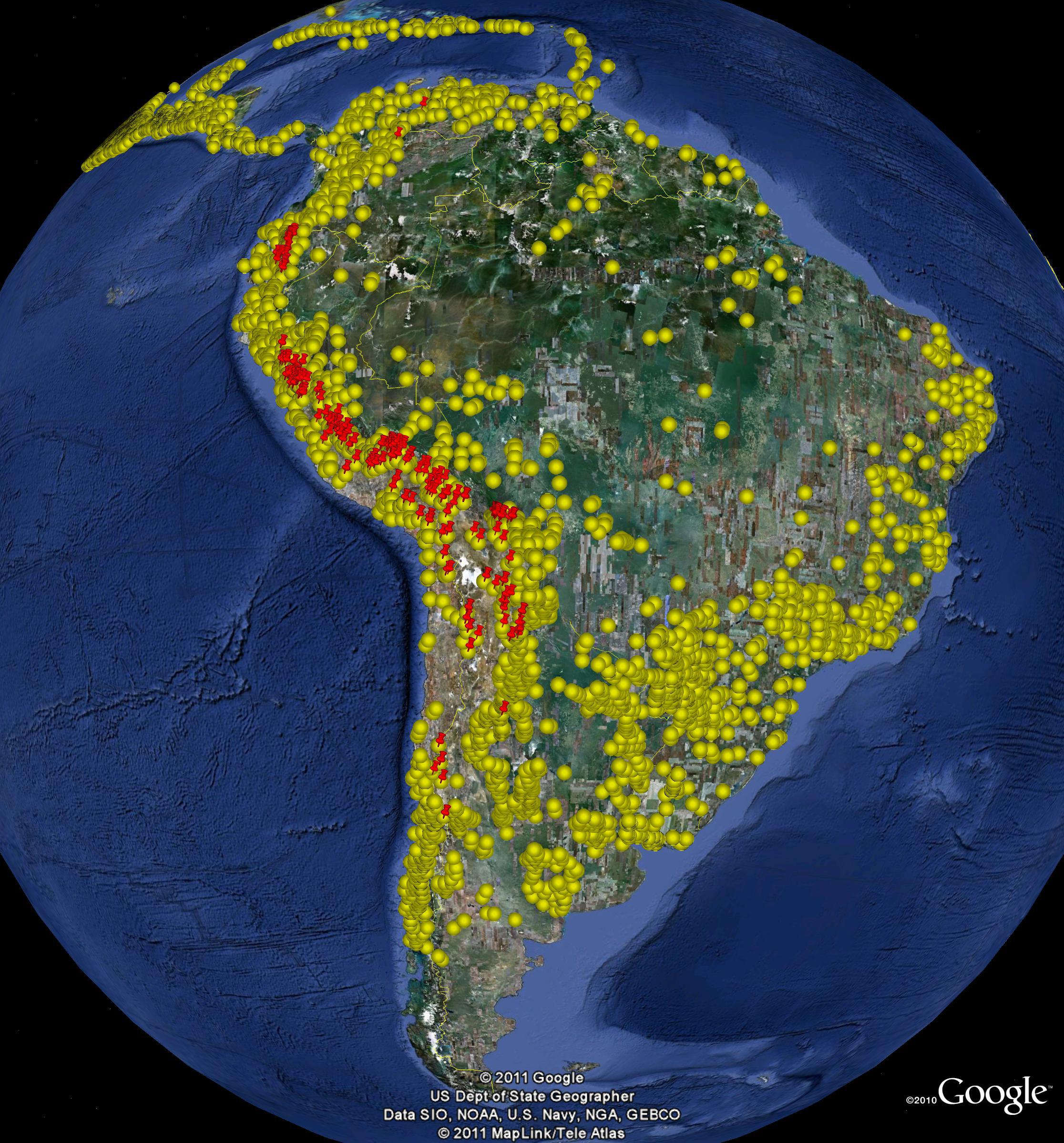
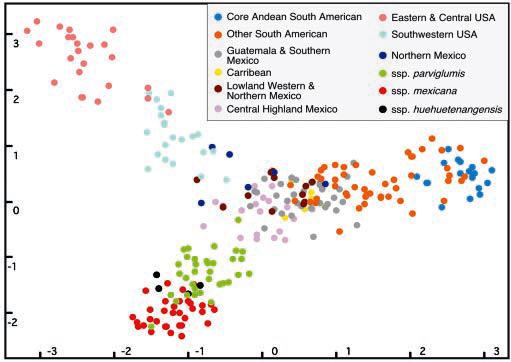
Those Andean agriculturalists obviously did a pretty good job of breeding maize to fit the new environment, and in fact still are.
LATER: As Jacob helpfully points out in a comment on this post, a 2002 paper confirmed, using microsatellites, that Andean maize is genetically quite distinct.
German lentils go back home
Before the introduction of the potato, Irish people included grain as a dietary mainstay, particularly oats. Oats were used in breads, desserts, drinks, medicines and cosmetics! Other grains that were grown included barley, flax, rye and some wheats. Unfortunately, many of these grain varieties were lost and we had to turn, primarily to the Vavilov Institute in Russia, the first genebank in the world, to repatriate our native grains. Michael Miklis in Piltown, Kilkenny, working with very small quantities of grain, over many years trialed them and bulked them up so that they could be resown on field scale again.
That reference to the Vavilov Institute on the Irish Seed Savers website reminded me of something similar they told me about the last time I was there.
Dr Margarita Vishnyaova, the head of the legume department, told me that they had recently “repatriated” some “German” lentils to a farmer cooperative in Baden-Wuerttemberg. The varieties in question are labelled “Späts Alpenlinse” (K2106, collected Hungary in 1965) and “Späths Albinse” (K2076, collected Czechoslovakia in 1963) in VIR’s records. Woldemar Mammel, a farmer from near Stuttgart had apparently been looking for these varieties in databases all over the place and eventually happened on them in the VIR online catalogue. They are old traditional varieties from the Swabian Alps which are no longer grown in Germany, or at least his part of them. The handover of the seed to Herr Mammel and a group of 15 other German organic farmers took place in Nov. 2007 at VIR, and was filmed by Slow Food Deutschland (Prof. Dr Roman Lenz, Dinah Epperlein). There are some photographs of the event on the Slow Food website. Sometimes genebank databases are good for something after all.