Radicchio diversity

Following in Luigi’s footsteps, the botanic gardens at Padua beckoned. The oldest botanic gardens in the Old World (Wikipedia is wrong; the New has older) they have operated continuously in the same place since 1545. A freezing February day was not ideal to see plants, and precious few of the labels denoted anything directly edible as food. I was not, however, entirely disappointed, for in a sunny bed in the lee of a building was a display of perhaps the region’s most famous crop: radicchio.
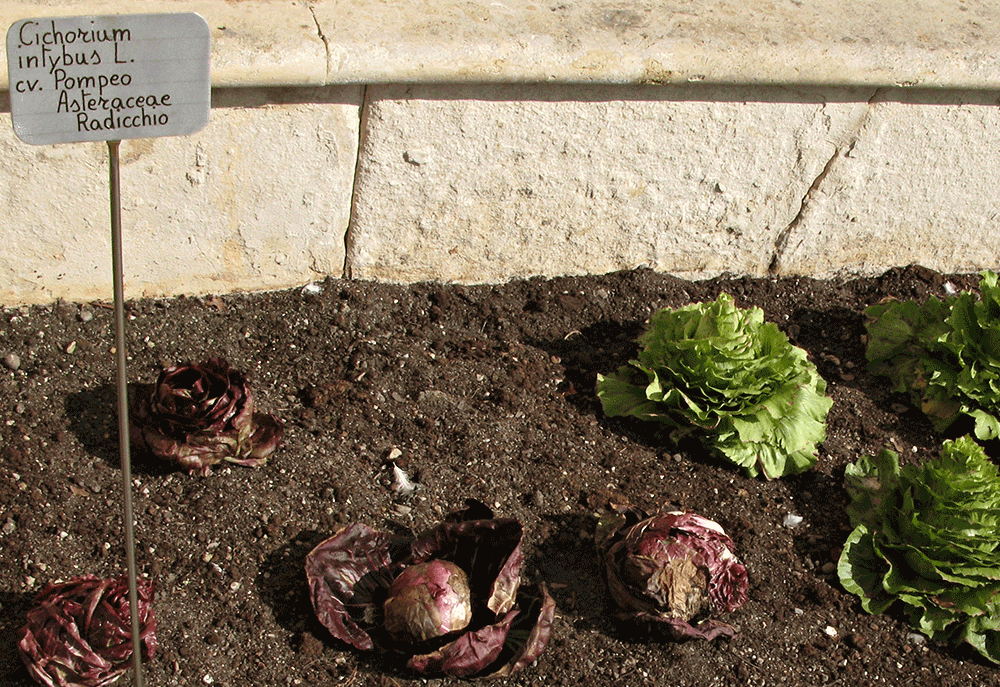
The picture above shows an old local variety, Variegato di Castelfranco, and Otello, a modern cultivar. Which, naturally, sent me scurrying to discover more about their history and breeding. There isn’t, actually, a huge amount. One study, of which I’ve seen only the abstract, examined DNA diversity of the five major types. Turns out that if you compare pooled bulk DNA from six individuals of each type, the different types are easy to distinguish. If, on the other hand, you look at DNA from individuals, the distinctions disappear. The variation within a single type is much greater than the variation among the different types. This, the researchers say, indicates that the types have maintained their “well-separated gene pools” over the years. An earlier paper (available in full) had come to a similar conclusion about the populations, with what seems like an ulterior motive: 1

The molecular information acquired, along with morphological and phenological descriptors, will be useful for the certification of typical local products of radicchio and for the recognition of a protected geographic indication (IGP) mark.

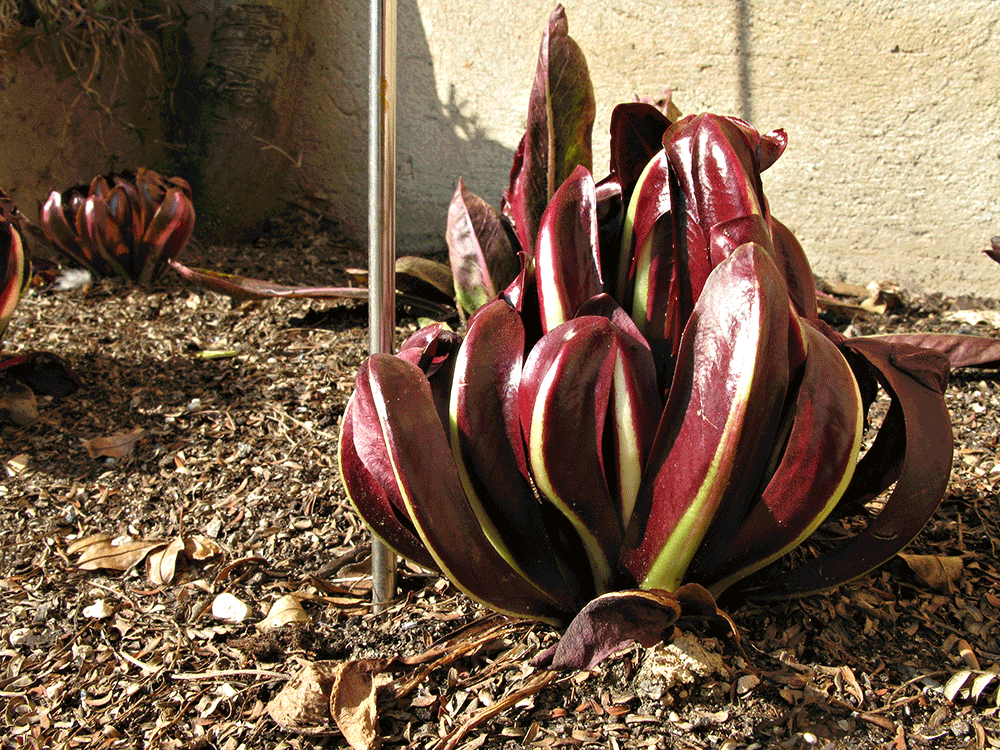
And lo, it came to pass. Four types (I think early and late Rosso di Trevisos are included in one designation) got their Protected Geographical Indication in 2008 and 2009. That’s late — tardivo — in the photograph below.
Featured: Threatened languages and agrobiodiversity

Peter Matthews weighs in on the issue of whether threatened language means threatened agrobiodiversity:

I would expect that the key linguistic indicator is not threat level, but speaking population size – not too large (likely to be associated with monocultural production systems) and not too small (likely to have a very restricted geographical range and knowledge of a relatively limited range of crops and wild plant resources).

Great ethnobotanical collection online

Another great find from the recent issue of The Plant Press I blogged about yesterday is the Smithsonian’s website on Edward Palmer:

Edward Palmer (1831-1911), often regarded as “the father of ethnobotany,” gathered extensive natural history collections in North and South America during the late nineteenth century and established standards for plant collecting and reporting, particularly for plants useful to people. His scientific framework is still used today. This new Botany website, Edward Palmer Collections provides a window into the Palmer Collection to communities where Palmer originally collected, as well as to scientists and the general public.

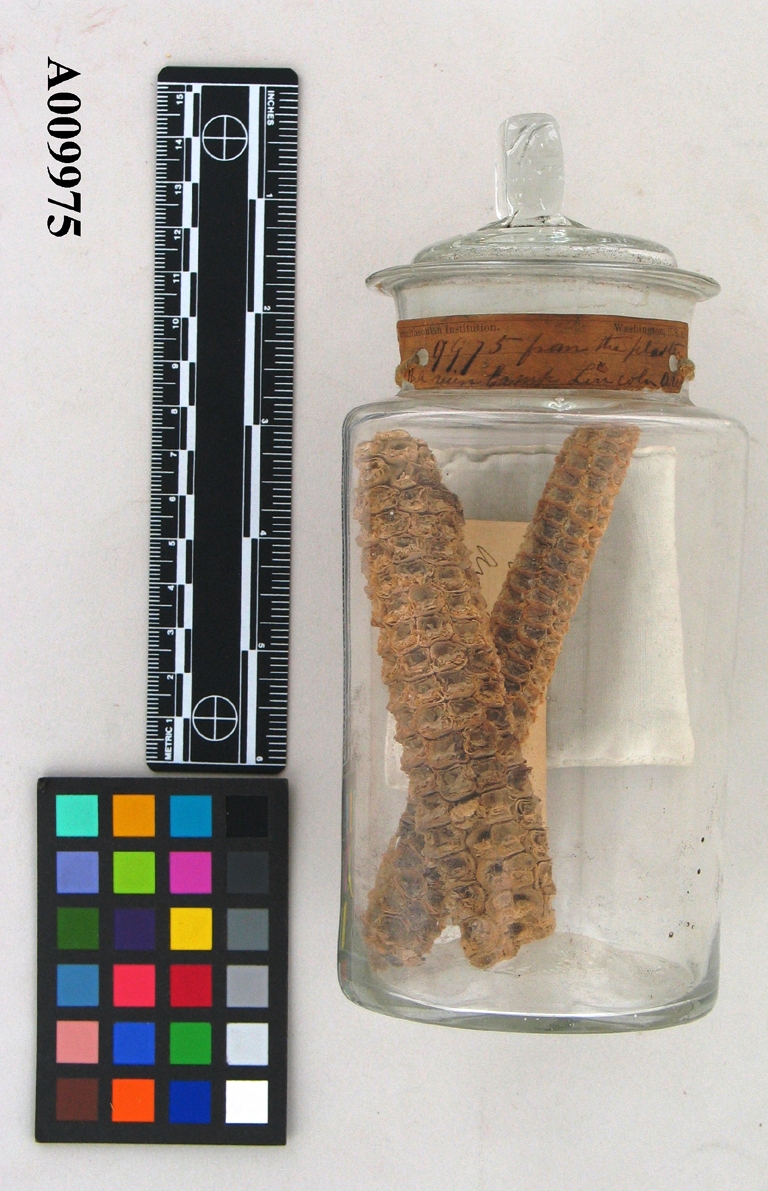
Palmer held posts both as ethnologist for the Smithsonian and as USDA plant collector, and the connections between his botanical and anthropological materials are fascinating, and nicely highlighted on the website. Now, is anyone going to try to get DNA out of his corncob?

Deconstructing an ancient Roman medicine

As promised earlier, here’s a little something on recent efforts to deconstruct an ancient Roman medicine. The short piece in The Plant Press which initially intrigued me eventually led to the website of the Institute for Preservation of Medical Traditions, a fascinating organization of which I was entirely ignorant. It has some more information and some photographs, and in an easier to handle form than the pdf you get The Plant Press in. It will do while I try to locate the published paper.

It seems that in 1974 a 2000-year-old Roman shipwreck was found off the coast of Tuscany. It the course of excavating it, various remains were recovered which pointed to the presence of a physician on board. Among these were a water-proof tin container with what looked like pills inside. In 2004, fragments of these reached Alain Touwaide and Antonella Appetiti at the Institute for Preservation of Medical Traditions, who started to analyze their organic and inorganic composition. They teamed up with geneticist Robert Fleischer of the Smithsonian to identify the botanical constituents of the tablets using the latest DNA fingerprinting technology.

First results seem to indicate that the tablets contained at least carrot, radish, parsley, celery, wild onion, and cabbage, that is, simple plants to be found in the garden. There was probably also yarrow and the more exotic hibiscus, possibly introduced in the Mediterranean area from Asia. Significantly, all the components of the pills identified so far (be they vegetal or inorganic) can be found in the ancient medical texts that the scholars in the Institute have been locating in manuscripts preserved in collections worldwide, transcribing and digitizing, studying and databasing for decades, all activities that contribute to the Institute’s program aimed at recovering the medical heritage of the ancient Mediterranean world.

This is apparently the first time that archaeological remains of ancient medicines have been found, let alone their ingredients identified.