Skip to content

Agricultural Biodiversity Weblog

Crops, livestock, microbes, pollinators, wild relatives, agroecosystems, foodways …

  • Home
  • About
  • What Is Agrobiodiversity?
  • Follow us
  • Contact us

Posts

Posted on February 28, 2011October 17, 2012

Italian pioneer of agrobiodiversity conservation dies

One of the Grand Old Men of plant genetic resources conservation, Professor Gian-Tommaso Scarascia-Mugnozza, died today at Viterbo. It is perhaps indicative of his stature and influence that there is a Scarascia Mugnozza Community Genetic Resource Centre at the M.S. Swaminathan Research Foundation, in Chennai (Madras), India. He was 85.

Posted on February 27, 2011February 26, 2011

Weird coconuts for sale

We briefly blogged about the rare horned coconut before. But I didn’t know you could actually buy one. Or other strange coconuts for that matter. Talk about adding value to agrobiodiversity.

Posted on February 27, 2011February 28, 2011

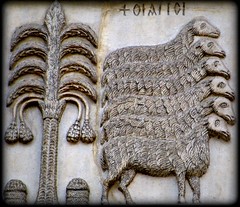
Venetian agrobiodiversity bas relief


Venice

Originally uploaded by luigig

Caught this on a recent trip to Venice. It’s embedded in an outside wall of St Mark’s Basilica. Agrobiodiversity was more crucial to iconography back in the Middle Ages, I guess.

Posted on February 26, 2011February 25, 2011

Animal Genetic Resources reminder

The newsletter of the IUCN Species Survival Commission and the IUCN Species Programme has just alerted me to a (fairly) recent edition of FAO’s international journal Animal Genetic Resources which I think we missed. It contains, among many other interesting things, a paper on “Conservation status of wild relatives of animals used for food” by P.J.K. McGowan.

Posted on February 26, 2011February 26, 2011

Seeds in the Svalbard Global Seed Vault…
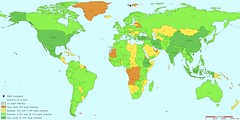


2011-02-SGSV by country of origin

Originally uploaded by Dag Endresen

…by country of origin, on its third birthday.

Posts pagination

Previous page Page 1 … Page 670 Page 671 Page 672 … Page 1,287 Next page

Subscribe

Paste this URL into your Feed Reader:
https://agro.biodiver.se/feed/

Fresh Nibbles

    1. Ancient farmers didn’t have to wait for the genetic diversity that made domestication possible. They selected from variation already present in wild plants, including the ancestors of rice and maize. Domestication was as much about spotting (or happening upon) useful differences as creating new ones.
    2. English colonists in America called Indigenous dogs “wolves,” revealing as much about colonial perceptions as about the animals themselves. This history of Indigenous dogs shows how unfamiliar animals were classified through peculiarly European ideas about wildness.
    3. Austria is bringing forgotten apple varieties back to life. Saving old varieties in genebanks is one thing: getting people to grow, sell and eat them is another, but it can be done. Or at least tried.
    4. Jordan’s olive-oil heritage centres on traditional varieties such as Nabali and ancient Rumi trees, but most production is consumed locally, leaving exports limited and making provenance, cultivar and harvest date important indicators for buyers. Compare and contrast with Austrian apples.
    5. Small island developing states have distinctive food cultures and ingredients, but face particular challenges in building sustainable and resilient food systems. FAO’s A Taste of SIDS explores the connections between island food, biodiversity and culinary heritage. Nice to see diversity within crops considered, though a few local variety names would have been nice.

    Published on October 21, 2026

Proudly powered by WordPress