Featured: Heirloom tomatoes

We recently Nibbled a request for information sources of seeds of heirloom tomatoes. That apparently galvanized MikeH into action:

You said: Do you have these heirloom tomatoes? I said: Nope, not this year but I’ll bet I know where they are.

The result? Satisfaction all round.

Ain’t it great when A gets connected to F quickly and seamlessly through B, C, D, and E who are only intermediaries?

That’s what social networking is for, I guess.

Nutrition and the naming of plants

Just in time for the big meeting on Biodiversity and Sustainable Diets, opening today at FAO in Rome and part organized by our pal Jess, comes shocking news:

Of 502 sample plants, only 36 followed best practice for plant identification, and 37 followed best practice for plant nomenclature. Overall, 27% of sample plants were listed with names that are not in current use, or are incorrectly spelt, or both. Only 159 sample plants would have been found from a database search of citations and abstracts. Considering the need for food composition data from wild and locally cultivated food species, and the cost of analysis, researchers must identify, name and publish species correctly. Drawing on the fields of ethnobotany and ethnopharmacology, comprehensive recommendations are given for best practice.

Mark Nesbitt and his colleagues analyzed the quality of botanical information in published papers about the nutritional value of plant foods. 1 What they discovered was that in many cases, if you relied on the botanical names as given in the papers, you would be hard put to identify the species concerned accurately enough to use automated searches of databases. And that could be a real problem as researchers seek to build a case for the value of lesser-known wild and cultivated species in building sustainable and nutritious diets.

There are, of course, recommendations to remedy the problem: “best practice”. Whether they’ll be widely adopted is anyone’s guess.

Jebel Abdul Aziz protected area to get development help

Maybe it’s the spirit of Nagoya, but the Global Arab Network is announcing that

the State Ministry for Environment Affairs, the Ministry of Agriculture, the United Nations Development Program and the local committees of the villages of Abdulaziz Mountain reserve signed on Tuesday three agreements for establishing development projects…

The aim?

…serving national communities in Abdulaziz Mountain area and reducing the effect of human activity on biodiversity in it, in addition to supporting the joint administration of the reserve’s resources among the various relevant establishments and organizing the management of the grants provided to local committees.

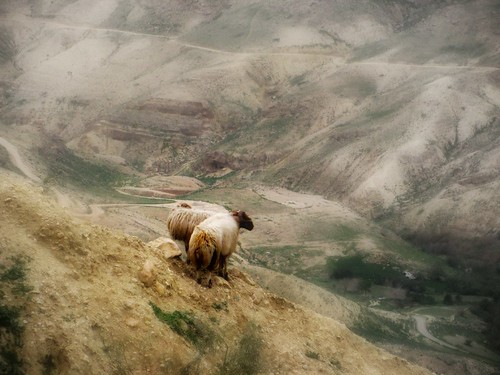
The Jabal Abdul Aziz protected area is in northeastern Syria, where the vegetation “represent[s] the nearest living examples to Neolithic sites along the Euphrates.”

The area clearly has eco-tourism potential. It’s also got crop wild relatives and other plant genetic resources:

The site includes a number of species that have an economical and ecological importance. Of these we mention:

(1) Genetic resources of fruit trees, Of these are: Pistacia atlantica, Pistacia khunjuk, and Amygdalus orientalis

(2) Excellent protein rich forage species. Of these we may mention Atriplex leucloda, Avena barbata, Dactylis glomerata, Salsola villosa, Stipa barbata, Aegilops spp., and Vicia spp.

(3) Medicinal plants are present in prosperous populations. Some of these species are: Thymus syriacus, Artemisia herba-alba, Capparis spinosa, Teucrium polinum, Achillea spp., Ziziphora spp.

(4) Ornamental species adapted to dry zone such as Gladiolus aleppicus, Ixiolirion tataricum and Tulipa montana are found too.

But will it be managed in such a way as to maintain these species?

Did wild relatives get a boost at Nagoya?

I think I may have Nibbled the fact that IUCN released a few days ago at Nagoya the results of a massive study of the global pattern of threat to vertebrate diversity. Here’s the money map:

Also to coincide with Nagoya, IUCN collaborated with Kew and the Natural History Museum, London on a global analysis of extinction risk for the world’s plants.

And of course, the A-Z Guide of Areas of Biodiversity Importance was launched at a side event at COP 10. The press release is on the UNEP website.

Compare and contrast with this map Julian Ramirez of CIAT has kindly sent me, showing the richness of wild relatives of a dozen or more major crops. Question for anyone who was at Nagoya: were livestock and crop wild relatives discussed during the proceedings?

I ask because in a recent posting on the Crop Wild Relatives discussion group, Nigel Maxted suggests that launching an initiative to “(establish) … a Global Network of CWR Protected Areas is now a real priority, along with systematic ex situ conservation!”

So what happened?