We are happy to publicize this request by Robert Koebner and Theo van Hintum, and wish them luck with their important initiative.
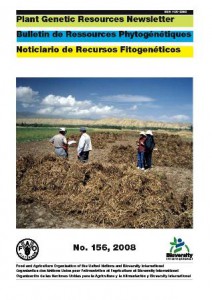 There has not been an issue of the Plant Genetic Resources Newsletter (PGRN) for a year. Its loss means that there is no longer a sensible outlet for “grey” literature on PRG -– such as reports of collecting expeditions, genebank updates, preliminary testing of new characterization protocols etc. A new intiative is currently being launched by Robert Koebner and Theo van Hintum (WUR) to bring PGRN back from the dead. The idea is to resume publication as a web-only English language journal housed at WUR, and to provide authors with linguistic support if needed. We are currently looking for the necessary financial sponsorship, and to achieve this we need to demonstrate that there is appreciable community support for the revival of PGRN.
So if you think that this is a worthwhile goal and that you would like to see PGRN back as a freely available, web-based journal, please email a message of support to Robert Koebner at mockbeggars(at)gmail.com, and leave a comment here.
We hope to hear from as many of you as possible!