A long article from The New Yorker last November is all about the world of artificial flavours — but it does contain a fascinating section on the diversity of citrus fruits that the taste-makers explore in search of inspiration.
Apologies
Sorry about the lack of service lately. Things are a bit hectic, with both of us traveling. Normal service will be resumed as soon as possible
A novelist on Pavlovsk and hunger
Elise Blackwell wrote a novel — Hunger — about the Siege of Leningrad and the people who starved at the Vavilov Research Institute rather than eat the seeds in their care. I haven’t read it, yet, although I have read interviews with the author. The Atlantic asked her to reflect on what is going on at the Pavlovsk Experiment Station. Very clever.
Genetic diversity is crucial to human survival and food is a central part of our history and heritage, but aesthetics matter too. In the place of an apple famed for its winter heartiness and a berry prized for its perfect sweetness will sit a commercial real estate development, the money earned off the bulldozed land going to those who successfully claimed in court that the Pavlovsk collection does not exist because it was never officially registered. Soon they will be accurate in more than legalistic terms: it won’t exist.
One thing puzzled me about her piece, though, and that was a reference to a bean she once grew, which she calls “the Tarahumara carpenteria,” italicized just like that, which suggests it could be a genus and species, but with a definite article, which suggests that if it is, Blackwell doesn’t know how to use a binomial. 1 I know of the Tarahumara people, and I have grown one of their heirloom sunflowers. But I could find no trace of this bean either in the interwebs or in my copy of the 2010 Seed Savers Yearbook. Blackwell doesn’t indicate what kind of bean it might have been: bush or pole; common, runner, lima or tepary. I checked them all. It isn’t there. I checked the USDA. It isn’t there. I checked Native Seeds/SEARCH. It isn’t there. Please, someone, tell me I am wrong.
This is not to cast doubt on anything Elise Blackwell wrote. Really. It is to suggest two things. First, if anyone is still growing a bean called anything like Tarahumara carpenteria, would they please, please ensure that someone else has it too, and not just as memory-laden specimens for weighting down pie crusts. And secondly, as someone long ago once told me; “write it down, because the weakest ink lasts longer than the strongest memory.” 2
We’all speak, they listen?
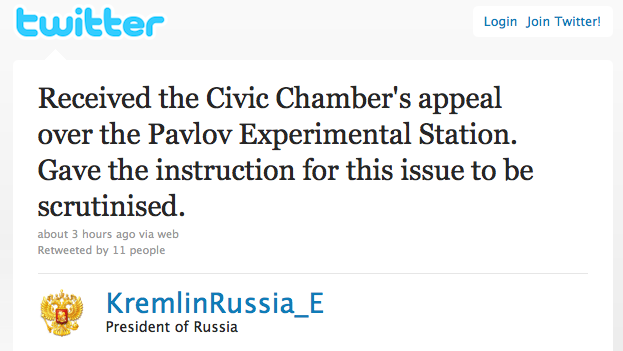
Court decides against Pavlovsk but hope remains
We’ve just learned that the court has decided in favour of the federal housing authority to permit the destruction of the Pavlovsk Experiment Station’s field collection of fruit diversity. Some hope remains, however. The N.I. Vavilov Research Institute of Plant Industry (VIR) says it will today lodge an appeal with the High Arbitration Court against the Supreme Arbitration Court’s decision. This gains campaigners another month to save Pavlovsk.
A spokesman for VIR also said that they had received further confirmation that the Court’s decision can be revoked by the President or Prime Minister.
We don’t know whether either Mr Medvedev or Mr Putin is actually listening, but if you haven’t already done so, it can’t hurt to let them know how you feel.