Those limelight-hogging publicity mavens at the Convention on Biological Diversity have done it again. A massive press release celebrates the fact that Syria recently became the 12th country to issue a set of postage stamps to celebrate the International Year of Biodiversity. Ahmed Djoghlaf, Executive Secretary to the CBD had this to say:
I want to pay tribute to the countries that have made the effort to design and issue beautiful stamps as a way of reminding people of the importance and irreplaceable nature of the biodiversity of our world … Young people and adults alike can enjoy and take pleasure in these stamps, which will become permanent and memorable collector’s items.
And yes, you’re dead right, we’re about to get on our high horse again and moan about the (lack of) agricultural content of these stamps. I took a close look at the pictures the CBD sent out, and as usual there are almost no crops or livestock there. India’s features rice farmers — and an owl. Belarus has a couple of fish, which may or may not be edible, although I think Portugal’s are. Hong Kong’s and Singapore’s may feature edible tree fruits, but then again they may not; who can tell? The UK has a couple of whales (the dormouse is not the edible one) but given the UK’s stance on whales, it’s pretty safe to say they didn’t have food in mind.
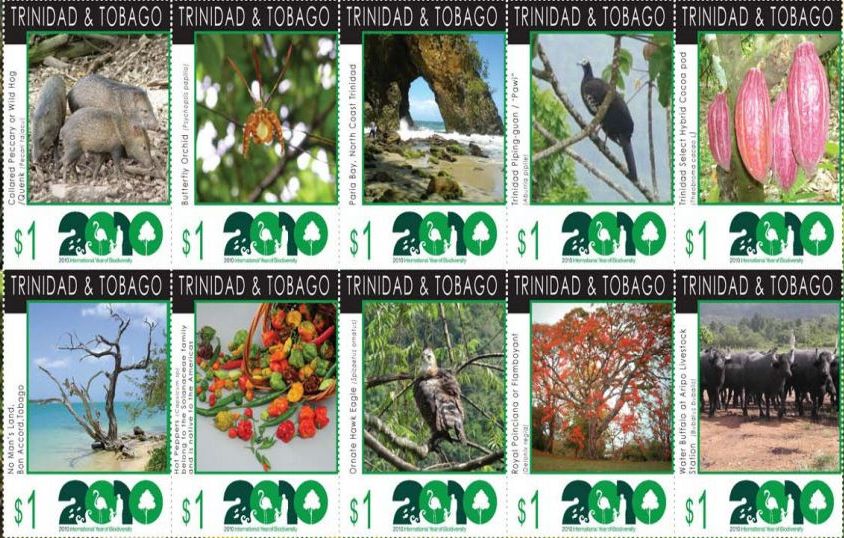
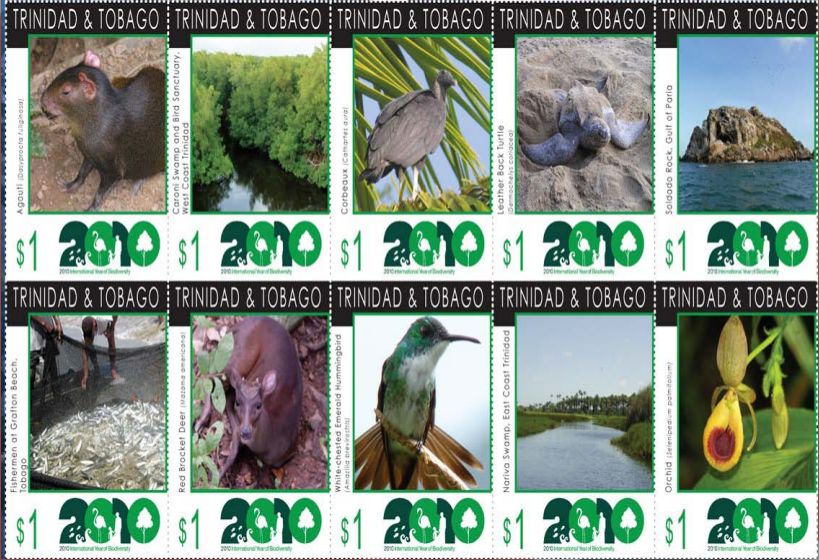
Let’s hear it, then, for Trinidad and Tobago, which did Select Hybrid Cacao, hot pepper diversity, water buffalo, agouti, leatherback turtles and fishermen, plus a couple of productive ecosystems.