School gardens

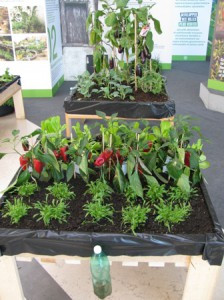
[I]nstead of building up and knocking down an army of straw men from a distance, Luke Tsai actually visited the [Martin Luther King, Jr. Middle School in Berkeley, California] garden to see how it works and talked to the teachers and principal about the Edible Schoolyard.

What a strange idea, to go and look at something you’re reporting on and see what the people involved make of it, rather than just using your own gut feelings. But Luke Tsai did just that before he wrote about The Edible Schoolyard. Let’s hope this kind of effort never catches on. The Ethicurean wrote about Tsai’s piece and gives lots of context and links.

Let’s define success, shall we?

Professor Robert Paarlberg has a long article in Foreign Policy that takes a critical look at feeding the poor. There’s much in it I agree with, and probably more I disagree with. I do have one important question, which I’m loathe to see buried among the comments at Foreign Policy.

Paarlberg devotes some time to attacking the “myth” that the Green Revolution was a failure. “In Asia,” he writes “the Green Revolution was good for both agriculture and social justice.” So here’s my question:

Why are 44% of the children under 5 years old in India malnourished?

Answers in the comments, please.

Carnival of Evolution

There’s a new edition of the Carnival of Evolution up at Evolution: Education and Outreach, the “official blog” of the journal of that name, and it contains three items of direct interest to agrobiodiversity fans (four if you count our submission, but you’ve already read that, right?).

CABI suggests global database of plant health

CABI will create a comprehensive global database of plant health, underpinned by CABI’s ever-growing collection of the world’s most extensive and trusted agricultural content. This currently comprises eight million records in CAB Abstracts, 30,000 pest datasheets from the Crop Protection Compendium, thousands of images, and almost 2,000 distribution maps. These will be augmented with research project findings, book content, sanitary and phytosanitary legislative standards, and open access data from authoritative partners. These include the UN’s Food and Agriculture Organization, the International Plant Protection Convention, and various national plant protection organizations.

A great starting point for the assessment of future breeding needs as well genetic erosion threats? Attentive readers will remember we’ve blogged about CABI’s pest/disease distribution maps before.