Everyone’s jumping into the industrial versus organic fray (again) with most of the usual suspects making most of the expected noises. One contribution, though, did surprise me somewhat. I have a lot of time for Matt Ridley’s writing, and I’m looking forward to his new book The Rational Optimist. At his blog devoted to the book he has a post on “organic’s footprint” that is either deliberately misleading or else accidentally thoughtless.
One foolishness that a commenter there has already picked up on is this:
Given that … it takes just about the same calories of fossil fuels to get an organic lettuce from a Californian farm to a plate in New York — 4,600 versus 4,800 (numbers from Michael Pollan’s Omnivore’s Dilemma) — can we please have a little less preaching of organic’s holiness?
Talk about a straw man. Who, seriously, imagines that an organic lettuce from California is a good substitute for an industrial lettuce from California in New York? No-one I know, apart maybe from some organic marketeers, who are no better than marketeers anywhere.
Ridley’s main point seems to be that cereal yields per hectare have risen steadily since the 1960s.
That remarkable achievement is mostly down to the fact that most farmers now get extra nitrogen straight from the air, via ammonium factories, rather than from plants, dung and dead fish — the `organic’ way.
If the world was fed with organic food, it follows, we would need to cultivate or otherwise exploit far, far more land to get the plants, dung and dead fish to produce the same amount of food. As I submit to being preached at by organic farmers about their virtue, this fact keeps creeping into my head. Wholly organic farming means no rainforests or it means hunger and high food prices.
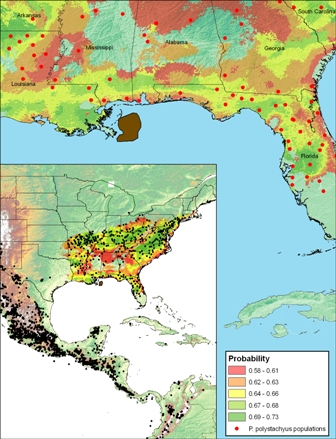
A phalanx of straw men. Never mind about the energy needed to get that nitrogen from the air. He could perhaps persuade me to be optimistic about that, even though things aren’t moving too fast on that front. Water? Other energy needs? Why not go the whole rational hog, and press for the Müller solution. Move all agriculture to where it does best, and give it what it needs to deliver. You could grow all the food that 12 billion people would need, with double today’s meat consumption, in a fraction of the area currently occupied by agriculture (see maps in this paper).
I’m not going to dissect Ridley’s post point by point. It isn’t worth it, and Gary has already provided the excellent synthesis that Luigi craved. To quote:
Good farmers are never “organic”. They also aren’t conventional as they are characterized by “organic” growers. The caricatures are devised by “organic” advocates to demonize other growers in the hope of somehow elevating themselves. Good farmers are concerned with producing good food and doing good land management so that they and their descendants can earn a living farming in future. The production methods they use are evaluated by that standard rather than a set of taboos or ungrounded regulations. They are realists who will use any available method that helps them achieve their objectives.
To which I would add that it isn’t only the organic farmers who demonize others. Bagmen for conventional agriculture are just as capable of demonization, as Ridley so eloquently demonstrates. But I’ll give Gary the last word, for now.
There’s a lot of room for improvement. We can get very much better at agriculture. The sterile conflict between “organic” and other growers does not help. We need to move beyond organic to a more reality based agriculture that is grounded in knowledge rather than superstition.