Speaking truth to Slow Food

ResearchBlogging.orgSlow Food is against standardization, right? Slow Food is for diversity, right? Well, sort of. That is certainly the rhetoric, but a paper by Ariane Lotti in Agriculture and Human Values 1 suggests that the practice can be rather different.

Lotti, who’s something of an insider, analyzes one of Slow Food’s projects in detail and comes to the conclusion that the organization is not as “alternative” as it claims, or believes itself to be. How can it be, when its imposition of production standards mimics the food system it purports to undermine? How can it be, when its taste education efforts can exclude “not-so-good-tasting foods…, potentially eliminating a part of the agrobiodiversity and associated processes that Slow Food is trying to save”?

Too harsh? A paragraph from the conclusion is worth quoting at length.

It may seem as if I am expecting Slow Food to do the impossible and protect agrobiodiversity while not engaging the structures of the conventional system, not creating a market for its exceptional products, and not trying to convince people of the importance of taste in the food decisions they make. Rather, I have tried to do something the organization has so far ignored; I have tried to take a critical look at the ways in which Slow Food attempts to achieve its mission and the effects of its activities. This is lacking in Slow Food and other alternative agriculture organizations, perhaps because a critique is often assumed to be a threat to a movement’s fragile existence. Without a critical examination of an organization’s activities, however, unintended and potentially negative effects are overlooked.

And of how many similar — and not so similar — organizations could something similar be said! Lotti longs for a middle way — no Cartesian dualist she.

…the binary of fast food and slow food ignores how the two extremes are related within the same agriculture system. This relation, in the case of the Slow Food organization, does not lead to a combination of the two to create what Mintz (2006, p. 10; emphasis in original) refers to as “food at moderate speeds”; that is, foods with the availability of fast foods and the characteristics of slow foods.

To truly fulfill its potential Slow Food needs to stop thinking of itself as somehow apart from — above — the conventional food system. Referring to the Basque pig keeper who was the subject of her analysis, Lotti points out that…

Pedro is not just a producer of Slow Food Presidium pigs and meats; he is a protector of global diversity and genetic resources. The industrial pig farmers, when they find themselves in a genetic corner with only conventionally-bred pigs to work with, turn to farmers like Pedro. The industrial pig is tasteless, and when the participants of the National Swine Improvement Federation Conference decide that they want to provide consumers with a “positive taste experience,” they go to farmers like Pedro, who raise non-industrial pigs, to look for taste (Johnson 2006, p. 54).

Closer attention to context and a critical, reflexive look at its efforts will “help the organization engage, address, and challenge more effectively the structures that undermine the continued production of the diverse catalogue of breeds and varieties with which it works.”

Will Slow Food slow down for a moment and listen?

Q&A: The Two Faces of Agriculture

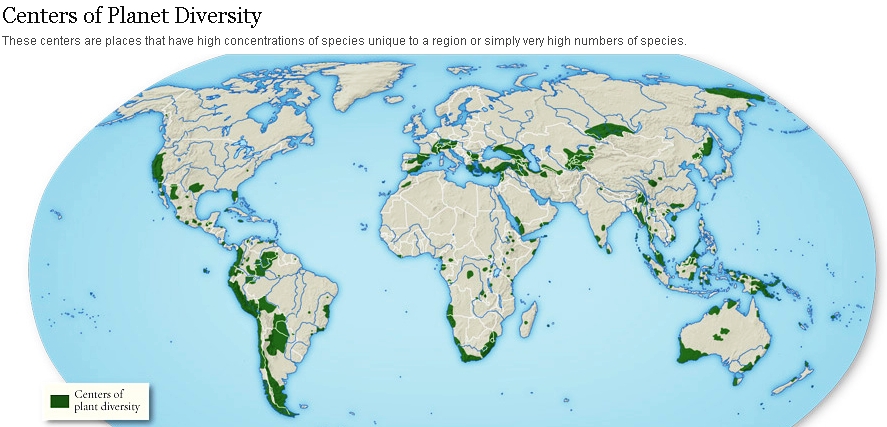
Like the Roman god Janus, whose two faces look in opposite directions, agriculture can either protect the planet’s biodiversity, or decimate it with the irrational use of chemical inputs and the reduction of soil fertility.

If you’re gonna quote Janus at me, you better be using decimate correctly too. At first blush IPS’s interview with Achim Steiner — head of UNEP — seems to be toeing the old “agriculture is the enemy of biodiversity” party line. On second blush too. Here’s Steiner:

The increasing importance of agriculture caused by a growing global population means that the spaces vital to many species of flora and fauna are increasingly limited. In that sense, agriculture poses a danger to biodiversity.

In the end, though, he gets to the point I hope he was trying to make all along.

We can stop that process of erosion and annihilation of species if we apply other models to make optimal use of those 20 centimetres of the earth’s crust necessary to produce the food that we need.

With those alternative models, agriculture offers great potential for protecting plants and animals.

Farmers can be excellent managers of natural resources and of different ecosystems. The challenge of this century is how to compensate farmers so that they continue producing the necessary goods for humanity and, at the same time, help conserve and protect ecosystems, which are also crucial for our survival.

The interview swings back and forth a few more times, offering the idea that farmers can protect endangered flora and fauna. But not a word about the need to protect endangered wild relatives, or crops, or livestock. Ho hum.

Science does food security

You’ll remember Jeremy waxing lyrical a few days back about a Science paper on “the challenge of feeding 9 billion people.” That paper now finds itself part of a special issue on food security. 2

In the 12 February 2010 issue, Science examines the obstacles to achieving global food security and some promising solutions. News articles introduce farmers and researchers who are finding ways to boost harvests, especially in the developing world. Reviews, Perspectives, and an audio interview provide a broader context for the causes and effects of food insecurity and point to paths to ending hunger. A special podcast includes interviews about measuring food insecurity, rethinking agriculture, and reducing meat consumption.

A lot of it is behind a paywall, but something that isn’t is Radically Rethinking Agriculture for the 21st Century. That radical rethink, in case you’re wondering, consists of using more biotechnology and saline water. Right.