Jacob points out:
“The retail price in Russia today is lower for a liter of vodka than a liter of milk.â€
Yikes.
Agrobiodiversity is crops, livestock, foodways, microbes, pollinators, wild relatives …
Jacob points out:
“The retail price in Russia today is lower for a liter of vodka than a liter of milk.â€
Yikes.
Someone called James Sultana emailed us to ask: “Where can get some bush wild tomatoes”.
I was forced to reply in pedant mode:
Could you be a little bit more specific? What do you mean by a “bush
wild tomato”? A wild relative of the tomato? Or some other species
(maybe Australian?) that goes by that name?
Alas, Jim hadn’t entered his email correctly in our contact form, so my reply bounced right back. So, if you’re reading this, Jim, answer the question and we’ll do our best to help. And the rest of you, what might a “bush wild tomato” be?
A couple of crazy Aussies are caught on video eating naga jolokia, the hottest chilli in the world. Watch it and weep.
My recent trip to Russia allowed me to get culinarily acquainted — albeit all too cursorily — with a bit of agricultural biodiversity I don’t know much about: buckwheat (греча). Russia used to be its largest producer. I saw it in its raw state in the market:
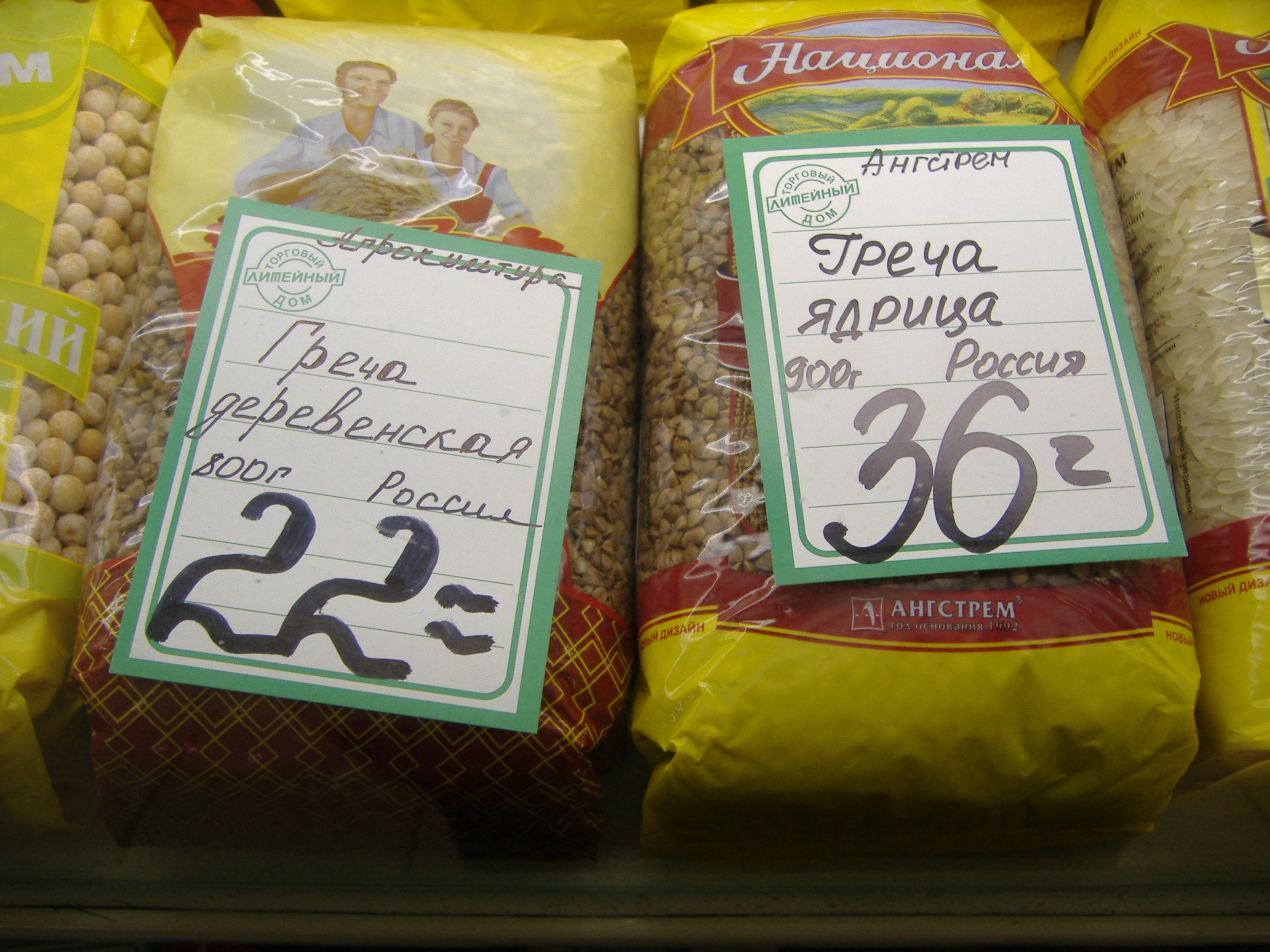
There was kasha for breakfast at the hotel. And I think I had the blintz too, though I’m not sure. Not spectacular, taste-wise, but pleasant enough.
Sure, the story of the sinkhole with 12,000 years’ worth of clues about the life of some of America’s first residents is fascinating. But what we all want to know is what kind of gourd is it, exactly?