- The rich diversity of aphrodisiac foods. Is it February again?
- Why bother doing it myself when someone else had already stuck the knife in The New Statesman.
- Making the Nagoya Protocol work at the community level. I know, let’s have a meeting. But will the ISF be invited?
- June’s Berry-go-Round botany blog carnival is up, with a few relevancies:
- Weeds revisited and rejoiced in.
- A hero of restoration ecology remembered and refound.
- The prickly pear as metaphor is apt and appropriate.
- How green is the cacao industry? This green.
- Yeah but does it qualify as an innovation system?
How to improve nutrition
Bob Ziegler, DG of IRRI, explains why the world needs biofortified staples:
Take the example of rice, the staple food for more than half of the world’s population – including more than half a billion of the world’s poorest in Asia. These people often eat rice and little else. While rice is an excellent food, it does not have all the vitamins and minerals a person needs – so many of these people don‘t get enough essential nutrients like iron, zinc, and vitamin A.
A diverse and nutritious diet is the best option, sadly however, this is often too expensive or simply unavailable.
Simple, eh?
This is about climate, not diversity. But …
U.S. Daily Highest Max Temperature Records set on June 28, 2012
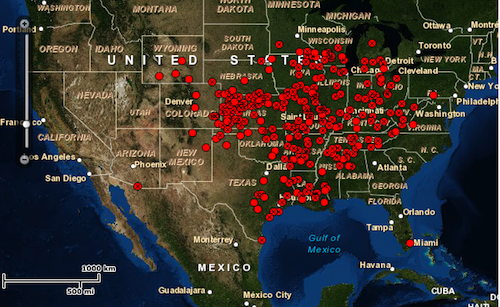
Out of a possible 5,752 records: 205 (Broken) + 74 (Tied) = 279 Total
Just the facts, Ma’am.
Nibbles: Climate predictions, Melon sequenced, Banana adoption, CRP networking, Supply chains, NUS value chains, Climate change good
- Rave from the grave… If the endless summer don’t get you, the nuclear winter still will.
- To him that hath… Spaniards bag Euro cup and their first DNA sequence: melon.
- Build a better banana… And you still need to persuade farmers to beat a path to your door.
- Well, maybe a Facebook page will help: roots, tubers and bananas go social.
- Oxfam advice on protecting your supply chains from endless summers and nuclear winters.
- Which might be useful for this training course. But are value chains the same as supply chains?
- Or it might not.
British pride in its opium processors
Paul Madden, the UK’s High Commissioner in Canberra, Australia, is just back from Tasmania full of enthusiasm for …
UK pharma giant GSK. 1 They process poppies grown by some 400 farms around the island, which go on to become the basis for many important global medicines. It is a very R&D oriented business, as new plant varieties are constantly being developed to produce increasingly sophisticated alkaloids.
If you’ve spent any time on this blog, you’ll know what comes next, and I hate to disappoint.
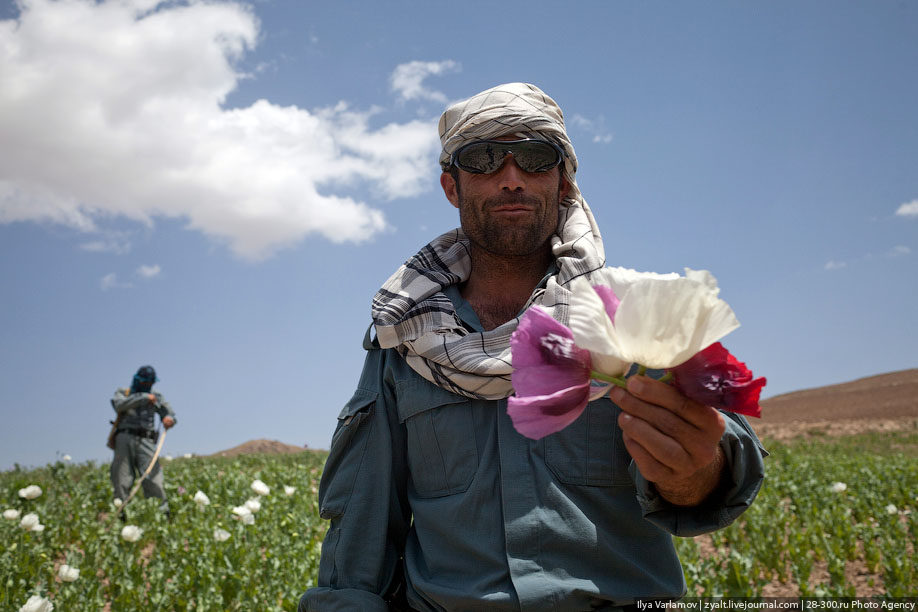
Why on earth is Tasmania encouraged to produce “half the world’s legitimate opiates,” while the same liberty and investment are not afforded the poor farmers of Afghanistan? Britain has interests there too, I believe. Less than a year ago the cumulative cost of those interests was estimated at GBP18 billion. How much would have been needed to create a properly constituted market that would adequately reward Afghan farmers for their resilience, agricultural know-how, and contributions to on-farm conservation? How much might such an effort have saved in not having to combat the people who are supporting Afghan farmers?
It isn’t just the drugs. Madden notes that
Nothing is wasted: the poppy seeds which are a by-product are sold into the catering industry. When you tuck into a lemon and poppy seed muffin anywhere in the world, the chances are the seeds came from GSK in Tasmania.
Funnily enough, that doesn’t impress me either. Were there no sour notes in the High Commissioner’s trip?
My only disappointment was to learn that these poppies are all white, rather than the red ones we associate with Poppy Day in the UK.
How very parochial, and biologically unbriefed.
The red poppies — Papaver rhoeas as opposed to P. somniferum — don’t produce opium or morphine, although they make plenty of thebaine. And believe it or not, thebaine is often the basis for those “increasingly sophisticated alkaloids,” and Tasmanian researchers are working hard to block synthesis at that point, so the poppies would be “useless for the illicit drug trade“.
One final point; they don’t have to be all white, unless you want them to be.