- Innovations for sustainable food systems: genebanks are in there but frankly I find the whole thing a bit problematic. Just gonna leave that there. Feel free to comment here.
- Colin Khoury’s backstory. Also some CWR.
- The fight against pathogens. Of plants, settle down.
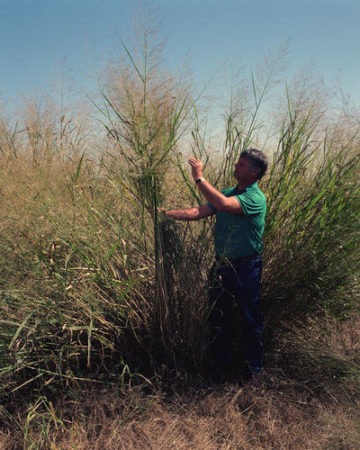
- Better Napier grass is good for everyone. Including the cows. But wait, “…[i]t doesn’t really matter which grass…”
- Phenome2020 recapped.
Nibbles: Columella, Thomas Bowrey, Dreamtime, Oz seedbank, Kenya sweetpotato, Dalla Ragione, Apple hunter, Cydonia, Caribbean nutmeg, Wheat synthetics, ICARDA forages, Land cover map
- Recreating Roman wine. It’s the tar, stupid.
- Decolonizing weed.
- Ancient Aboriginal foraging and cooking was quite something.
- The National Seed Bank at the Australian National Botanic Garden makes the news. See what I did there?
- So does sweetpotato in Kenya.
- Turning to art to find lost fruit varieties in Italy.
- Remembering Lee Calhoun of North American Fruit Explorers.
- Bringing back the quince. That’s the fruit trifecta.
- Might as well bring nutmeg back too.
- CIMMYT’s synthetic hexaploid wheat programme explained in a PowerPoint.
- Report on screening ICARDA’s wild forages.
- Nerd out with cool land cover map in Google Earth Engine. Mash up with above, for example?
A new genetic resources journal
Very worthy endeavour kicks off.
We are happy to announce the creation of Genetic Resources (www.GenResJ.org), a new open access peer-reviewed online journal which is free to publish and free to read. The journal is inspired by the late Plant Genetic Resources Newsletter and Animal Genetic Resources journal and aims to fill the gaps left by their discontinuation. Starting as part of the GenRes Bridge project, this new journal will serve as a common platform to share knowledge, tools and other information among practitioners and researchers across different domains of genetic resources, with a focus on plant, animal and forest genetic resources. The first issue of Genetic Resources is scheduled to be published in June 2020.
Genetic Resources publishes methods, strategies, guidelines, case studies or reviews on a variety of topics of interest on the present and future use of genetic resources. These may include the documentation, conservation, management, assessment, characterization and evaluation of genetic resources and their link to broader biodiversity, socioeconomic practices, policy guidelines or similar, serving stakeholders within and across sectors. Its target audience are practitioners and researchers involved in monitoring, collecting, maintaining, conserving, characterizing and using genetic resources for food, agriculture and forestry.
Genetic Resources is now accepting submissions of manuscripts for consideration in the journal. Authors are invited to submit original research, reviews or short communications that cover the scope of the journal.
For further details, please visit our website: www.GenResJ.org and review our Author Guidelines. If you are interested in joining the editorial board, becoming a reviewer or for any other additional information please contact the managing editor Sandra Goritschnig at s.goritschnig at cgiar.org.
We look forward to receiving your submissions.
Send your stuff in now to make it into the inaugural issue.
Open sesame
Go on, follow the largest ever deposit to the Svalbard Global Seed Vault. There’s a hashtag, of course there is: #SeedVault2020.
You know you want to.
LATER: And, it’s a wrap!
https://twitter.com/NordGen/status/1232978684421734402
Brainfood: Grassland diversity, Perennial crops, Ancient dates, Armenian grapes, Endangered trees, HLB sniffers, Household data, NUS, Phenotyping, Sorghum parasites, Wild Vigna, Ancient foods, Climate frontier
- Economic benefits from plant species diversity in intensively managed grasslands. More species means more milk, more money and less risk.
- Community structure of soil fungi in a novel perennial crop monoculture, annual agriculture, and native prairie reconstruction. Perennial monoculture not unlike native prairie.
- Origins and insights into the historic Judean date palm based on genetic analysis of germinated ancient seeds and morphometric studies. Ancient Judean dates may have come from further east.
- Genetic diversity and traditional uses of aboriginal grape (Vitis vinifera L.) varieties from the main viticultural regions of Armenia. 71 genotypes, no less.
- Mapping tree species vulnerability to multiple threats as a guide to restoration and conservation of tropical dry forests. About 50% of the distribution of 50 trees in northwestern Peru and southern Ecuador is vulnerable.
- Canine olfactory detection of a vectored phytobacterial pathogen, Liberibacter asiaticus, and integration with disease control. Dogs can sniff out a nasty citrus disease.
- The Rural Household Multiple Indicator Survey, data from 13,310 farm households in 21 countries. 758 variables, no less.
- Local Solutions for Sustainable Food Systems: The Contribution of Orphan Crops and Wild Edible Species. Increasing dietary diversity, more market opportunities for smallholders, and more attention to biodiversity conservation. Do orphan crops feature among the 758 variables above?
- Breeder friendly phenotyping. Focused, rapid and precise. Much like me, then?
- Genomics of sorghum local adaptation to a parasitic plant. Why we need on-farm conservation.
- Mapping patterns of abiotic and biotic stress resilience uncovers conservation gaps and breeding potential of Vigna wild relatives. Sources of resistance to biotic stresses are more common than to abiotic stresses, in terms of the number of species that have them.
- Archaeobotanical evidence of food plants in Northern Italy during the Roman period. Nice take-homes from Dr Lisa Lodwick on Twitter.
- The environmental consequences of climate-driven agricultural frontiers. Areas newly suitable for one or more crops store a lot of C, cover a lot of important watersheds and are home to a lot of biodiversity.