How Do We Preserve the Vanishing Foods of the Earth? https://t.co/z5O68gtSVN
— AgroBioDiverse (@AgroBioDiverse) October 20, 2019
Click on the tweet, or here, to see some of my answers. Add yours in the comments below, if you’re not on Twitter.
Agricultural Biodiversity Weblog
Agrobiodiversity is crops, livestock, foodways, microbes, pollinators, wild relatives …
How Do We Preserve the Vanishing Foods of the Earth? https://t.co/z5O68gtSVN
— AgroBioDiverse (@AgroBioDiverse) October 20, 2019
Click on the tweet, or here, to see some of my answers. Add yours in the comments below, if you’re not on Twitter.
One of the reforestation papers we blogged about a few months back is coming in for some criticism.
In the original study, ecologist Thomas Crowther of the Swiss Institute of Technology in Zurich and his colleagues first used a machine learning algorithm to predict where additional trees could naturally grow, based on climatic conditions under which existing forests are known to exist. Then, his team used a handful of published estimates on the carbon stored in existing forests to estimate how much carbon those additional trees could lock in once they reach maturity. After taking into account the carbon that would be trapped in the soil, leaf litter, and dead wood associated with the trees, they arrived at their 205 gigaton estimate.
That’s a trillion trees on almost a billion hectares. Just google those figures to get an idea of the impact the paper had.
Anyway, now researchers are finding holes in the methodology. My reliably pernickety friend Eike Luedeling is objecting to the figure used to convert canopy cover to amount of carbon sequestered, and to how the availability of land for reforestation was estimated. Others are suggesting that the effect of new forests on the surface albedo should have been factored in. But perhaps the main objection is higher-level.
Several groups of scientists took particular issue with the paper’s original statement that global tree restoration is “our most effective climate change solution to date,” an assertion one of the critics called “dangerously misleading” as it implies trees are the unique solution to climate change. Land, and how we use it, can be a big part of the solution to climate change, as outlined highlighted in a recent report by the Intergovernmental Panel on Climate Change. But those strategies only “buy us time” while people cut greenhouse gas emissions, which is arguably the most powerful climate change mitigation strategy, says Luedeling.
Needless to say, the authors are countering vigorously. You can read all the toing and froing in The Scientist.
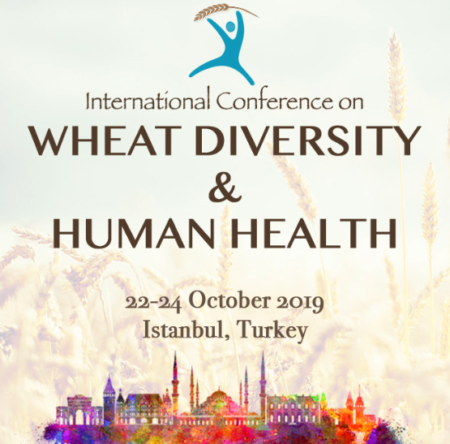
The objective of this conference is bringing the Wheat researchers and the Human Health community together to exchange information and discuss strategies for improving the health benefits of wheat by exploiting diverse genetic resources, modern breeding, genomics, and sustainable production and processing technologies.
You had me at Weißbier.