- Did Homeric heroes eat a lot of meat? The answer will surprise you. A thread.
- Social food atlas to be launched.
- Atlas of West African food systems already launched. Very different thing.
- Saving chocolate through biotech.
- What makes foods smart?
- Pros and cons of the Lancet/EAT thing. And more.
- Waking up the wine industry to the beauty grapevine wild relatives.
- The magos of maize, from Mexico to the US, and back again.
- Plant breeding training in Africa.
- Pre-colonial North America: not wilderness, not dense forest, and not just the Three Sisters, lots of Apios too. Lots.
- Food AND biodiversity.
- Nutritious OR affordable.
A survey on genebank learning materials
A request from Gayle Volk (USDA-ARS) and Pat Byrne (Colorado State University). Please respond by 15 March.
The plant genetic resources conserved by genebanks around the world are the essential raw materials for increasing crop genetic diversity and improving the global supply of food and other agricultural products. Colorado State University and USDA-ARS have developed a short survey (5-10 minutes) to assess the needs for various types of learning materials to educate the next generation of plant genebank managers, as well as to inform students about the value and use of plant genetic resources in breeding and research programs. The survey link can be found here.
Nibbles: Fox burials, Myammar genebank, Wild rice, Community genebanks, Breeding cowpeas & EAH bananas, Doherty pics, Pulque ecotourism, Tree diversity maps, Horizontal genes, Polish hop breeding
- Did ancient Iberians domesticate foxes?
- Myanmar genebank staff receive training in Australia.
- Why genebanks are important. Though not so much for wild rice. No, not that wild rice, we’re talking Zizania here.
- Genebanks can be community-friendly.
- Improving cowpea and banana. Need genebanks for that.
- Picturing genebanks.
- Drinking for conservation.
- Mapping tree diversity.
- Some grasses steal genes from neighbours.
- Polish hops for Polish beer.
Featured: Herbemont
It seems I may have inadvertently walked into a little bit of a controversy with that post on Herbemont. Dr Jerry Rodrigues of the University of Cape Town hopes for a resolution in a comment on the post:
Let’s hope that sooner rather than later, researchers in the Department of Viticulture and Enology or at the National Clonal Germplasm Repository (University of California, Davis) or the Plant Genetic Resources Unit (PGRU) at Geneva, New York will not be afraid to make public the microsatellite DNA markers for the true Herbemont.
Whereas Erika Maul from the Julius Kühn-Institut, which maintains the Vitis International Variety Catalogue (VIVC), has this to say in an email:
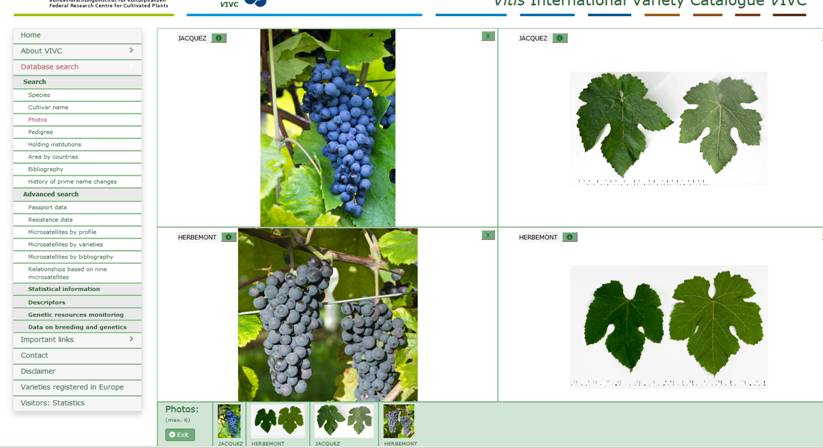
Herbemont and Jacquez are maintained in European collections and seem not to be endangered. These photos from VIVC could assist to confirm identification.
What is the State of the World’s Biodiversity for Food and Agriculture?
Spoiler alert: It’s not good.