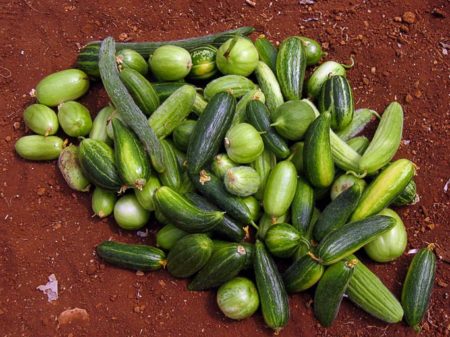
- The role of wild fruits and vegetables in delivering a balanced and healthy diet. Not great, until they’re domesticated.
- Maize Diversity, Market Access, and Poverty Reduction in the Western Highlands of Guatemala. Forget maize.
- Evaluation of Wild Lentil Species as Genetic Resources to Improve Drought Tolerance in Cultivated Lentil. Environment explained drought response in wild lentils better than molecular classification.
- Geographical distribution, diversity and gap analysis of East African sorghum collection conserved at the ICRISAT genebank. Both Sudans.
- Explaining the Ethiopian farmers’ perceptions on potential loss of traditional crop varieties: A principal components regression analysis. Poor farmers know more, and care more, about loss of traditional landraces.
- High-throughput sequencing of African chikanda cake highlights conservation challenges in orchids. Those are very biodiverse cakes, but not in a good way.
- Revisiting the ‘cornerstone of Amazonian conservation’: a socioecological assessment of Brazil nut exploitation. It’s actually in pretty good shape, but that doesn’t mean it can’t be improved.
- Phylogenetic Prediction of Alternaria Leaf Blight Resistance in Wild and Cultivated Species of Carrots. Look for taller material in clade A.
- Starch granule evidence for the earliest potato use in North America. S. jamesii may have been used for 10,000 years in Utah.
- Genome-Wide Association Study of Grain Architecture in Wild Wheat Aegilops tauschii. Two genetic lineages, with big differences in grain width and weight.
Featured: Flavour
KCTomato is in the mood to rant about breeding for flavour:
(Rant) My only concern is if entities do so based on financial gain and limit or prevent others from accessing such material or information in the future.
Thank you Stubbe, Rick and others for openly sharing material and having some fore sight that they were contributing and sharing something to be built on rather than a means to an end. (/Rant)
But not only rant, to be fair. Read the whole thing.
Photographing VIR
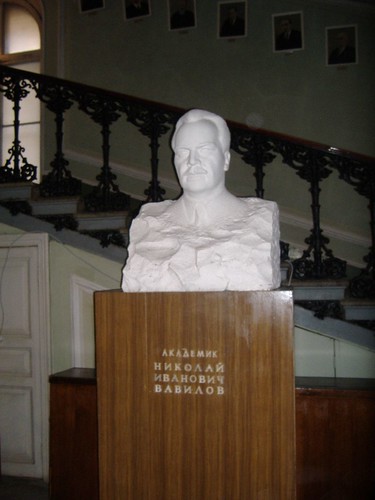
Swiss (I think) photographer Mario Del Curto has a book out about the Vavilov Institute, called The Seeds of the Earth. I’ve just found out about it at The Eye of Photography, but there’s a better blurb on the website of the Department of Plant Molecular Biology, Faculty of Biology and Medicine of the University of Lausanne. Where you can also find an order form. If you don’t want to shell out the 40-odd euros, you can just look at my photos.
ILRI looking for a forages genebank manager
The International Livestock Research Institute (ILRI) seeks to recruit a dynamic Forage Scientist with a keen interest in genetic resources, to head the genebank at ILRI and to manage the composition of tropical and sub-tropical forage collections both at ILRI and the International Center for Tropical Agriculture (CIAT). This is a joint ILRI/CIAT position that will be based at the ILRI campus in Addis Ababa, Ethiopia.
The thinking behind that “joint position” thing is explained in the global forages strategy.
A roundabout way of learning about caroselli
Another despatch just in from our correspondent in Puglia, last seen checking out the olive plague. This time she sends us pictures of something called “cumazzi,” which is a new one on me.
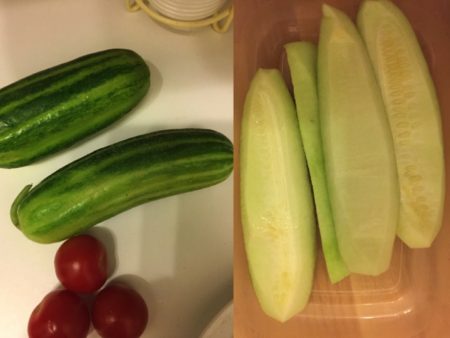
They are not cucumbers exactly. Easy to digest and sweeter than cucumbers. Really crunchy and refreshing.
It turns out they are the immature fruits of a vegetable race of the melon, Cucumis melo, probably in the “adzhur group.” They go by a long list of names, but they seem to be restricted to Puglia (the heel of Italy), where they come in all shapes and sizes.
#/media/File:Ecotipi_carosello_e_barattiere.jpg)